
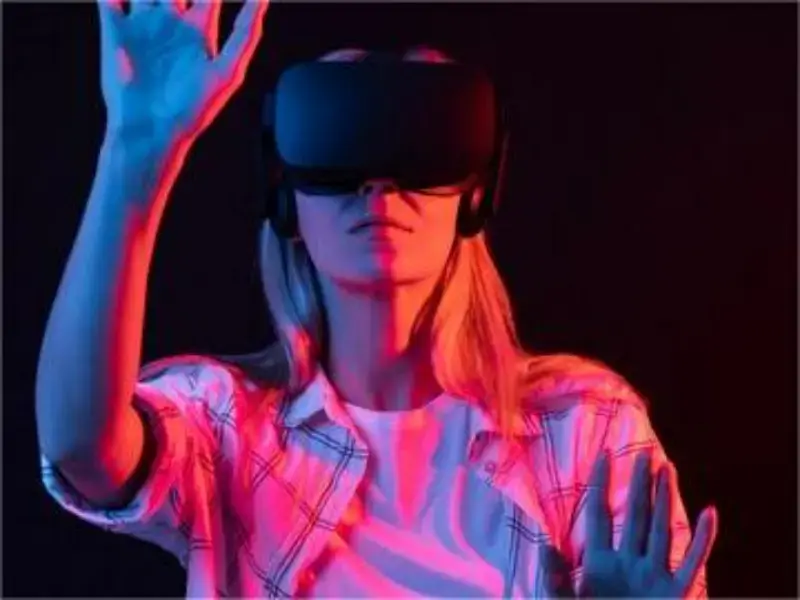
- Entities experience reduced symptoms through engaging in virtual activities that trigger adrenaline and dopamine release.
- A UK-based trial at Teesside Airport’s fitness gym involves weekly VR sessions, showing promising results in symptom alleviation.
- Funded by a retired lecturer’s initiative and supported by Parkinson’s UK, the program has potential for growth and benefits from community interest.
An initiative at Teesside Airport’s fitness and well-being gym has implemented virtual reality headsets, providing Parkinson’s patients with an innovative therapy to alleviate symptoms.
Also read: Dawn of a new VR era: Apple Vision Pro now available to buy
The virtual reality breakthrough
Virtual reality (VR) headsets are providing relief for individuals suffering from Parkinson’s, as reported by a charitable organisation.
A dozen entities each week have been donning the headsets as part of an ongoing trial at a fitness and well-being facility located at Teesside Airport, near Darlington.
The triallists engage in a variety of virtual experiences, which include virtual tours of landmarks such as the Taj Mahal, participation in exercise classes, and even virtual climbs of historical sites like the Acropolis.
A representative from Parkinson’s UK, the charity overseeing the trial, described the venture into virtual reality as “incredibly exciting.”
The immersive activities stimulate the body’s production of adrenaline and dopamine, neurotransmitters that offer relief from Parkinson’s symptoms. These can range from tremors and balance issues to slow and rigid movements.
From theme park thrills to virtual adventures
Keith Wilson, a retired lecturer diagnosed with Parkinson’s four years ago, conceived the idea after experiencing the effects of adrenaline from rollercoaster rides while on holiday in the United States.
Upon returning to his home in County Durham, Mr. Wilson discovered that VR headsets could simulate the same exhilarating sensations.
“For me, it’s akin to turning back the clock on the disease, at least for a few hours,” Mr. Wilson remarked. “It brings a smile to everyone’s face.”
Motivated by his own positive experience, he raised £4,500 to purchase ten headsets and began offering complimentary classes—unique in the UK.
The weekly sessions are managed by Mr. Wilson and well-being coach Victoria McFaull.
While acknowledging that expanding the programme will be challenging, Mr. Wilson believes in its vast potential.
One of the entities, Janet Murphy, who travels from Middlesbrough to attend the classes, expressed a desire for a facility closer to her home.
She compared the experience to going to the gym, noting, “Initially, you’re reluctant, but after the session, you feel reinvigorated, especially as you progress with the games on the headset and they become more challenging.”
Community and charitable interest
Parkinson’s UK, which has contributed £1,000 towards the trial, is closely monitoring its outcomes. The initiative has piqued the interest of other charitable organisations as well, including Age UK and the Multiple Sclerosis Society.
Tim Morton, who leads the physical activity programme at Parkinson’s UK, emphasised the importance of being physically active for a minimum of two-and-a-half hours per week for individuals with the condition.
He commented, “We are continually seeking innovative ways to motivate our community to engage in physical activities they find enjoyable, and the virtual reality trial is incredibly exciting.”
“It has already demonstrated early promise for Parkinson’s patients, enhancing their energy levels, mood, and drive,” he continued.
“With further time and more entities experimenting with the technology, we anticipate discovering a host of additional benefits.”