- Annual clean tech revenue nearly doubles from €560m to €1bn target.
- Integrated water, energy and waste solutions address AI infrastructure resource strain.
What happened
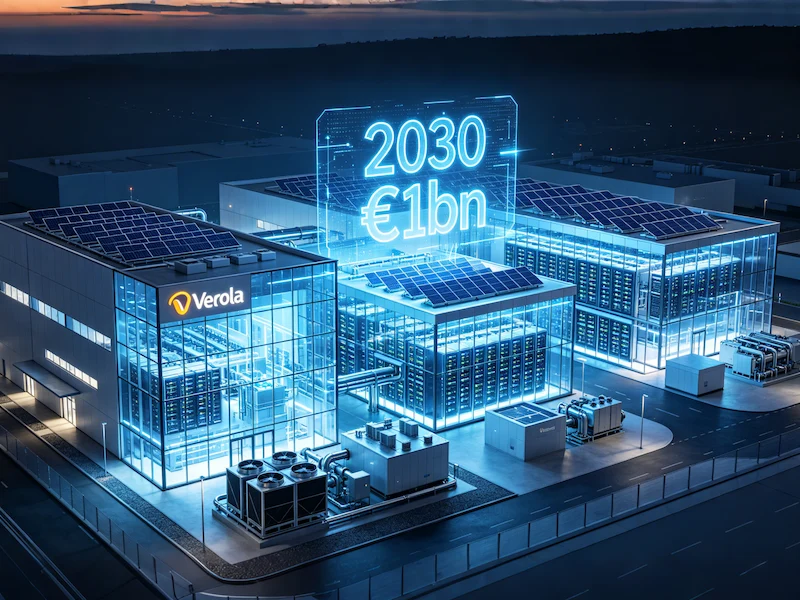
Veolia is accelerating its push into clean technologies for data centres and semiconductor facilities. The company targets €1bn in annual revenue by 2030, up from around €560m in 2025. The push responds to AI-driven infrastructure growth and rising demand for efficient cooling and resource management.
Veolia is deploying integrated solutions across water, energy, and waste management. These include advanced cooling systems designed to reduce water consumption, wastewater recycling technologies, and energy recovery systems that capture and reuse heat generated by data centres. The firm is also working with hyperscale operators and chip manufacturers to improve operational efficiency while meeting tightening environmental standards.
The strategy builds on Veolia’s global footprint in environmental services, enabling it to provide end-to-end solutions across the lifecycle of digital infrastructure. As data centre capacity expands worldwide, the company aims to position itself as a key sustainability partner for operators seeking to scale responsibly.
Why it’s important
The surge in AI workloads is transforming data centres into highly resource-intensive systems, placing unprecedented strain on electricity grids and water supplies. This creates both a risk and an opportunity for infrastructure providers and sustainability specialists.
Veolia’s approach reflects a structural shift in the sector. Environmental performance is becoming central to data centre design and operation, rather than a secondary concern. Operators must now balance rapid capacity expansion with regulatory pressure, cost control, and environmental impact.
By integrating water reuse, energy efficiency, and waste recovery into a single offering, Veolia is positioning itself within a critical layer of the digital economy. This signals a broader trend where utilities and environmental firms become embedded in the technology stack, enabling scalable growth without proportionally increasing resource consumption.
As governments tighten climate targets and investors scrutinise sustainability metrics, such solutions will likely define competitive advantage. In this context, Veolia’s expansion highlights how the future of AI infrastructure will depend not only on computing power, but on how efficiently it uses finite natural resources.
Also read: TikTok to build €1bn second data centre in Finland
Also read: Zoho to open UK data centre, betting on data sovereignty and trust