Asia-Pacific
South Korea plans world’s largest AI data hub
South Korea’s $35bn AI data centre to provide 3GW power by 2028, setting a new standard in global tech infrastructure.
Headline
South Korea’s $35bn AI data centre to provide 3GW power by 2028, setting a new standard in global tech infrastructure.
Context
An investor consortium led by Stock Farm Road has announced plans to build the world’s largest AI data centre in South Korea’s Jeollanam-do province, with construction set to begin in late 2025 and completion targeted for 2028. The $35b facility will boast a 3-gigawatt (GW) power capacity—triple the planned output of OpenAI’s Stargate project in the US—and is designed to support next-generation AI training and services. Stock Farm Road, co-founded by Brian Koo and Amin Badr-El-Din (CEO of BADR Investments), will initially invest $10bn, with further funding tied to phased development. The centre will feature advanced cooling systems, international fibre networks, and energy load flexibility to accommodate AI’s high power demands. Located in southwestern South Korea, the site was chosen for its proximity to renewable energy sources and reduced strain on Seoul’s infrastructure.
Evidence
Pending intelligence enrichment.
Analysis
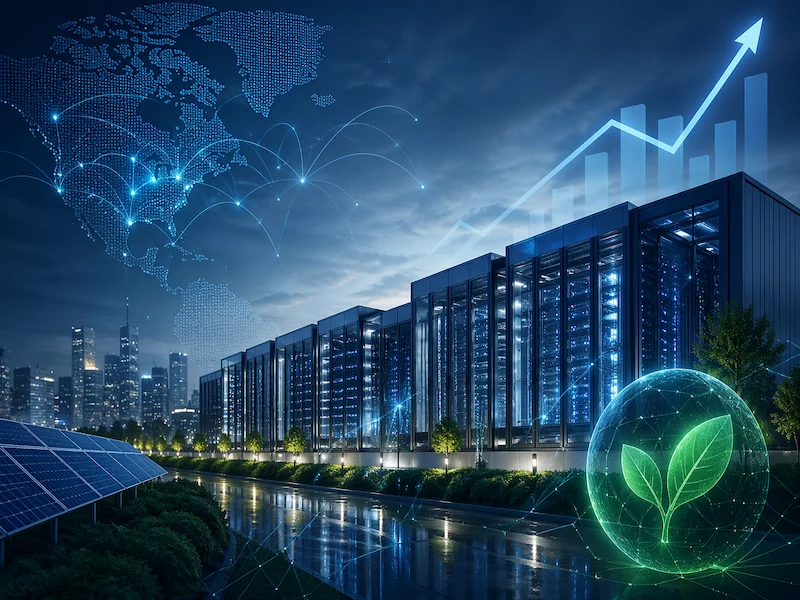
The project aligns with a booming global data centre market, projected to grow from $219b in 2023 to $584bn by 2032. It also follows US efforts under President Biden to prioritise AI infrastructure, including federal land allocations for data centres. Also read: South Africa’s telco industry calls for tech firms to help fund infrastructure Also read: California’s Gavin Newsom vetoes controversial AI safety bill The scale of South Korea’s AI data centre underscores the critical role of energy infrastructure in advancing AI capabilities. The 3GW Jeollanam-do facility alone could account for 60% of this projected need, positioning South Korea as a key player in AI development. Data centres are also central to geopolitical competition. North America currently dominates the sector, but Asia-Pacific investments—particularly in South Korea and Japan—are accelerating. The project’s emphasis on energy efficiency and renewable integration reflects broader industry trends to mitigate AI’s environmental impact, as AI chips from firms like NVIDIA consume exponentially more power than traditional processors.
Key Points
- $35b project to deliver 3GW power capacity by 2028, dwarfing OpenAI’s US-based Stargate.
Actions
Pending intelligence enrichment.