
- The country was the Republic of the Congo, whose capital is Brazzaville—not the Democratic Republic of the Congo. Internet Society Pulse records a national Internet shutdown from 05:30 UTC on 15 March 2026, election day, until 08:00 UTC on 17 March: 50.5 hours.
- NetBlocks told Reuters that connectivity was about 3% of ordinary levels. Traffic measurements establish the timing and national scale, but the reviewed record contains no authenticated shutdown order, operator explanation, legal basis or technical account of how access was suppressed.
The original article named the wrong Congo
The presidential election on 15 March 2026 took place in the Republic of the Congo, commonly distinguished as Congo-Brazzaville. The earlier version repeatedly identified the Democratic Republic of the Congo, a separate country whose capital is Kinshasa. Its generated image reinforced the error by using the Democratic Republic of the Congo flag.
Reuters reported a widespread outage as voters went to the polls. NetBlocks director Alp Toker said the measurements were consistent with a nation-scale blackout and put connectivity at about 3% of ordinary levels. Telecoms.com reported the same finding on 16 March and compared it with the Republic of the Congo's election shutdown in 2021.
Independent measurements bound the outage to 50.5 hours
Internet Society Pulse records the event as a national shutdown beginning at 05:30 UTC on 15 March and ending at 08:00 UTC on 17 March. Its event page displays Cloudflare Radar and IODA evidence showing Internet traffic falling close to zero. The recorded duration is two days and two hours, or 50.5 hours using the published timestamps.
That chronology replaces the old article's contradictory references to an upcoming election, voting and early results. The disruption began on polling day and service returned on 17 March, the day authorities announced provisional results. The available timestamps do not establish whether restoration occurred before or after the announcement itself.
Measurement proves disruption, not who gave the order
A collapse visible across several measurement systems is strong evidence of national loss of external connectivity. It does not by itself identify the decision-maker, the legal instrument, the operators' instructions or the network control used. A shutdown could be enforced at different layers; the public evidence reviewed here does not distinguish among international transit, routing, mobile core, DNS or other controls.
Reuters said Prime Minister Anatole Collinet Makosso did not immediately respond to a request for comment. Telecoms.com found no public explanation from Airtel Congo, MTN Congo or the Postal and Electronic Communications Regulatory Agency, ARPCE, at the time. A civil-society snapshot described a purported 5 March memo ordering communications and text messages blocked, but also recorded that a minister rejected it as fake; the disputed document is not proof of an order. The old claim that authorities justified the shutdown to preserve order or fight misinformation was therefore removed.
The shutdown covered a tightly controlled election
Denis Sassou Nguesso, then 82, sought another five-year term after governing for most of the period since 1979. Reuters reported six challengers, a boycott by several opposition parties, two prominent opponents in prison and others in exile. Those facts describe the election context; they do not independently prove who caused the network failure.
Provisional figures announced on 17 March gave Sassou Nguesso 94.82% and put turnout at 84.65%, according to the Associated Press. AP also reported short or absent queues at many Brazzaville polling stations. These are official results and field observations, not a basis for converting traffic measurements into a legal finding about responsibility.
The missing evidence is operational and legal
A national loss of connectivity can obstruct reporting, family communication and ordinary online activity, but no reviewed source quantifies affected users, failed payments, business loss, emergency-service impact or circumvention use for this event. The old article's broad economic, essential-service and democratic-impact claims had no Congo-specific measurements and have been narrowed accordingly.
A complete account would require an authenticated order or incident record, the legal authority invoked, recipient operators, implementation times, affected autonomous systems and services, any exemptions, restoration instructions and operator logs. Until those records emerge, the defensible conclusion is precise: a national-scale shutdown overlapped the Republic of the Congo election for 50.5 measured hours; attribution and mechanism remain undisclosed.
What to watch
- An authenticated government, security-service, regulator or court order covering the shutdown.
- Airtel Congo, MTN Congo or upstream-provider records showing receipt and implementation of instructions.
- Network evidence separating international transit, routing, mobile-core, DNS and service-level controls.
- The exact restoration sequence by operator, autonomous system, access technology and region.
- Documented exemptions for public services, election bodies, media, banks or emergency communications.
- Congo-specific measurements of affected users, commerce, payments, reporting and circumvention.
Sources
- Telecoms.com, 16 March 2026: contemporaneous report of the nation-scale disruption, operator and regulator silence, and the 2021 comparison
- Reuters report republished by ThePrint, 15 March 2026: NetBlocks estimate of about 3% ordinary connectivity, election context and the prime minister's non-response
- Internet Society Pulse event record: 05:30 UTC 15 March to 08:00 UTC 17 March, national classification, 50.5-hour duration and Cloudflare Radar/IODA evidence
- Internet Society Pulse, 24 March 2026: later two-day characterization and comparison with other election-related shutdowns
- Associated Press, 17 March 2026: provisional result, official turnout, election field observations and nationwide shutdown reference
- EU SEE/Hivos Republic of the Congo snapshot, March 2026: pre-election civic-space context and the expressly disputed purported communications memo
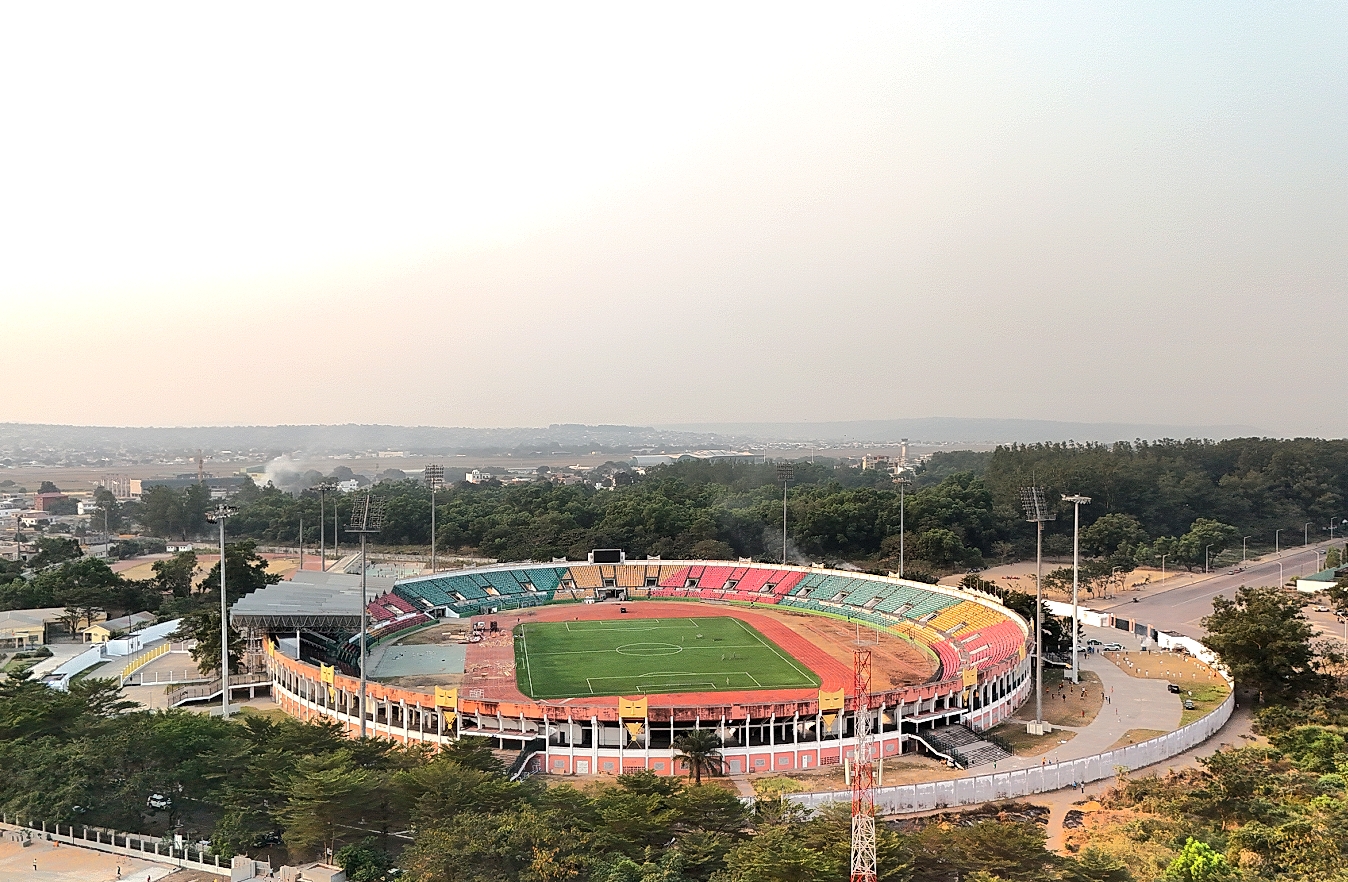
- Wikimedia Commons image record: Africany's 19 August 2025 aerial photograph of Brazzaville and its CC0 dedication
- Original Brazzaville JPEG: unmodified 1348×882 location image; it predates and does not document the election or outage
- CC0 1.0 public-domain dedication: rights terms for the replacement location photograph