
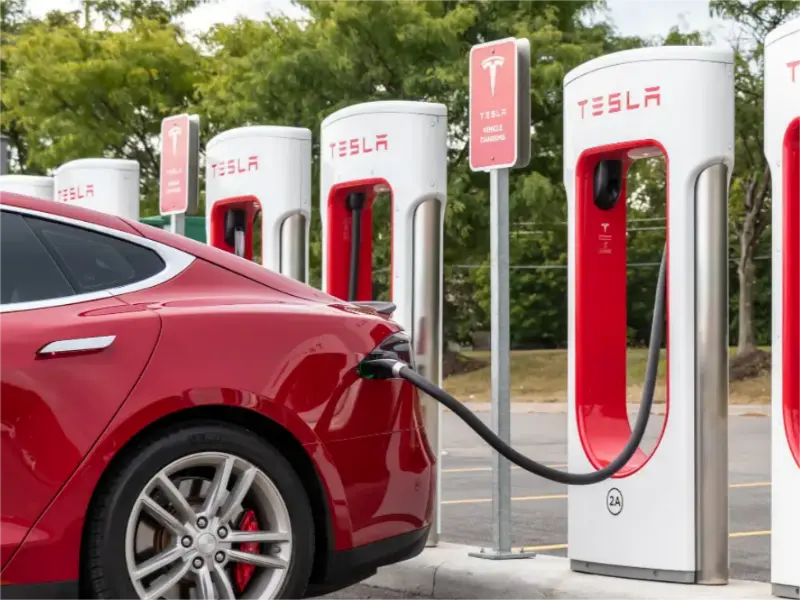
- Tesla drivers using the Supercharger network in the UK pay on a pay-as-you-go basis, with an average price of 67p per kWh, or 53p per kWh for subscribers to the £10.99 per month membership.
- Charging a Tesla to 80% at a Supercharger is estimated to cost between £32.16 and £44.22, depending on the model.
- Charging at home is cheaper and more convenient, with costs ranging from £20.40 to £27.88 for a full charge, depending on the Tesla model and electricity provider.
Discover the latest insights into charging a Tesla in the UK, from Supercharger network fees to home charging costs, empowering EV owners with crucial financial information.
How much does it cost?
Tesla drivers utilizing the Supercharger network pay for their charging sessions on a pay-as-you-go basis and solely for the power they consume when replenishing their battery.
The average price per kilowatt hour (kWh) for a Supercharger in the UK stands at 67p. However, Tesla owners subscribed to the £10.99 per month membership incur a charge of approximately 53p per kWh for charging their car.
In 2022, Tesla made a portion of their Supercharger network accessible to non-Tesla drivers on a pay-as-you-go basis. For non-Tesla drivers, the Supercharger network entails a cost of 77p per kWh.
When utilizing a Supercharger, Tesla recommends charging only up to around 80% due to the slower charging rate during the last 20%. This practice also ensures the availability of Superchargers for drivers who require significant charging.
Below are estimations for the cost of charging to 80% on various Tesla models using the Supercharger network, based on the PAYG rate of £0.67 per kWh:
Model 3 Standard Range: £32.16 per charge
(60 kWh x 80% = 48 kWh; 48 kWh x £0.67 = £32.16)
Model 3 Long Range & Performance: £44.22 per charge
(82 kWh x 80% = 66 kWh; 66 kWh x £0.67 = £44.22)
Model Y Standard Range: £32.16 per charge
(60 kWh x 80% = 48 kWh; 48 kWh x £0.67 = £32.16)
Model Y Long Range & Performance: £44.22 per charge
(82 kWh x 80% = 66 kWh; 66 kWh x £0.67 = £44.22)
Also read: Honda and Acura Forge New Partnerships to Supercharge the EV Experience
Also read: Tesla to build world’s largest supercharging station in Florida
What is the Tesla idle fee?
The Tesla Supercharger Idle Fee is designed to enhance accessibility to public chargers and increase availability.
For every minute a Tesla battery remains connected to a Supercharger after reaching full charge, the driver incurs an idle fee of 50p per minute. If the Tesla is moved within 5 minutes, the fee is waived.
The idle fee amount varies based on the Supercharger station’s capacity. It costs 50p when the station is half full, while at full capacity, the fee doubles.
How much does it cost to charge a Tesla at home?
Charging at home is both cheaper and more convenient compared to public charging. Your electricity rate per kWh depends on your provider and location in the UK. Providers cannot exceed a charge of 34p per kWh, but you can ascertain your rate from your electricity bill.
For day-to-day home charging, charging your Tesla to 100% is acceptable as the slower charging speeds are gentler on the battery. There’s no need to worry if the charging session finishes during the night; the vehicle can safely remain plugged in until morning.
Below are estimates for the cost of a full charge on various Tesla models at home:
Model 3 Standard Range: £20.40 per home charge
(60 kWh x £0.34 = £20.40)
Model 3 Long Range & Performance: £27.88 per home charge
(82 kWh x £0.34 = £27.88)
Model Y Standard Range: £20.40 per home charge
(60 kWh x £0.34 = £20.40)
Model Y Long Range & Performance: £27.88 per home charge
(82 kWh x £0.34 = £27.88)
How does charging a Tesla compare to charging a standard EV?
Due to the larger battery capacity of most Teslas compared to other popular electric cars in the UK, charging them can be more expensive. For instance, charging a BMW i4 with an 80 kWh usable capacity would cost £27.20 at home or £42.88 for an 80% charge at a Supercharger. In contrast, the Tesla Model X, with a 105 kWh battery, would cost £35.70 at home and £56.28 for an 80% charge at a Supercharger station.
The same calculations used throughout this guide can be applied to compare Tesla models and charging costs with other electric vehicles under consideration. Simply multiply their battery capacity by the charging cost in pence per kWh.
While Teslas might have higher charging costs than other standard EV models due to their larger battery sizes, they also boast some of the longest ranges available, making them a worthwhile investment based on individual needs and preferences. Further information can be found in our charging costs guide, helping you determine the charging costs for your electric car.