
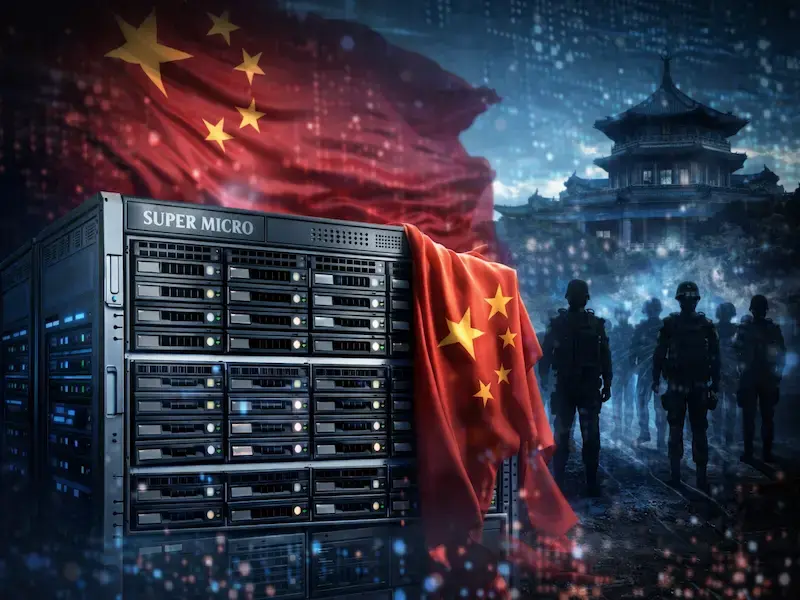
- Chinese universities with alleged military ties obtained servers made by Super Micro, according to Reuters.
- The development raises concerns about supply chains for high-performance computing infrastructure.
What happened: Hardware flows under scrutiny
Universities in China with links to the military have reportedly acquired servers produced by Super Micro Computer, according to Reuters.
The report states that the institutions obtained high-performance computing equipment despite increasing restrictions and scrutiny around the export of advanced technology to China.
Super Micro, a US-based company, produces servers widely used in data centres and artificial intelligence workloads. These systems are often deployed to support high-performance computing tasks, including research and AI development.
According to Reuters, the purchases were made through intermediaries, highlighting the complexity of global supply chains and the challenges involved in enforcing export controls.
The universities involved have been identified as having links to China’s military, raising concerns among policymakers about how such technology might be used.
The report underscores how advanced computing hardware has become a focal point in the broader technological competition between the United States and China.
Also Read: Anthropic Accuses Chinese AI Labs of Illicit Model Distillation
Also Read: US delays additional tariffs on Chinese chips until June 2027
Why it’s important
The development reflects growing geopolitical tension surrounding the control of advanced technology.
High-performance computing systems are increasingly seen as strategic assets, particularly in areas such as artificial intelligence, defence and scientific research. As a result, governments have introduced measures to restrict the export of certain technologies.
However, the Reuters report suggests that supply chains remain complex and difficult to regulate fully.
For technology companies, this creates additional compliance challenges as they navigate international regulations while maintaining global operations.
From a financial perspective, geopolitical risk is becoming an increasingly important factor influencing the semiconductor and hardware industries.
The situation also highlights the interconnected nature of the global technology ecosystem, where components, systems and services often cross multiple borders before reaching end users.
As artificial intelligence continues to drive demand for high-performance computing, access to hardware will remain a key point of competition between countries.
The case therefore illustrates a broader trend: technology supply chains are becoming arenas for geopolitical competition, with implications for companies, governments and global markets.
In this context, managing the flow of advanced computing infrastructure may become as important as developing the technology itself.