
Summary
- JSC ENERGO-PRO Georgia's strongest economic asset is not a global connectivity brand but a regulated, local electricity-distribution obligation across most of Georgia, backed by field crews, substations, customer systems and a public-service role that can matter when outages, billing disputes and connection delays carry real costs.
- The margin case remains unproven because the evidence points to a power-distribution operator with RIPE NCC membership and operational digital needs, not to a confirmed retail telecom, cloud or managed-network business. Pricing power would require proof that customers pay a distinct premium for local resilience and support rather than simply accepting regulated service, buying backup equipment, or using larger carriers and cloud platforms for the digital layer.
The Customer Pays For The Crew That Answers Nearby
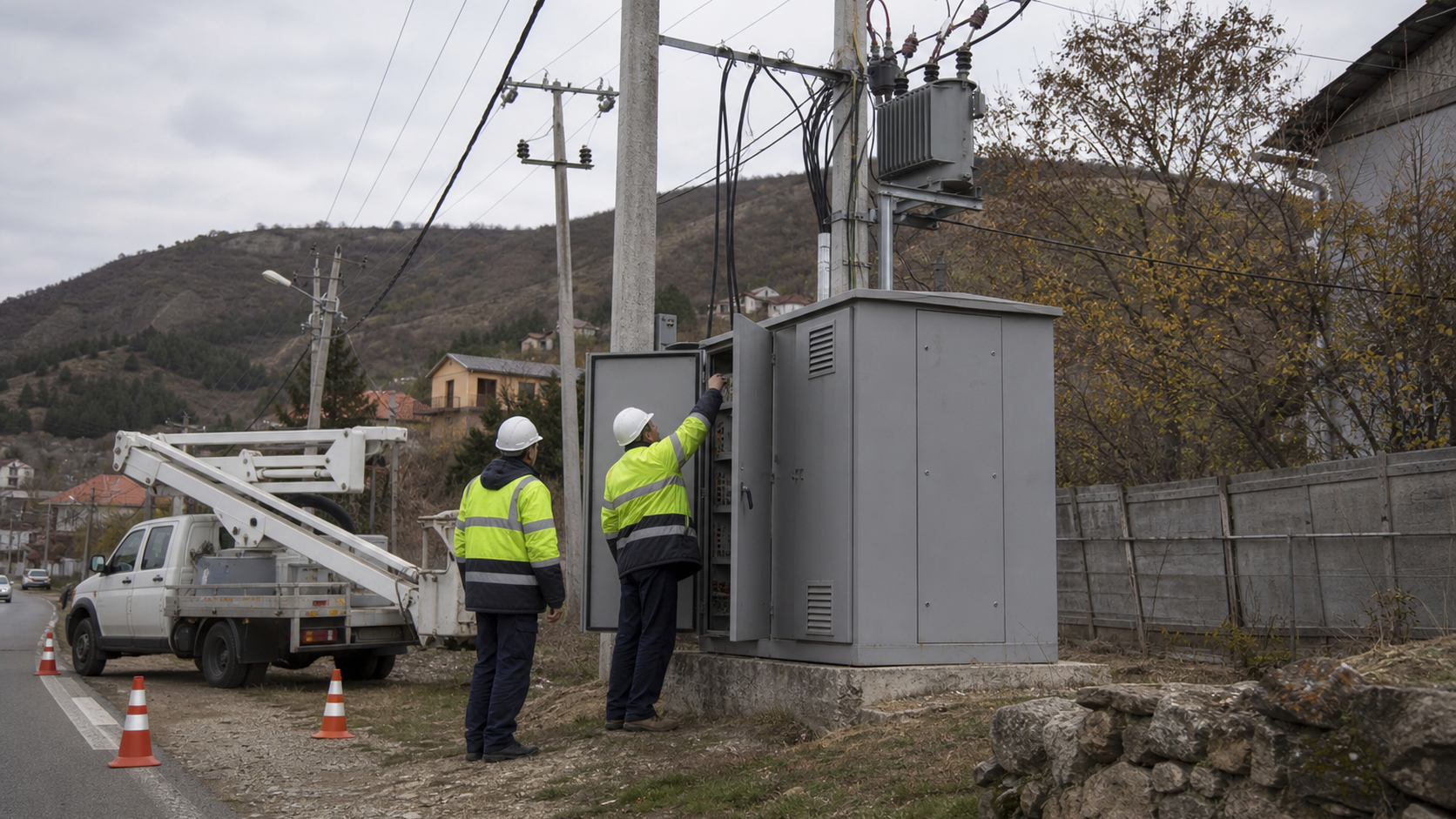
The economic incentive starts with a customer who does not want an abstract service promise. A municipality wants the lights to stay on during an election day. A supermarket wants a fault handled before refrigerated stock is lost. A small factory wants a new connection, a capacity increase or a meter dispute resolved without a chain of remote handoffs. A household in a regional town wants an outage notice and a reachable counterparty. In each case the thing with value is not only electricity. It is the presence of a local operator with a duty to maintain equipment, communicate interruptions, dispatch people and answer to a regulator.
That is the part of JSC ENERGO-PRO Georgia's position that buyers might pay for, directly or indirectly. Its official Georgian materials describe one of the largest energy companies in the South Caucasus by subscriber base and service area, divided into six branches and serving more than 1.2 million subscribers across Georgia's regions.
The ENERGO-PRO group page for Georgia gives an even more concrete operating picture: ENERGO-PRO Georgia JSC operates and maintains an electricity distribution network of 52,955 kilometres as of 31 December 2023, with a licence area covering roughly 85% of Georgia's territory and more than 1.3 million grid customers. This is not a desk-only enterprise. It is a dispersed operating system of lines, transformers, substations, meter points, service counters, dispatch routines and repair crews.
Local accountability has economic value because distribution failures do not feel interchangeable to the end user. A cloud platform can host a billing portal. A global carrier can sell connectivity. A managed-service provider can monitor devices. None of them can replace the owner of the local distribution asset when a low-voltage feeder fails or a customer needs a regulated connection. That gives ENERGO-PRO Georgia a natural support story: the company sits close to the physical fault and is answerable for the regulated service.
It can also use customer systems, outage notices and contact channels to reduce the perceived distance between a regional customer and the operator.
The hard question is whether that support story becomes durable margin. In regulated electricity distribution, better service can preserve allowed revenue, reduce penalties, improve collections and lower political risk. It does not automatically create an open-ended premium. If a tariff caps the distribution charge and a customer has few practical alternatives for grid access, the operator's job is to earn trust inside a regulated settlement, not to price like an enterprise software vendor.
Local accountability can produce value by reducing losses, shortening repair cycles, cutting call-centre escalation, improving meter reading and increasing payment discipline. It becomes pricing power only when customers or the regulator recognise those outcomes in allowed revenue, service fees, connection charges or performance incentives.
That distinction matters for a telecom-economics reading of the company. The presence of number-resource governance and digital customer channels is relevant, but the customer's willingness to pay is anchored in electricity continuity. The economic lens should not turn a distribution utility into a carrier merely because it operates communications systems. The margin question is narrower and more interesting: can a regionally embedded utility convert operational responsiveness into a measurable return after funding the crews, redundancy, cyber controls, billing platforms and supplier contracts required to deliver that responsiveness?
The Boundary Is Power Distribution, Not A Telecom Shortcut
The first discipline is to define the company by evidence rather than by analogy. JSC ENERGO-PRO Georgia is an electricity distribution company. The official ENERGO-PRO Georgia page says the company received a new licence in May 2021 and, from 1 July 2021, would conduct only electricity distribution in its coverage area. The ENERGO-PRO group page explains the legal separation more fully: ENERGO-PRO Georgia Holding JSC was established on 15 April 2021 to provide management and shared services to ENERGO-PRO Georgia JSC, EP Georgia Generation JSC and EP Georgia Supply JSC, and it owns 100% of those three companies.
EP Georgia Supply was created in May 2021 to carry out supply activities after distribution and supply were legally separated.
That boundary is central to the economics. Distribution is asset-heavy and territorially accountable. Supply is customer-facing energy sale. Generation owns and operates power plants. The group may benefit from the combined presence of all three activities under the holding company, but the article subject, JSC ENERGO-PRO Georgia, should be judged as the distribution operator. It owns or controls the local network assets, bears maintenance obligations and participates in a regulatory model that sets tariffs and service expectations.
It does not become a general telecom provider because the enterprise has internal communications, digital portals or RIPE NCC membership.
The IEA's Georgia energy profile reinforces that market structure. It describes a sector that has been largely unbundled, with Georgia pursuing reforms under Energy Community alignment and the Law on Energy and Water Supply. It also identifies Georgian State Electrosystem as the transmission system operator, moving electricity from generation and imports to distribution companies and direct customers. Distribution companies then deliver electricity to final customers.
The energy-security section states that the 2021 unbundling defined Telasi JSC and ENERGO-PRO Georgia JSC as electricity distribution system operators, while EP Georgia Supply and the Tbilisi supply company took public supply obligations in their respective areas.
This gives ENERGO-PRO Georgia a strong but bounded role. It is downstream from generation and transmission, upstream of final consumption, and exposed to customers at the point where infrastructure performance becomes visible. It carries the operational burden of poles, substations, transformers and low-voltage connections across difficult territory. It also sits inside a national reform effort that wants more competitive energy markets, clearer unbundling and improved security of supply. Those are not optional strategic slogans; they shape how revenue can be earned and what expenses must be carried.
The company therefore has two separate economic stories. The first is the regulated distribution story: maintain a wide network, connect customers, reduce losses, deliver reliable service and earn allowed revenue. The second is the digital operations story: use communications, portals, metering, cyber controls and number resources to run that distribution business more effectively. The second can support the first, but public evidence does not show that it is a standalone telecom business with separate product margins.
That is why larger carriers, global cloud platforms and managed-service substitutes matter as comparators rather than direct rivals. They compete for the digital layer around the utility: enterprise connectivity, cloud hosting, monitoring, customer applications and cyber tooling. A buyer who wants easier IT operations can turn to those providers. A buyer who needs a new grid connection, restoration after a local fault or accountable metering cannot. ENERGO-PRO Georgia's defensible position is strongest where physical distribution and local obligation meet.
Its weakest margin claims are where the service is purely digital and can be bought from a larger specialist.
Regulated Tariffs Put A Ceiling On The Simple Story
The tariff page on ENERGO-PRO Georgia's own website shows why the margin case cannot be reduced to "more customers means more pricing power." Distribution tariffs are published by voltage and customer category. The 35/110 kV distribution charge is listed at 3.727 tetri per kilowatt-hour for both household and non-household customers. The 3.3/6/10 kV level is listed at 7.441 tetri per kilowatt-hour.
Low-voltage 220/380 V non-household users and small enterprises are listed at 11.099 tetri per kilowatt-hour, while household bands at the same voltage are listed at 8.599, 11.099 and 12.403 tetri per kilowatt-hour depending on monthly consumption level.
Those numbers matter less as a forecast than as a structural warning. A distribution company with fixed tariffs must recover labour, maintenance, network losses, outage response, metering and capital needs within a regulated framework. Higher voltage customers pay a lower distribution rate because they use a different part of the network. Low-voltage customers place more demand on local transformation, dense service infrastructure and billing operations. Household tariff tiers introduce social and consumption-policy considerations that may constrain how much cost can be passed through quickly.
The company also operates inside public-service supply arrangements in its territory. The tariff page lists EP Georgia Supply as providing universal service, public service and last-resort supply, each with different supply tariffs and final customer charges including value-added tax. That supply company is legally separate from the distribution operator, but customers experience the system as a joined-up service. If the bill is confusing, the outage is long or the connection is slow, the public may not care which corporate entity carries the formal line item.
That creates reputational pressure on the distribution operator even where margin is allocated by regulation.
Regulated tariffs can still support value creation. A company that reduces technical losses, improves meter accuracy, lowers truck rolls, better plans maintenance and digitises customer interactions can defend operating margin even without raising headline tariffs. A wide service area offers scale for procurement, workforce training and standardised systems. Incentive regulation, where present, can reward efficiency. Better outage communication can reduce complaint handling. Faster connections can support local businesses and public-sector projects, improving the operator's standing with the regulator and government.
But the tariff evidence also limits the bullish story. If a distribution charge is set in tetri per kilowatt-hour, and if customers cannot freely negotiate higher distribution rates for premium local care, margin depends on cost discipline and regulatory recognition rather than unconstrained selling. A company can market its responsiveness, yet the revenue mechanism may still treat it as a network utility. It must fund the service level before it can prove the service level deserves a higher return.
That is where the labour-and-redundancy question enters. Local accountability requires people in the field, dispatch capacity, vehicles, spares, substation maintenance, cyber controls and backup processes. Each of those protects service quality but consumes cash. If the regulator or customer contract does not reward the improvement, the operator may gain goodwill while losing economic spread. The proof of margin would be visible in allowed revenue decisions, falling loss ratios, improved collection, fewer penalties, higher connection fees where permitted, and lower operating cost per customer served.
Without those facts, local accountability remains a necessary operating promise rather than a confirmed profit engine.
Local Control Has Value Only When It Lowers Customer Risk
The reason local control can command respect is simple: the downside of failure sits with the customer first. A hospital, water utility, municipal office, bank branch or mobile tower site does not measure reliability only in kilowatt-hours. It measures it in spoiled inventory, service interruption, public complaints, staff overtime and emergency backup fuel. For these customers, a reachable distribution operator can lower operational risk even when the formal electricity commodity is regulated.
ENERGO-PRO Georgia's branch structure and customer scale suggest a service model built around proximity. Its Georgian site lists regional branches, remote-service phone numbers, application channels, technical-condition requests, planned interruption notices, customer-change procedures and forms. The same site has service pages for new connections, temporary connections, power increases, reserve supply, network relocation and small power-plant connection.
The details of each procedure differ, but together they show the practical surface through which customers ask the operator to change the physical relationship between a site and the grid.
This is where local accountability can be worth paying for. A customer may tolerate a commodity price but still value certainty over whether a new warehouse can get capacity, whether a backup feed is feasible, whether a construction site can receive temporary power, or whether a small generator can connect under the rules. For public-sector and essential-service users, the value is often continuity rather than convenience. They want an operator that understands local roads, weather, seasonal demand and administrative realities.
The company's public announcements support that operating posture. Its homepage refers to customer warnings tied to the National Environment Agency's weather information, election-day emergency readiness, summer tourist-season safety reminders and internal trainer development. These are not proof of premium pricing, but they are evidence of a company that frames its role around regional service reliability and safety. A distribution operator that can move crews, communicate risks and train staff may reduce the probability that a local fault becomes a political or commercial event.
Still, customer-risk reduction must be converted into measurable economics. If a customer pays the same tariff regardless of support quality, the company's return is indirect. Better service may reduce complaint costs, regulator pressure and non-payment. It may help the company secure approvals for investments. It may make local authorities more cooperative when network works require access. It may protect the brand of the wider ENERGO-PRO group. Those are real advantages, but they are not the same as enterprise software-style recurring revenue.
The alternative for customers is not always another grid. Often it is self-protection: diesel generators, batteries, uninterruptible power supply equipment, private electricians, managed monitoring, cloud-based applications and redundant carrier links. These substitutes do not remove the need for the local electricity network, but they can cap how much customers attribute resilience to the distribution operator. If a factory believes the only reliable answer is its own backup system, ENERGO-PRO Georgia's local accountability may preserve the base relationship without earning an added premium.
The margin test is therefore behavioural. Do customers with high continuity needs choose paid connection upgrades, reserve arrangements or other regulated services because they trust ENERGO-PRO Georgia's local execution? Does the regulator recognise better performance in the cost base? Do outage and loss metrics improve enough to release cash? Do public-sector customers treat the company as a partner in continuity planning rather than merely the entity that sends a bill? Those answers would show whether local control lowers risk in a way that customers and the regulatory model monetise.
Scale Helps, But Geography Turns Scale Into Labour
Scale is the strongest easy argument for ENERGO-PRO Georgia. A network of 52,955 kilometres, more than 1.3 million grid customers and a licence area covering roughly 85% of Georgia's territory creates purchasing leverage, data volume and operational relevance. A small operator cannot spread billing systems, cyber tools, training programmes or specialist engineers across that base. A large operator can. The Georgian site also describes the company as one of the largest employers in the country, with around 6,000 professionals, while the group page lists 6,297 employees for Georgia.
Scale, however, is not free. In electricity distribution, serving many customers across a broad and mountainous country means more exposure to weather, road access, dispersed faults, old assets and low-density stretches of network. The IEA energy profile describes Georgia as a country with substantial hydropower, seasonal imbalances and a need for continued investment in energy security. The energy-security section notes that ENERGO-PRO Georgia's service area extended over 58,846 square kilometres, about 84% of the land base, and that it owns high-voltage grids, substations and transformers.
Those assets turn geographic reach into a continuous maintenance obligation.
This is the paradox of local accountability. Customers value a nearby operator because Georgia's regions are not interchangeable call-centre zones. Yet the same regional spread requires more people, more vehicles and more spare parts than a concentrated urban network. Tbilisi-focused Telasi may face its own density problems, but ENERGO-PRO Georgia faces the different cost of reach. The farther the customer from the nearest crew or warehouse, the more expensive the promise of rapid response becomes.
Labour also has a quality dimension. Distribution is increasingly digital and physical at the same time. Crews need safety discipline around energized assets. Engineers need grid-planning skills. Customer teams need to handle applications and disputes. IT teams need to secure customer data, operational communications and number-resource records. The official announcement about internal trainers is small but useful evidence: the company knows workforce capability is not a side issue. If service quality depends on local crews, training becomes part of the margin equation.
This labour cost is where larger managed-service substitutes can look attractive to buyers and to the utility itself. A cloud provider can run standard software platforms at large scale. A global carrier can provide connectivity with established enterprise support processes. A specialist can monitor equipment remotely. ENERGO-PRO Georgia can buy or integrate such tools, but it cannot outsource the whole customer promise, because the physical network remains local. The company can use global suppliers to reduce unit costs; it cannot let them own the accountability that gives the utility its distinctive value.
The margin implication is mixed. Scale should help with procurement and system standardisation. It should also provide a rich base of operating data for better planning. But broad geography converts scale into recurring field cost. If the network is old, weather-exposed or loss-prone, each added customer may demand more capital and labour than the headline count suggests. A persuasive margin case would therefore need cost-per-customer, cost-per-kilometre, interruption, loss and collection data over time. Customer count alone is not enough.
Redundancy Costs Money Before It Creates Pricing Power
The core question asks whether the company can recover the capital and operating cost of local network control. Redundancy is the cleanest way to test that question. Customers like redundancy after a failure. They rarely like paying for it before a failure. A second feed, a stronger transformer, additional switching capability, better communications, backup control systems and cyber resilience all reduce risk, but each adds cost that must be justified through tariffs, connection fees, lower losses or avoided penalties.
Georgia's wider energy system makes redundancy especially important. The IEA profile says roughly 80.5% of Georgia's electricity generation came from hydropower in 2021, with the rest from natural gas and wind. It also notes that gas imports are highest during winter, when heating demand rises and hydropower capacity is lower. The IEA 2020 review states that Georgia has faced a growing supply-demand gap, with domestic hydropower abundant in summer but reduced in winter, supplemented by imports and thermal generation.
This seasonality sits above ENERGO-PRO Georgia, but it affects the environment in which distribution reliability is judged.
The distribution operator cannot solve national generation seasonality on its own. It can, however, manage the last-mile consequences of demand growth, voltage constraints, maintenance timing, outage communication and connection planning. It can also prepare for more distributed resources. The IEA energy-security chapter notes that GNERC developed a net-metering framework and that Georgia has been facilitating micro hydropower and solar systems. ENERGO-PRO Georgia's own service menu includes small power-plant network connection.
That points to a future in which distribution operators must handle not only one-way delivery but more complex local flows.
More complexity increases the value of local control while raising the cost of control. A customer with rooftop solar, batteries, electric-vehicle charging or process automation may need more sophisticated grid interaction. A municipality that wants continuity during weather events may value pre-planning with the distribution operator. But smart switching, metering, communications and engineering capacity are capital-intensive. If the tariff model does not reward them, they become unfunded obligations.
This is where telecom economics is useful. A telecom network operator knows that redundancy is both a sales argument and a capital burden. The same logic applies here, but with a regulated electricity twist. ENERGO-PRO Georgia's RIPE NCC membership suggests it has enough operational networking need to participate in number-resource governance. That can support internal systems, customer platforms or operational communications. It does not prove customers are buying telecom services. The more relevant inference is that digital resilience is part of running the electricity network.
Redundancy creates pricing power only when buyers can see the difference between the local operator and a cheaper alternative. If a managed-service provider can promise monitoring but cannot fix the transformer, the distribution operator retains a unique role. If a cloud platform can host the customer portal but cannot guarantee field response, local accountability remains valuable. If a carrier can sell connectivity but cannot restore electricity, it is a complement more than a substitute. But if customers do not pay for those distinctions, redundancy stays mostly a cost.
The facts that would prove the point are concrete: approved investment plans linked to reliability outcomes, regulator-accepted asset-base growth, lower outage duration, fewer technical losses, paid reserve-connection services, and customer segments that choose higher-cost connection or continuity options because they trust ENERGO-PRO Georgia's execution. Without that evidence, redundancy is prudent infrastructure spending, not yet a demonstrated margin moat.
Suppliers And Upstream Markets Decide Part Of The Margin
No distribution operator controls all of its economics. ENERGO-PRO Georgia's local network sits inside a national electricity system with generation, imports, transmission, balancing and supply rules. The IEA profile identifies Georgian State Electrosystem as the transmission operator, with thousands of kilometres of transmission lines, 93 substations, a National Dispatch Centre and cross-border links to Russia, Turkiye, Armenia and Azerbaijan. GSE moves electricity from hydro, thermal and wind plants and from imports to distribution companies and direct customers.
That means the distribution operator's customer-facing reliability partly depends on upstream system adequacy.
The wider ENERGO-PRO group owns generation in Georgia through EP Georgia Generation, which the group page says owns and operates 15 medium-sized hydropower plants with total capacity of 494 MW. The same page notes that LLC gPower, held by EP Georgia Generation, owns a 110 MW Gardabani gas-fired thermal plant that provides guaranteed reserve capacity for Georgia's unified electricity system. These assets belong to sister entities, not to the distribution company itself, but they shape group-level strategic context.
A group with generation, supply and distribution knowledge may coordinate investment insight better than a standalone distribution operator, while still respecting unbundling rules.
The group-level 2025 update adds useful financial context. ENERGO-PRO reported consolidated revenue of EUR 1.491 billion and EBITDA of EUR 348 million for 2025. Hydropower generation reached 4,363 GWh, while the distribution segment increased volumes in Georgia by 1% and continued reducing grid losses. It also reported 5,581 GWh of electricity distributed in Georgia and 4,292 GWh of electricity sales in Georgia, while group capital expenditure reached EUR 193 million, 64% of it in the distribution segment.
Those numbers are not JSC ENERGO-PRO Georgia standalone margin, but they show that distribution remains a major capital destination for the group.
Supplier dependence cuts both ways. A group-backed distributor can draw on parent-company expertise, procurement relationships, financing access and hydropower experience. It may buy meters, transformers, IT systems, vehicles and grid equipment on better terms than a smaller local operator. It may also benefit from group discipline around sustainability, anti-corruption policy and investor reporting. These advantages can lower cost of capital and improve execution.
At the same time, distribution spending competes with other group priorities. The 2025 update highlights acquisitions in Brazil and Turkiye, weaker hydrological conditions in several countries, higher realized electricity prices in some markets and significant debt. A multinational group allocates capital where returns are clearest. If Georgian distribution requires heavy investment but offers tightly regulated returns, the local company must make a strong case that reliability, loss reduction and customer service will produce acceptable payback.
There is also an upstream fuel and import risk. Georgia relies on imported natural gas and oil products for much of its energy system, even though electricity generation is heavily hydro-based. Winter demand, hydrological variability and regional electricity trade can affect system stress. A distribution operator can be operationally excellent and still face public pressure when upstream supply is tight. That makes local accountability politically useful but economically uncomfortable: the customer may blame the visible operator for problems created elsewhere in the chain.
The margin judgement therefore depends on how much upstream and supplier risk is passed through, absorbed or rewarded. If tariffs and regulation allow efficient recovery of necessary investment, ENERGO-PRO Georgia can fund local control. If cost inflation in equipment, labour, cyber systems and vehicles outruns allowed revenue, local control compresses margin. The company needs not only customers; it needs a regulatory settlement that recognises the real supplier cost of being the accountable regional operator.
Cloud And Managed-Service Substitutes Compete For The Easy Premium
The digital part of the story is where competition becomes most direct. A regional electricity distributor needs communications, customer data, billing systems, outage-management tools, cyber controls, operational monitoring and external connectivity. But most of those layers can be supplied by larger specialists. Cloud platforms sell hosting and analytics. Carriers sell enterprise connectivity and redundancy. Managed-service providers sell monitoring, security and support. Equipment vendors sell grid automation.
None of these substitutes owns ENERGO-PRO Georgia's distribution obligation, but they can capture much of the digital margin around it.
This is why RIPE NCC membership must be read carefully. The RIPE member page identifies JSC ENERGO-PRO Georgia at its Tbilisi address, with serviced areas listed as Czech Republic, Georgia and Turkiye. It confirms participation in a regional internet-number governance system. That is relevant for operational networking, addressing, routing administration and institutional visibility. It is not proof that the company sells public internet access, cloud services or IP transit. Treating it as such would inflate the economic thesis beyond the evidence.
The practical reading is stronger because it is narrower. A company that runs a huge electricity distribution network needs reliable digital infrastructure. It may need its own address resources for internal systems, customer platforms, operational communications, monitoring or cross-border group functions. That capability can make the utility less dependent on a single outside provider and more competent as a buyer of telecom services. It may also help with cyber governance and continuity. But the customer is still paying primarily for electricity distribution, not for a substitute to a global carrier.
Managed-service substitutes matter because they reduce the scarcity of digital competence. If ENERGO-PRO Georgia wants a better customer portal, cloud hosting is available. If it wants secure connectivity among offices or substations, carriers and integrators compete. If it wants analytics, vendors will sell them. The company may choose to keep some control in-house, but it must justify that choice against the price and maturity of outside providers. Local accountability is not a reason to build everything internally; it is a reason to own the parts where failure would damage the public-service promise.
This creates a useful strategic split. ENERGO-PRO Georgia should be locally deep and digitally selective. It needs enough internal capability to specify, supervise and secure critical systems. It needs enough number-resource and network governance to avoid being a passive buyer. It needs operational data to understand faults, losses and service quality. But it does not need to mimic a cloud platform or a carrier. The economic win is not to outscale hyperscale or telecom groups. It is to use bought-in scale where it is cheaper and preserve local control where it is scarce.
For customers, that split means ENERGO-PRO Georgia's value must be tied to outcomes that external digital vendors cannot deliver alone. Faster restoration, clearer connection decisions, fewer billing errors, safer field work, lower losses and accountable regional service are defensible. Generic hosting, dashboards or connectivity are not. The company can defend margin when digital systems lower the cost of electricity distribution or improve regulated performance. It will struggle to defend margin if it tries to charge for digital services that larger providers can supply more simply.
Public Accountability Can Win Trust Without Becoming A Moat
Public accountability is visible across the company's materials. It publishes tariffs. It lists application routes and service procedures. It warns customers about weather and safety risks. It announces emergency work modes for election day. It provides contact channels, including remote service numbers. These facts matter because a regional utility's brand is built less by advertising than by repeated moments of stress: the storm, the unpaid bill, the delayed connection, the damaged line, the confusing meter reading.
Trust can create economic value even when it does not create a monopoly premium. A trusted operator may face fewer disputes, lower collection friction and more acceptance of planned works. Customers may report faults faster. Municipalities may coordinate road access. Regulators may view investment requests with less suspicion. Employees may stay longer if the company is seen as professionally run. Those benefits are hard to isolate in a line item, but in a field-heavy utility they can matter.
Public accountability also shapes the downside. A company serving more than a million customers across most of a country cannot hide service weaknesses. Poor outage communication, safety incidents or repeated billing problems become political issues. The larger the footprint, the larger the audience for failure. That means ENERGO-PRO Georgia must spend on service quality even where the immediate revenue return is not obvious. The alternative is a higher cost of complaints, interventions and reputational damage.
This is different from the economics of a voluntary enterprise technology contract. If a company dislikes a software vendor, it can switch at renewal. If a household depends on the local distribution network, switching is not realistic. That creates regulatory and political safeguards around price and service. The operator may have a captive physical role, but that captivity invites public scrutiny. The moat is therefore not pure pricing power; it is a responsibility that must be performed well enough to keep the regulated compact stable.
The company's public role during weather and election events is especially relevant to "public-sector continuity" as a topic. Election-day readiness signals that continuity is not only commercial. It can be civic. A distribution operator that keeps service stable during public events supports institutional trust. But again, the economic return is indirect unless performance is recognised in tariffs, contracts or regulatory decisions. Civic value may justify investment; it does not automatically fund it.
This should discipline the investment thesis. ENERGO-PRO Georgia can win trust through local accountability, but trust is not the same as a defensible spread over cost. It can improve the odds that the regulator permits necessary investment. It can reduce the risk of political backlash. It can make customers more willing to engage with connection and safety processes. But if labour, equipment and cyber costs rise faster than the allowed return, trust alone will not protect margin.
The strategic question is therefore not whether public accountability matters. It plainly does. The question is whether the company can turn that accountability into operational metrics that money recognises: lower losses, fewer outages, faster restoration, better collections, approved capital recovery and paid services where regulation permits. A public-service reputation becomes a moat only when it changes the cost or revenue curve.
The RIPE Membership Is A Governance Signal, Not A Product
The number-resource evidence is small but important. The RIPE NCC member page lists JSC ENERGO-PRO Georgia with a Tbilisi address, phone, fax, email contact and serviced areas including Georgia, Czech Republic and Turkiye. It places the company inside the public governance system for internet number resources in the RIPE NCC region. For a utility group with multiple countries, operational systems and customer channels, that is a meaningful institutional signal.
It should not be inflated. A RIPE membership entry does not prove the company sells broadband, IP transit, managed networking or cloud products. It does not show customer revenue from telecom services. It does not identify a public retail offer. It simply demonstrates that the company or group has a formal reason to participate in number-resource administration. That reason may be internal networking, address management, operational resilience, group coordination or another legitimate operational need.
The economic relevance lies in governance and optionality. Utilities are becoming more communications-dependent. Smart meters, remote switching, customer portals, outage maps, field devices, cyber monitoring and coordination with suppliers all require reliable digital infrastructure. A company that treats number-resource governance seriously may be better positioned to supervise vendors, avoid single-provider dependence and maintain continuity. It may also have a stronger internal capability to understand routing, addressing and operational risk.
But optionality is not margin by itself. Customers do not pay a premium because a utility appears in a RIPE member list. They pay if the utility's digital capability reduces outage time, improves service, protects data, supports reliable metering or enables faster customer workflows. The RIPE evidence therefore belongs in the "network-resource evidence" topic as supporting context, not as the centre of the investment thesis.
This distinction also protects the article from a category error. ENERGO-PRO Georgia's economic control surface is the electricity distribution network. Its digital control surface supports that network. Larger carriers and cloud providers remain relevant because they can supply many parts of the digital control surface. But they do not erase the need for the local distribution operator. The company should be analysed as a buyer, operator and governor of critical digital dependencies, not as a confirmed competitor to telecom specialists.
The facts that would strengthen the RIPE-related thesis are specific. Public routing records tied clearly to operational systems, disclosed autonomous-system use, resilience architecture, customer-facing digital-service revenue, cyber-certification evidence or regulated digital-investment allowances would all matter. So would proof that public-sector or enterprise customers value ENERGO-PRO Georgia's local digital control in continuity planning. In the absence of those facts, the RIPE membership is best treated as a credible sign of operational seriousness and number-resource governance, not a standalone business line.
That modest reading is still useful. A regional electricity distributor that lacks digital competence may become overly dependent on suppliers and slow to respond to customers. A distributor that understands its digital dependencies can buy better, govern better and recover faster. ENERGO-PRO Georgia's margin case improves if number-resource governance supports lower operating risk. It weakens if the evidence is used to imply telecom revenue that is not publicly demonstrated.
The Facts That Would Change The Margin Judgment
The current judgment is balanced but cautious. JSC ENERGO-PRO Georgia has a powerful local-accountability position because it operates a wide electricity distribution network, serves more than a million customers, sits inside a group with energy assets and has public evidence of number-resource governance. It also works in a country where energy security, hydropower seasonality, import dependence and EU-aligned market reform make reliable local distribution strategically important. Those are real advantages.
The caution comes from the revenue mechanism. Distribution tariffs are regulated and published. The company's role was legally narrowed to distribution from July 2021, while supply and generation sit in separate group entities. Local support, workforce depth and digital resilience all cost money before they earn recognition. Larger carriers, cloud platforms and managed-service providers can capture much of the generic digital value around the utility. Customers can also buy backup systems and third-party monitoring to reduce their dependence on the grid operator's service quality.
ENERGO-PRO Georgia therefore cannot assume that local accountability automatically produces pricing power.
The first fact that would change the judgment is a clear regulatory return story. If GNERC decisions, tariff methodologies or investment approvals show that ENERGO-PRO Georgia can recover modernisation capital and earn an adequate return for reliability, digital controls and loss reduction, the margin case strengthens. Published tariffs show the charge surface, but not the full allowed-return mechanics or performance incentives. Investors need the bridge between service obligations and recoverable cash.
The second fact is operating performance over time. Network-loss reduction, interruption frequency, interruption duration, restoration time, complaint rates, connection backlog, collection efficiency and cost per customer would show whether scale is improving economics or simply increasing work. ENERGO-PRO group says Georgia distribution volumes rose 1% in 2025 and grid losses continued to fall, but company-specific detail would be more persuasive. A distributor that lowers losses while keeping service quality high can create value even under tight tariffs.
The third fact is customer willingness to pay for continuity-related services. Evidence that public-sector bodies, industrial users, telecom tower operators, hospitals or commercial customers choose paid reserve supply, capacity upgrades, temporary connections or specialised service arrangements would turn local accountability into a clearer revenue story. The more those choices are voluntary and repeated, the more they indicate pricing power. If such services are only regulated obligations at cost, the thesis is weaker.
The fourth fact is digital resilience proof. RIPE membership is a starting point, not an end point. Public evidence of secure operational networking, cyber investment, customer-platform reliability, smart metering economics or vendor diversification would show whether the company can use digital control to lower risk. Evidence of digital-service revenue would be stronger, but even internal cost savings could matter.
The fifth fact is capital allocation inside the ENERGO-PRO group. The 2025 group update says 64% of capital expenditure went to distribution. If a meaningful share is directed to Georgia and tied to measurable returns, local distribution remains a priority. If group acquisitions elsewhere absorb capital while Georgian distribution faces rising maintenance needs, the local margin story becomes less compelling.
On current evidence, the answer to the title question is conditional. JSC ENERGO-PRO Georgia can turn local accountability into margin if it proves that service proximity lowers losses, improves collections, earns regulatory recovery and attracts paid continuity-related work from customers that cannot get the same outcome from carriers, cloud platforms or managed-service substitutes. It cannot do so merely by being large, locally present or visible in number-resource governance. The asset is local trust. The test is whether that trust changes the economics after labour, redundancy and supplier costs are paid.