Nokia–Kongsberg sign 5G defence MoU is profiled by BTW Media because public-source evidence links it to internet infrastructure, governance, operational dependencies, or market visibility.
Nokia–Kongsberg sign 5G defence MoU is tracked as a internet infrastructure institution within the internet infrastructure ecosystem.
Nokia–Kongsberg sign 5G defence MoU has public-source relevance to network operations, governance, dependency mapping, or market structure.
Nokia–Kongsberg sign 5G defence MoU has public-source relevance to network operations, governance, dependency mapping, or market structure.
Nokia–Kongsberg sign 5G defence MoU is tracked as a internet infrastructure institution within the internet infrastructure ecosystem.
Public-source signals support medium-impact monitoring for infrastructure visibility and dependency analysis.
Nokia–Kongsberg sign 5G defence MoU is profiled by BTW Media because public-source evidence links it to internet infrastructure, governance, operational dependencies, or market visibility.
Public-source signals support medium-impact monitoring for infrastructure visibility and dependency analysis.
| 0.90–1.00 | A | High — direct sources |
| 0.75–0.89 | A/B | Strong |
| 0.55–0.74 | B/C | Medium |
| 0.35–0.54 | C/D | Weak–medium |
| 0.10–0.34 | D | Weak signal |
| 0.00–0.09 | D | Internal monitoring |
Mixed-source
- Collaboration targets secure, interoperable battlefield networks; scope includes unmanned systems, sensors and EU Defence Fund projects.
- Move reflects wider European defence-5G momentum, from Nokia’s work with blackned in Germany to Kongsberg’s JV with Thales.
What happened: Partners align on deployable 5G
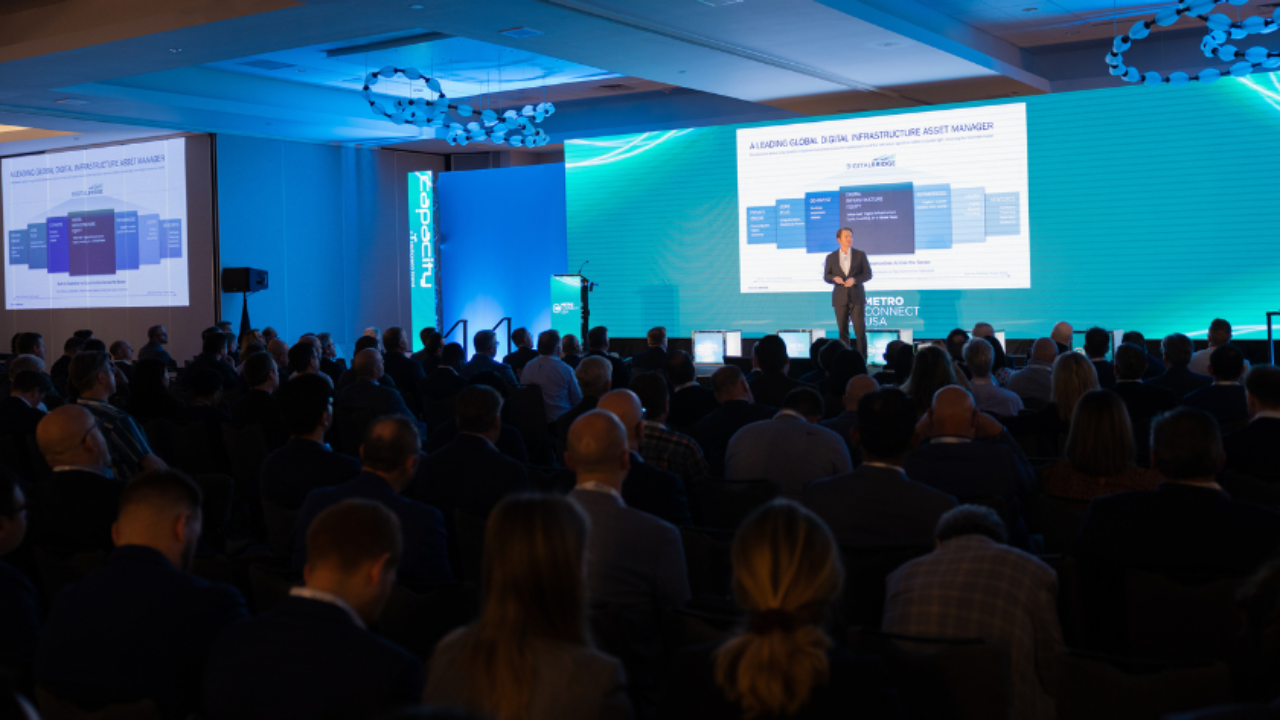
Nokia said the MoU with Kongsberg Defence & Aerospace combines its 4G/5G and private-wireless portfolio with Kongsberg’s tactical comms to deliver secure, resilient field connectivity for defence organisations and allies. Early focus is on simplifying deployable 5G; the roadmap also references integrating unmanned systems and sensors, plus participation in European Defence Fund initiatives such as 5G COMPAD and FACT.
The announcement links directly to Kongsberg’s defence communications pedigree and to official EU documentation on the 5G communications programme.
Also Read: AT&T’s ORAN shift: A game-changer for telecom giants
Also Read: Ericsson unveils rapid-deploy radios for crisis and public safety use
Why it’s important
Defence users want commercial-grade bandwidth with mission assurance. Nokia says it will explore 6G “network-as-a-sensor” concepts to boost situational awareness, while the EU programmes cited aim to standardise testing and interoperability for cyber-physical systems. If realised, this could shorten deployment cycles and allow coalition forces to field interoperable, software-defined networks faster.
Yet questions remain. Procurement and export controls, spectrum access, crypto/interoperability baselines, and cyber-hardening will decide whether pilots translate to doctrine. Europe’s market is moving—Nokia has separately teamed with blackned on German tactical networks, and Kongsberg formed a defence-comms JV with Thales—signalling demand but also multiple architectures. Outcomes will hinge on open interfaces, ruggedisation and the ability to integrate radios, satellite and 5G under a single C2 framework.
Core Entity Brief
- Entity: Nokia–Kongsberg sign 5G defence MoU
- Subject Type: Internet infrastructure institution
- Region: Europe and Middle East
- Classification: Institution Type
Service Surface / Control Surface
- Public records support monitoring of governance, service, and infrastructure control surfaces.
Governance and Policy Surface
- Public-source signals support medium-impact monitoring for infrastructure visibility and dependency analysis.
- Operational criticality: Medium
- Time horizon: Quarter (30-120d)
Decision Trigger Matrix
- Monitoring focuses on verified service continuity, governance changes, and relationship signals.
Current state favours active tracking due to infrastructure relevance.
Public-source signals support medium-impact monitoring for infrastructure visibility and dependency analysis.
Long-cycle infrastructure decisions likely to remain path-dependent.
Member Unlock
Restricted Profile Intelligence
Login is required to unlock full profile briefings and deep-dive sections.
Only for Strategy Circle
Strategic Circle Access
Open to all readers. Unlock profile briefings after joining and logging in.
Join Strategic CircleOnly for Leadership Alliance
Leadership Alliance Access
For owners and management of IP-holding companies. Login required to unlock.
Join Leadership Alliance