AUG East subsea cable to revolutionise East Asia connectivity is profiled by BTW Media because public-source evidence links it to internet infrastructure, governance, operational dependencies, or market visibility.
AUG East subsea cable to revolutionise East Asia connectivity is tracked as a internet infrastructure institution within the internet infrastructure ecosystem.
AUG East subsea cable to revolutionise East Asia connectivity has public-source relevance to network operations, governance, dependency mapping, or market structure.
AUG East subsea cable to revolutionise East Asia connectivity has public-source relevance to network operations, governance, dependency mapping, or market structure.
AUG East subsea cable to revolutionise East Asia connectivity is tracked as a internet infrastructure institution within the internet infrastructure ecosystem.
Public-source signals support medium-impact monitoring for infrastructure visibility and dependency analysis.
AUG East subsea cable to revolutionise East Asia connectivity is profiled by BTW Media because public-source evidence links it to internet infrastructure, governance, operational dependencies, or market visibility.
Public-source signals support medium-impact monitoring for infrastructure visibility and dependency analysis.
| 0.90–1.00 | A | High — direct sources |
| 0.75–0.89 | A/B | Strong |
| 0.55–0.74 | B/C | Medium |
| 0.35–0.54 | C/D | Weak–medium |
| 0.10–0.34 | D | Weak signal |
| 0.00–0.09 | D | Internal monitoring |
Mixed-source
- Strengthening network diversity and resilience across eight countries.
- Positioned to handle explosive growth in AI-generated traffic by 2033.
What happened: A Singtel‑led consortium partners with NEC to build AUG East submarine cable
Singtel, chairing a consortium comprised of Amazon Web Services, Microsoft, ARTERIA Networks, Chunghwa Telecom, DREAMLINE, Globe Telecom, Telekom Malaysia, and Unified National Networks, has signed a contract with NEC Corporation to build the Asia United Gateway East (AUG East) submarine cable.
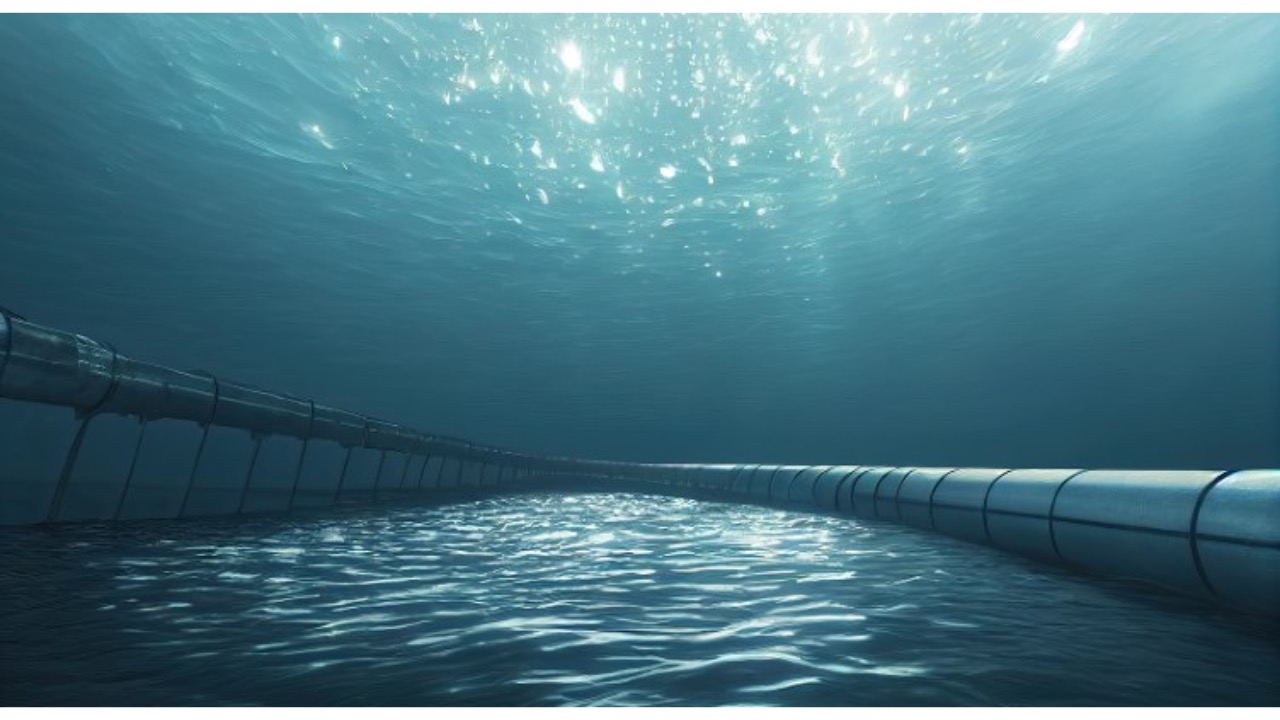
Spanning approximately 8,900 km, the cable will connect Singapore with Japan and land in Brunei, Indonesia, Malaysia, the Philippines, South Korea, and Taiwan. Completion is scheduled for Q3 2029. The system will feature high‑count fibre pairs capable of supporting millions of simultaneous ultra‑high‑definition video streams.
Alan Tan, chair of the Asia United Gateway Cable Management Committee and director of Submarine Cable Planning at Singtel, emphasised that the surge in AI innovation is driving the need for resilient, high‑capacity digital infrastructure.
Also read: Singapore agency partners with Singtel for network slicing
Also read: Singtel and Ericsson power Singapore’s Tuas Port’s automation with 5G
Why it’s important
The AUG East cable arrives at a pivotal moment: a report from Light Reading cites Omdia projections that by 2033, roughly 62 per cent of global monthly network traffic will derive from AI and AI‑enhanced applications. This infrastructure is therefore strategically essential for meeting this demand.
By connecting two major digital hubs—Singapore and Tokyo, Japan—the cable will bolster network diversity and reliability along a major route. That, in turn, supports enhanced digital inclusion and economic development across Asia Pacific. Moreover, NEC’s proven track record in submarine cables reassures project robustness.
In a wider context, this initiative aligns with global cloud and content providers increasingly investing in their own submarine infrastructure—Microsoft and Facebook’s MAREA transatlantic cable and Google’s Indigo cable are prime examples. With the region’s digital economy expanding in AI, fintech, and cloud services, the AUG East cable will be pivotal in sustaining data-hungry growth.
Core Entity Brief
- Entity: AUG East subsea cable to revolutionise East Asia connectivity
- Subject Type: Internet infrastructure institution
- Region: Asia Pacific
- Classification: Institution Type
Service Surface / Control Surface
- Public records support monitoring of governance, service, and infrastructure control surfaces.
Governance and Policy Surface
- Public-source signals support medium-impact monitoring for infrastructure visibility and dependency analysis.
- Operational criticality: Medium
- Time horizon: Quarter (30-120d)
Decision Trigger Matrix
- Monitoring focuses on verified service continuity, governance changes, and relationship signals.
Current state favours active tracking due to infrastructure relevance.
Public-source signals support medium-impact monitoring for infrastructure visibility and dependency analysis.
Long-cycle infrastructure decisions likely to remain path-dependent.
Member Unlock
Restricted Profile Intelligence
Login is required to unlock full profile briefings and deep-dive sections.
Only for Strategy Circle
Strategic Circle Access
Open to all readers. Unlock profile briefings after joining and logging in.
Join Strategic CircleOnly for Leadership Alliance
Leadership Alliance Access
For owners and management of IP-holding companies. Login required to unlock.
Join Leadership Alliance