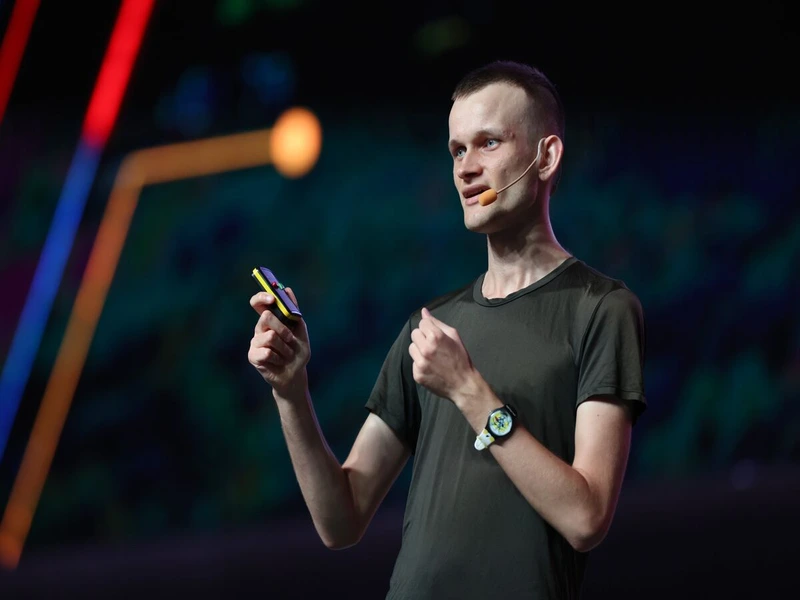
Vitalik Buterin supports privacy-preserving zk ID systems for Web3 is profiled by BTW Media because public-source evidence links it to internet infrastructure, governance, operational dependencies, or market visibility.
Vitalik Buterin supports privacy-preserving zk ID systems for Web3 is tracked as a internet infrastructure institution within the internet infrastructure ecosystem.
Vitalik Buterin supports privacy-preserving zk ID systems for Web3 has public-source relevance to network operations, governance, dependency mapping, or market structure.
Vitalik Buterin supports privacy-preserving zk ID systems for Web3 has public-source relevance to network operations, governance, dependency mapping, or market structure.
Vitalik Buterin supports privacy-preserving zk ID systems for Web3 is tracked as a internet infrastructure institution within the internet infrastructure ecosystem.
Public-source signals support medium-impact monitoring for infrastructure visibility and dependency analysis.
Vitalik Buterin supports privacy-preserving zk ID systems for Web3 is profiled by BTW Media because public-source evidence links it to internet infrastructure, governance, operational dependencies, or market visibility.
Public-source signals support medium-impact monitoring for infrastructure visibility and dependency analysis.
| 0.90–1.00 | A | High — direct sources |
| 0.75–0.89 | A/B | Strong |
| 0.55–0.74 | B/C | Medium |
| 0.35–0.54 | C/D | Weak–medium |
| 0.10–0.34 | D | Weak signal |
| 0.00–0.09 | D | Internal monitoring |
Mixed-source
- Ethereum co-founder Vitalik Buterin backs “pluralistic” zero-knowledge ID systems for digital identity management.
- He argues they can offer privacy and prevent centralized control while allowing different providers to coexist.
What happened: Buterin proposes zk-based IDs to protect user privacy
Vitalik Buterin, co-founder of Ethereum, has published a blog post endorsing the development of pluralistic zero-knowledge (zk) digital ID systems as the most realistic way to preserve privacy in an increasingly digital world. In the post, Buterin explains that zero-knowledge proofs can verify data (like citizenship or reputation) without revealing unnecessary personal information.
Buterin suggests a decentralised and pluralistic model for identity, where multiple issuers—governments, communities, or online services—can operate together without one central authority. He critiques singular, top-down identity models such as India’s Aadhaar system or Facebook’s login infrastructure, which consolidate control and increase privacy risks. His proposed model would instead allow different types of zk ID schemes—such as Proof of Humanity, BrightID, and IDen3—to work in parallel.
He also highlights the importance of making zk ID systems usable for both humans and smart contracts, combining social and technical verification layers.
Also read: Vitalik Buterin proposes partially stateless Ethereum nodes for better scalability
Also read: Ethereum Pectra upgrade exposes wallet vulnerability’
Why it’s important
Digital identity is central to the future of online interaction, especially as platforms require stronger verification while users demand more privacy. Buterin’s stance supports a growing shift toward identity systems that do not rely on central databases or surveillance. Zero-knowledge (zk) proofs, a cryptographic method allowing data verification without exposure, are increasingly viewed as a solution to the tension between transparency and confidentiality.
Governments and tech companies have often leaned toward centralised ID models, but these raise concerns about censorship, exclusion, and data misuse. In contrast, zk-based identity systems align with the Web3 ethos of decentralisation and user sovereignty. For example, Polygon ID, based on zk tech, is already being tested in some ecosystems to verify identity without storing personal data.
Buterin’s support may influence developers and policymakers to invest in privacy-first solutions rather than replicating old models in digital form. The pluralistic structure he proposes reflects blockchain’s broader principles—interoperability, choice, and minimal trust in any single party.
Core Entity Brief
- Entity: Vitalik Buterin supports privacy-preserving zk ID systems for Web3
- Subject Type: Internet infrastructure institution
- Region: Asia Pacific
- Classification: Institution Type
Service Surface / Control Surface
- Public records support monitoring of governance, service, and infrastructure control surfaces.
Governance and Policy Surface
- Public-source signals support medium-impact monitoring for infrastructure visibility and dependency analysis.
- Operational criticality: Medium
- Time horizon: Quarter (30-120d)
Decision Trigger Matrix
- Monitoring focuses on verified service continuity, governance changes, and relationship signals.
Current state favours active tracking due to infrastructure relevance.
Public-source signals support medium-impact monitoring for infrastructure visibility and dependency analysis.
Long-cycle infrastructure decisions likely to remain path-dependent.
Member Unlock
Restricted Profile Intelligence
Login is required to unlock full profile briefings and deep-dive sections.
Only for Strategy Circle
Strategic Circle Access
Open to all readers. Unlock profile briefings after joining and logging in.
Join Strategic CircleOnly for Leadership Alliance
Leadership Alliance Access
For owners and management of IP-holding companies. Login required to unlock.
Join Leadership Alliance