Summary
- Bangladesh Submarine Cables PLC sold 650 Gbps of SMW-5 capacity to Saudi Telecom, 13 Gbps to Orange for the rest of the cable's life, and 200 Gbps to Telekom Malaysia for ten years — the three named buyers add up to exactly the 863 Gbps the FY2024-25 report says was leased out.
- The capacity the company buys to keep traffic moving is contracted through tenders with one-year-plus-one-year renewals and two-year initial terms, so the durable commitments in these accounts sit on the side facing away from Bangladesh.
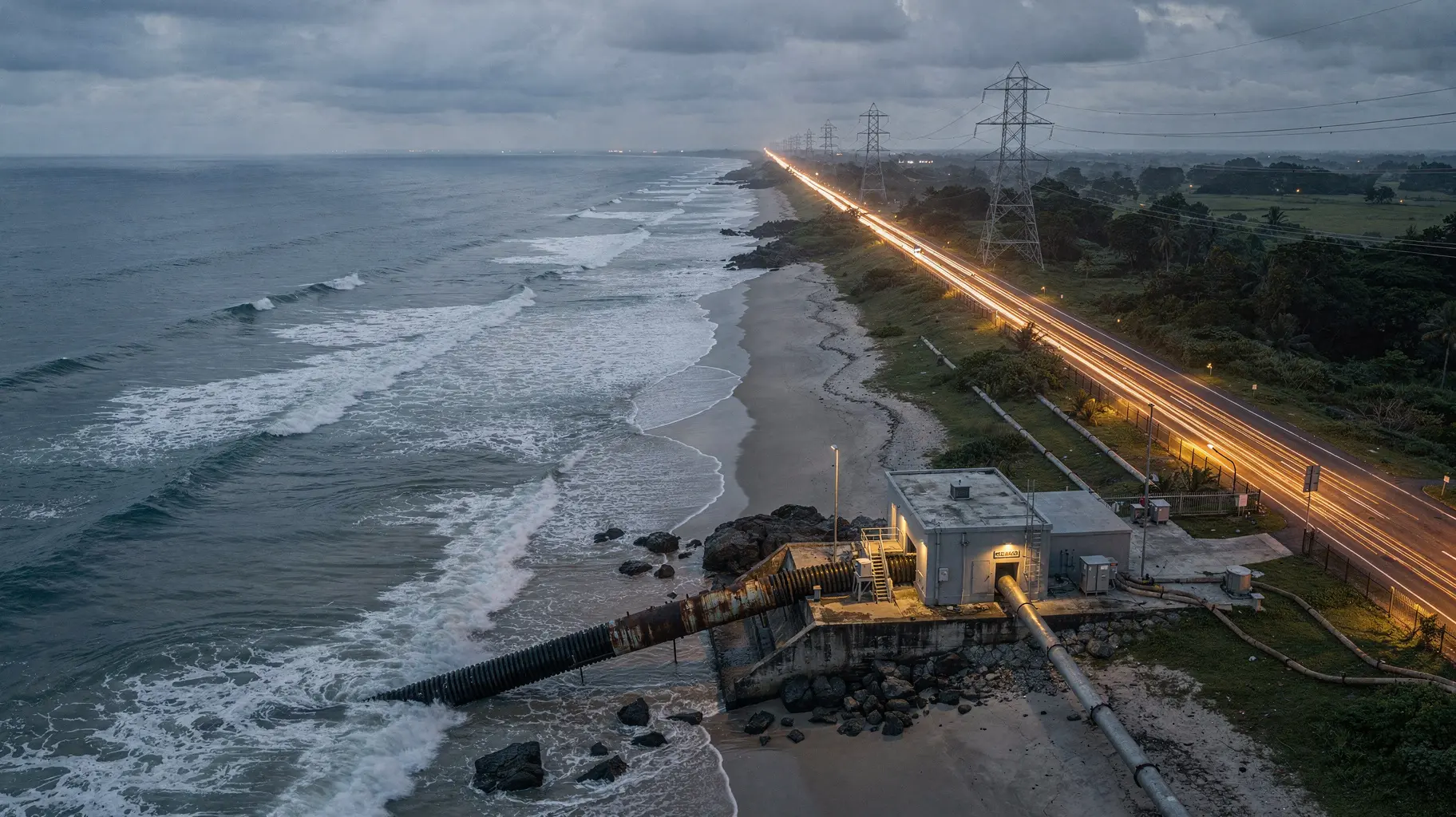
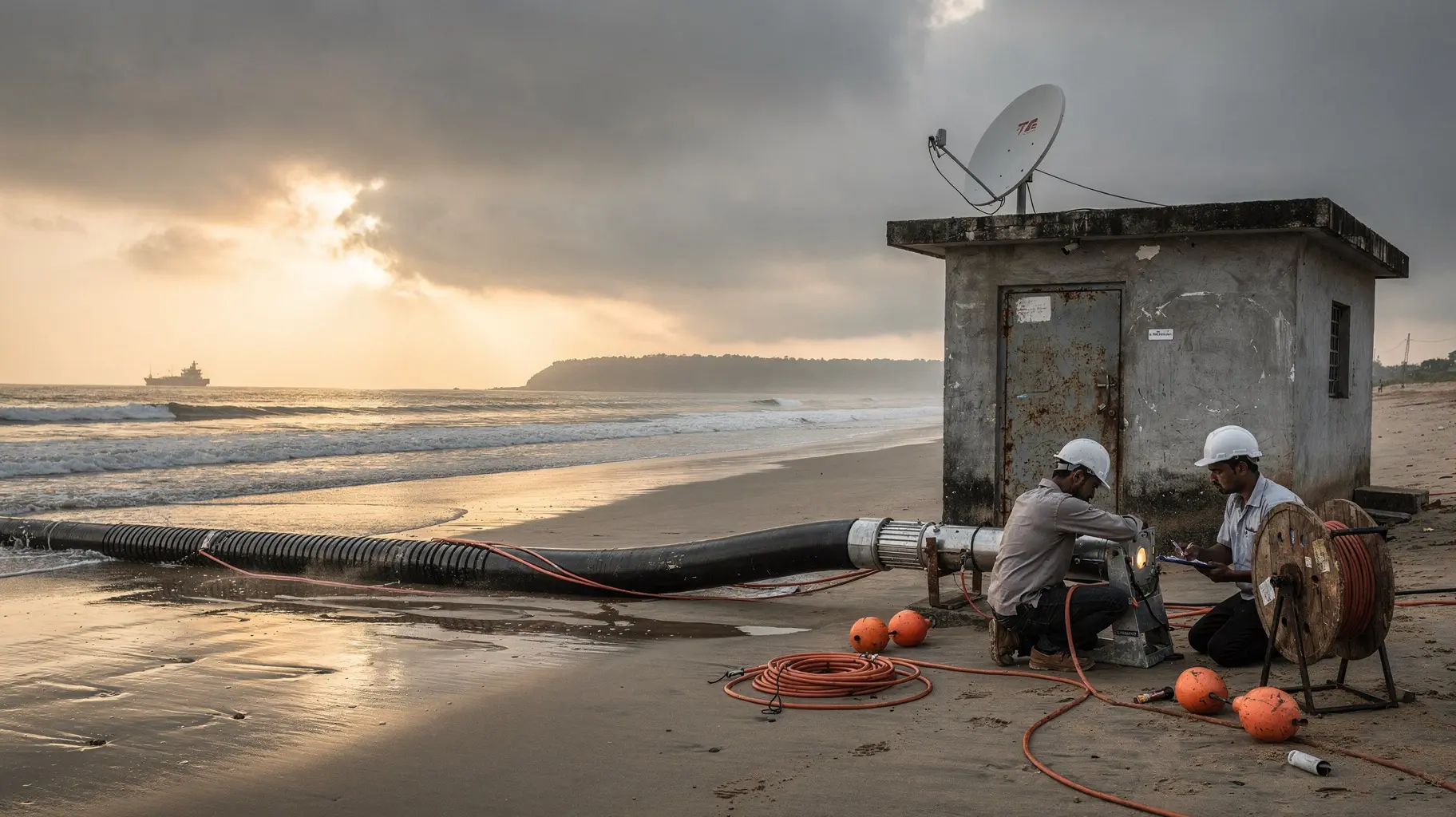
Jhilongja in Cox's Bazar and Alipur in Kuakata are the two places where the world's cables touch Bangladesh, and the company that owns those landings is a member of three consortia: SEA-ME-WE-4, SEA-ME-WE-5 and SEA-ME-WE-6, as the FY2021-22 annual report sets out. Geography is the easy part of this story. The hard part is in the notes, where the company states which of its commitments carry an end date and who stands on the other side of them.
The company's filings appear under Bangladesh Submarine Cables PLC. In the FY2023-24 directors' report it records transferring 25.31% of its allocated SMW-5 capacity on the Yanbu-Marseille section to Saudi Telecom, effective 12 May 2021 — a block the same report puts at 650 Gbps at the time. It records an agreement signed with Orange on 30 June 2021 leasing 13 Gbps on the Singapore-France route for the rest of SMW-5's life. And it records completing a lease of 200 Gbps on the Djibouti-Marseille segment to Telekom Malaysia for ten years during FY2022-23.
The arithmetic closes with an unusual tidiness. The FY2024-25 report says the company previously leased a total of 863 Gbps of SMW-5 capacity to international telecom operators. The three named counterparties account for 650 plus 13 plus 200 — 863 Gbps, with nothing left over. That is my arithmetic on the company's own figures, not a company statement, and it says something the route maps cannot: by the year ended 30 June 2025, the identified outbound block was not a portfolio of experiments. It was the whole disclosed position.
The money sits where a deferred sale sits. Note 37 of the same report recognises IPLC-Export revenue including part of USD 3.6 million received from Saudi Telecom for the 25.31% capacity transfer, USD 175,000 from Orange for 0.13x100G, and USD 950,000 billed under the Telekom Malaysia lit-up-capacity lease. Note 28 carries total unearned revenue of BDT 433,744,533 at 30 June 2025, of which BDT 230,310,000 is attributed to Saudi Telecom, BDT 11,454,710 to Orange and BDT 76,836,000 to TM Technology Services. Cash has arrived; the revenue is still being earned out.
The Orange line is the one that shows how long the earning runs. Note 37 says the Orange amount is recognised "based on IRU considering the remaining cable life (i.e. 16 years) of SMW-5 to comply the criteria mentioned in the IFRS 15," while the Telekom Malaysia amount is recognised over the agreement period. Sixteen years is an accounting life, not a printed expiry date on a signed contract, and the reports do not append the Orange or Saudi Telecom agreements.
The distinction matters and I am not going to paper over it: what the filings establish is that revenue recognition for one buyer is stretched across the rest of the cable's physical life, and that for another buyer a fixed ten-year term governs.
Now look at the other side of the ledger. The company does not hold a stated long-term right to the capacity it buys. Its own Singapore IP-transit bidding document defines circuits activated "initially for one year" and then "renewed for another year" after a successful first year, with renewal beyond two years by mutual consent. It prices committed and burstable bandwidth monthly, evaluates bids over two years, and reserves a termination right if performance parameters are exceeded for three consecutive months. A second bidding document covering Chennai, Marseille and backhaul from Tuas to SG3 Equinix Singapore sets an initial period of two years, allows activation of any 10G circuit or port within two years of signing, and runs each activated circuit for two years from activation; in the text I read, that version carries no renewal clause at all. Both documents have blank tender and issue dates and neither names a winning supplier, so they evidence the company's standard purchasing terms rather than any particular awarded contract.
Set the two sides beside each other and the shape is stark. On the way out: a transfer effective 2021, rights running to the end of a cable's life, a ten-year lease, and consideration parked in unearned revenue. On the way in: one-year renewals, two-year evaluations, per-Mbps monthly invoicing, a termination clause, and no stated term anywhere in the published procurement text. The durable instruments in this business are not the ones keeping Bangladesh online.
What the standing costs look like is in the expense lines. FY2025 includes BDT 92,455,394 of IP Transit Cost for purchased bandwidth and BDT 483,860,614 of operations and maintenance paid to the SEA-ME-WE-4 and SEA-ME-WE-5 consortiums. Consortium membership is a running bill; purchased transit is a running bill; and neither appears as a capacity asset. Note 8 lists intangibles as a BTRC submarine-cable licence and software, with the BDT 115,000,000 licence acquisition fee amortised across a 20-year validity. There is no separate IRU capacity asset in that note.
Note 7 assigns the SMW-4 upgrade, ready for use on 30 November 2023, a seven-year useful life — an accounting life again, not a contract expiry.
The forward pipeline does not yet change this reading. The FY2021-22 report records the SMW-6 Construction and Maintenance Agreement signed on 23 September 2021 for one MIU, later increased to two MIUs, or 13,200 Gbps toward Singapore and France, subject to government consent; the FY2023-24 report repeats the 13,200 Gbps figure. The company's public document index catalogues an SMW-6 C&MA amendatory agreement opened on 5 April 2022, a Partial Assignment record opened on 20 June 2022, a record concerning additional capacity purchase under the third submarine cable project opened on 22 September 2022, an SMW-6 supply contract variation and an Egypt Crossing Agreement amendatory agreement. What the index does not give is a ready-for-service date, and a second attempt to establish one failed at the retrieval stage, so I am not claiming a date the documents I read do not carry.
The freshest lead is equally thin. The tender notices index lists item 128, dated 12 October 2025, as an invitation to lease 4x100G lit-up capacity in SMW-5 from Equinix Singapore to Marseille, and item 129, dated 19 October 2025, for supplying 8x100G SFPs and shifting two 4x100G MPA cards from Cox's Bazar to SG3 Equinix Singapore. The page timed out during retrieval and only the indexed listing was available. Those are titles, not terms. No duration, award status or equipment relocation is asserted here on the strength of a listing line.
One more disclosure belongs beside the numbers rather than buried under them: the FY2024-25 statements carry a qualified opinion from Aziz Halim Khair Choudhury, Chartered Accountants (PKF AHKC), transmitted by letter dated 23 October 2025. The figures above are used exactly as the company published them.
So what would break this reading? Two things. A dated disclosure of a long-term inbound capacity right — an IRU or a multi-year lease with a stated term and a named counterparty — would flip the logic, because it would put a durable clock on the side that keeps Bangladesh connected. Or a restatement showing that the Saudi Telecom, Orange and Telekom Malaysia amounts are licence fees rather than capacity transfers would remove the outbound clock entirely. Neither appeared in the documents I read. If either turns up, this briefing is wrong and should be corrected rather than defended.
Until then, the useful description of Bangladesh's international connectivity is not a route count. It is a schedule. Three buyers hold rights measured in cable life and years; the operator holds renewals measured in twelves and twenty-fours; and the difference between those two clocks is the price the country pays for capacity it no longer owns. Any operator negotiating with this company should read the note on unearned revenue before reading the network diagram, and should ask which side of the schedule its own contract will sit on. See the directory record for Bangladesh Submarine Cable Company Limited (BSCCL) for the entity behind these filings.
Member Briefing
Deeper Trend Context
Sign in with the right membership level to unlock the full briefing and source notes.
Strategic Circle
A daily briefing in your language, built from changes we have verified.
Join for USD 20/monthCancel anytime.
Public reporting stays free. Member research, the daily briefing and the forum need a membership.