Summary
- Kobe City awarded Mitsui Fudosan and Kumagai Gumi a 10-to-20-year lease for about 3 km and 17,000 m² of a former belt-conveyor tunnel; annual rent is ¥7,572,000.
- The project team targets initial service at the end of 2027 and a future maximum receiving capacity of 20 MW. The first-phase power, conversion budget and contracted customers have not been disclosed.
A city can make an old tunnel look like a data-centre bargain with one number: ¥7,572,000 a year. Kobe’s October 6 award notice says that is the annual rent for roughly 3 kilometres of its retired belt-conveyor tunnel, covering about 17,000 square metres. Divide one by the other and the price comes to about ¥445 per square metre per year, or ¥37 a month. The unit is approximate because the city’s area is approximate, but the arithmetic gives the headline its bite.
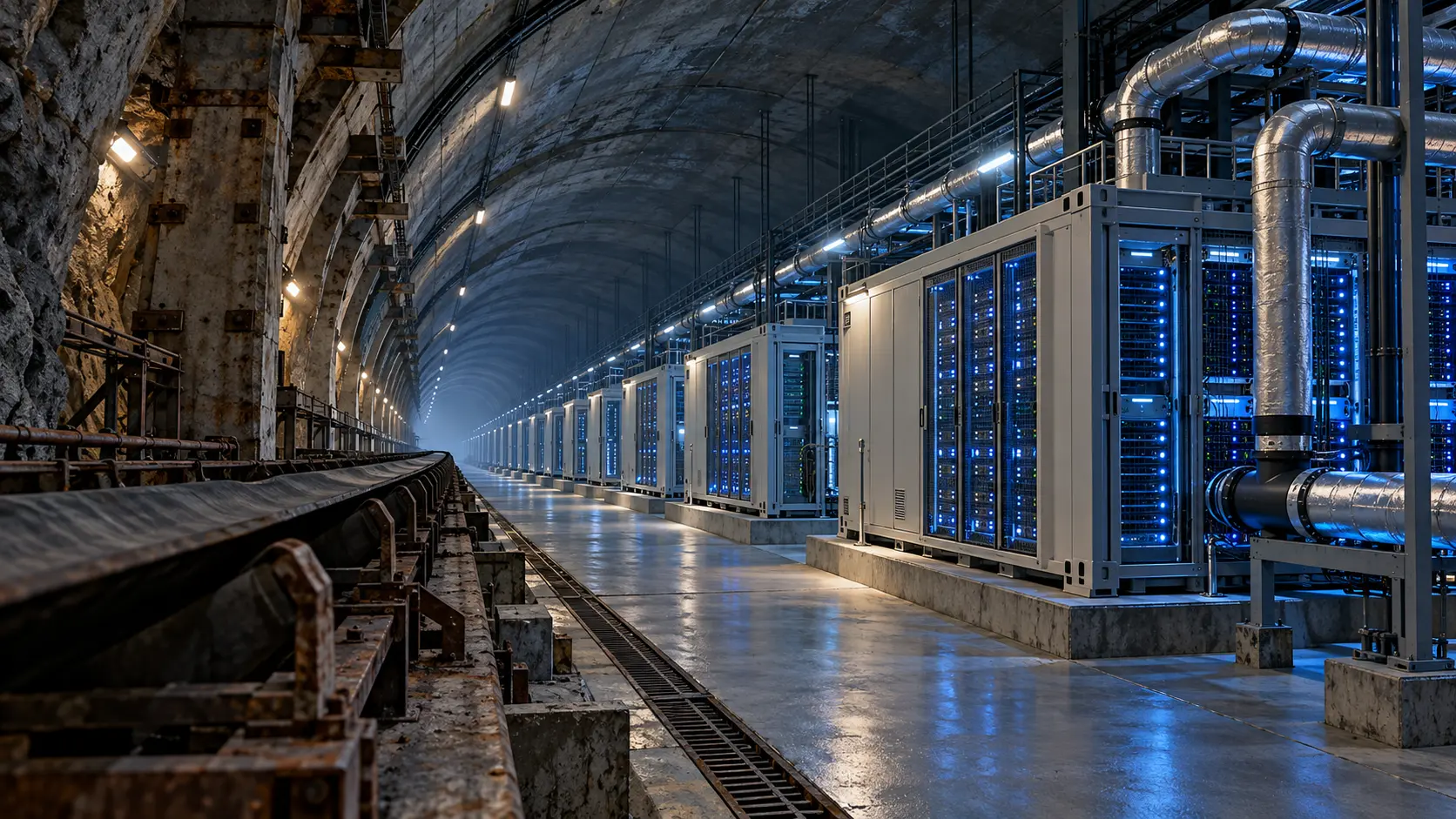
The tunnel once hauled earth from Kobe’s mountains toward the sea for housing, industrial sites and the airport reclamation project. The conveyor stopped in September 2005. Two decades later, the city has found a tenant for a slice of the civil-engineering afterlife: Mitsui Fudosan is the representative company, with Kumagai Gumi as a consortium member. They plan a containerized data centre with Getworks operating the equipment.
The site has a useful natural feature. Mitsui says the tunnel stays between 15°C and 20°C through the year. The plan calls for water cooling that recirculates groundwater. Most of the space is more than 40 metres underground, according to project partner Pacific Consultants. That is an unusual starting point for a computing facility: a structure built to move soil now has to move heat, water and electricity around servers.
Here the municipal rent is the least mysterious number in the deal. Kobe gives a possible lease term of 10 to 20 years, but does not publish a fixed signed term in its award notice. It records the selected annual rent and the site. The project companies say initial service is planned for the end of 2027. They describe up to 20 MW of power-receiving capacity as a future maximum target. That is not the opening phase, and it is not a published figure for IT load or customer demand.
A cheap tunnel lease can make a strong opening slide. It cannot pay for tunnel conversion, power equipment, cooling loops, backup systems, fibre routes, security, construction or financing. The partners have not published the conversion budget, initial MW, electricity price, contracted tenants, utilization or revenue. Those are the lines that turn a clever reuse project into a data-centre business.
The numbers also determine who takes the risk. Mitsui and Kumagai control development and construction; Getworks is slated to operate the container centre; the city supplies a long-lived site under a conditional-use lease. A delay in power or fit-out can leave a very inexpensive tunnel earning no data-centre revenue. If customers sign before the expensive equipment is installed, the project can finance against demand; if the build comes first, capital waits for racks to fill.
The city revived a public asset, the developers found a distinctive site, and an operator has a job to do. The next announcement worth reading will be less cinematic than “20 MW underground”: the first phase’s power allocation, capex, signed customer load and date of energization. Those figures will tell us whether Kobe has found a bargain, or merely a remarkably cheap address for a remarkably expensive build.
Sources: Kobe City award notice; Mitsui Fudosan project release; Pacific Consultants project details; Kobe City tunnel history.
Member Briefing
Deeper Profile Context
Sign in with the right membership level to unlock the full briefing and source notes.
Only for Strategic Circle
Strategic Circle
Open to all readers. Unlock profile briefings after joining and signing in.
Join Strategic CircleOnly for Leadership Alliance
Leadership Alliance
For qualified IP-asset owners and management; sign in to unlock alliance briefings.
Join Leadership Alliance