Summary
- Grid batteries supplied 8% of evening-peak generation in the National Electricity Market in Q3 2026, ahead of gas at 5.1%.
- Batteries set wholesale prices in almost half of dispatch intervals, up from 18% a year earlier; average NEM prices fell to A$63/MWh.
Analysis
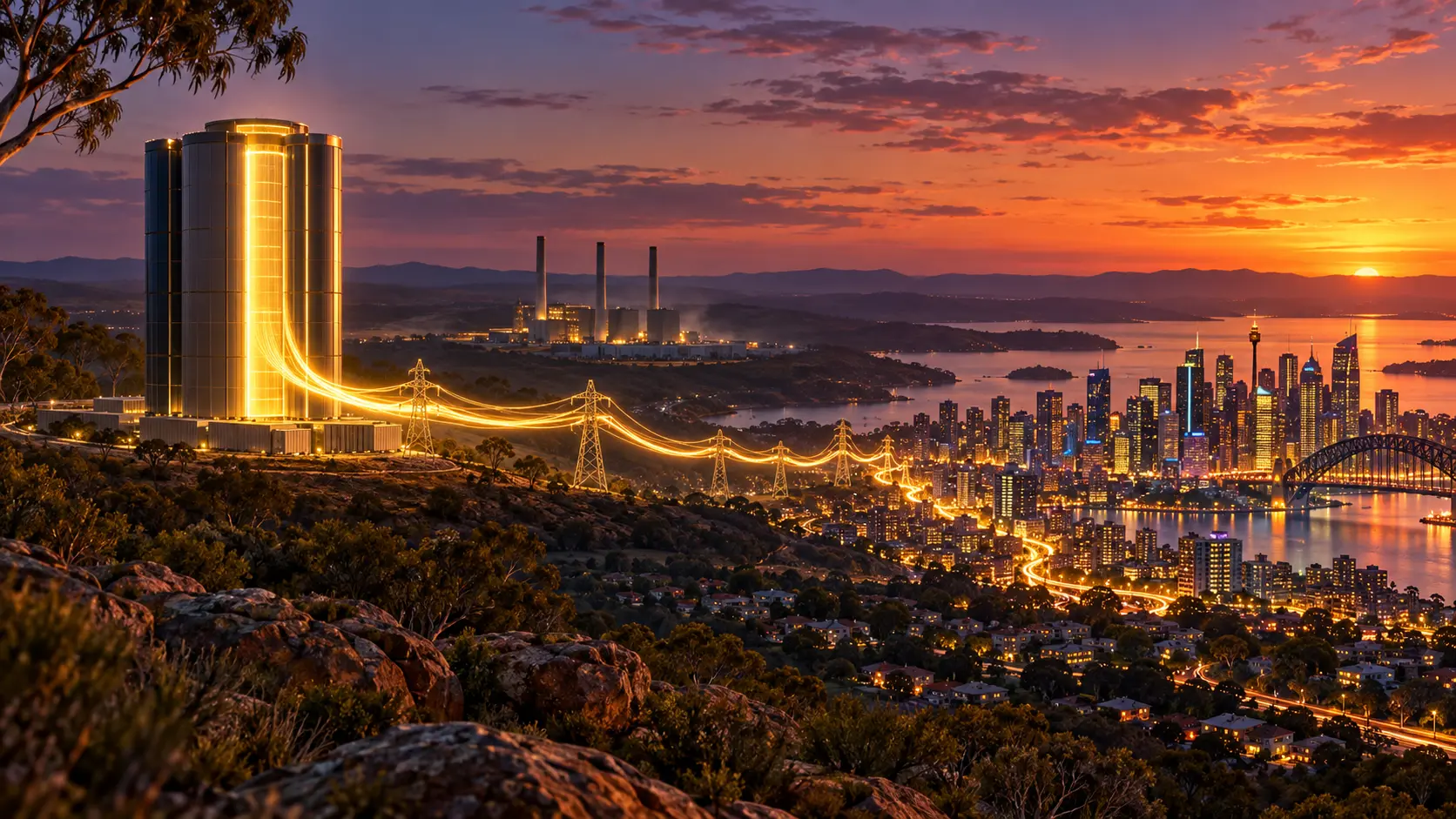
The evening peak used to be gas’s dependable curtain call. In Australia’s National Electricity Market, batteries have now taken the bigger measured role: 8% of generation between 4pm and 9pm in the September quarter, against gas at 5.1%. AEMO says it is the first quarter in which grid-scale batteries have exceeded gas during that window.
The change is showing up in the market’s price-setting machinery, not just its generation mix. Batteries set wholesale prices in almost half of dispatch intervals, compared with 18% a year earlier. A dispatch interval is a tiny slice of the operating day, but controlling the marginal price in half of them is a large seat at the table. Battery charging and discharging contributed to lower evening peak prices.
For the quarter, average NEM wholesale prices fell 27% year on year to A$63 per megawatt-hour, the lowest September-quarter average since 2021. Renewable generation reached a Q3 record 44.3%; grid-scale solar rose 30%, hydro 15%, and energy shifted by grid batteries more than tripled. Gas-powered generation fell 34% to its lowest Q3 average since 2000. The old evening lineup is being rewritten by storage that moves daytime energy into the hours when demand rises.
Demand did not take the quarter off. Underlying NEM electricity demand grew 1.3% to a record Q3 average of 25,471 MW. Victoria accounted for almost all of that increase. Its data-centre consumption rose 65% year on year to an average 225 MW. That is a quarterly average for one state, not the peak or installed capacity; it is a useful measure of a new load joining an already changing system.
Western Australia tells a different story and belongs in a different market column. In its Wholesale Electricity Market, weaker wind and reduced coal availability helped lift average real-time prices 19% to A$120.72/MWh, a quarterly record, while batteries flattened the daily price profile. One country now offers two clear demonstrations: storage can press down on prices when it shifts abundant energy into the evening, and it cannot make weak supply disappear when wind and coal availability tighten.
Sources
Member Briefing
Deeper Profile Context
Sign in with the right membership level to unlock the full briefing and source notes.
Only for Strategic Circle
Strategic Circle
Open to all readers. Unlock profile briefings after joining and signing in.
Join Strategic CircleOnly for Leadership Alliance
Leadership Alliance
For qualified IP-asset owners and management; sign in to unlock alliance briefings.
Join Leadership Alliance