Summary
- India’s Department of Telecommunications (DoT) ordered Calling Name Presentation (CNAP) on 4G-and-newer wireless networks from 1 November, with no separate request from the subscriber.
- A 2025 DoT position recorded by the Telecom Regulatory Authority of India (TRAI) said called users could ask to disable CNAP “as per procedure”. The October 2026 circular does not set out that procedure.
Analysis
An unknown number used to arrive with one obvious fact: the number. India’s new rule adds a name by default on 4G-and-newer mobile networks. That small change moves a decision from the person receiving a call to a system run by telecom providers: the display appears unless a control path lets the receiver turn it off.
The policy took a long route. In February 2024, TRAI recommended that access providers offer CNAP when subscribers asked for it. In a September 2025 back-reference, DoT proposed the reverse default: show the name automatically, while allowing a called subscriber to request disablement “as per procedure”. TRAI’s October 2025 response marked that view “Noted”. DoT’s Circular no. 01/Licensing Policy/2026, dated 13 October, then instructed access-service providers to introduce CNAP across their 4G-and-newer wireless networks from 1 November.
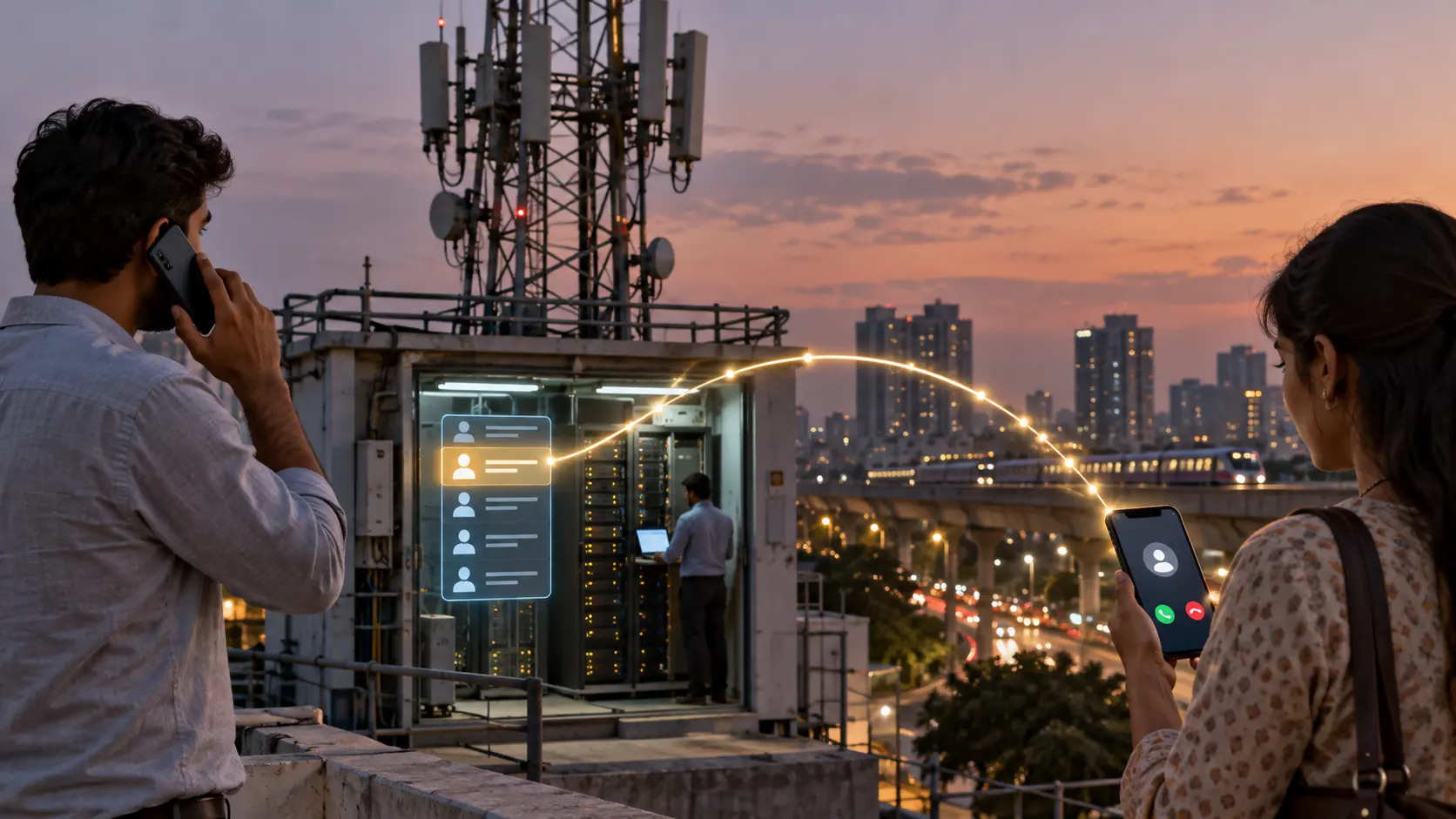
The operative document is unusually clear about the data route. Each originating provider must maintain a database that maps a subscriber’s name to the assigned telecom identifier. The terminating provider retrieves that name and presents it. On the receiver’s screen, a saved contact takes precedence. If the number is not saved, the circular calls for the originating provider’s name on domestic calls; an international call is labelled “International Call”.
The display is therefore assembled from two records. A receiver’s own contact list can replace the network-provided name. Otherwise, the name comes from the originating provider’s subscriber record. The circular identifies the record that supplies the name; it does not describe a separate live check of who holds the handset. For business and bulk connections, a provider may accept a preferred name only when it is a verified registered trademark or GST-portal trade name.
DoT also sets boundaries. A caller using Calling Line Identification Restriction (CLIR) must not have a name displayed. The query-response design must not retain the calling-name identity after the call ends, and providers must provision the databases and connections to deliver it. Those are requirements in the circular. Its publication does not report whether each operator has completed rollout or how often a displayed name has been wrong.
That leaves a conspicuous gap beside the precise network diagram. The 2026 circular tells providers to show the name to each subscriber without a separate request. It requires a grievance mechanism with redress “in a time bound manner”, but names no correction or response interval. It does not explain how a called user requests that CNAP be disabled, even though the 2025 DoT position said such a request could be made. A complaint channel and an opt-out procedure answer different questions.
The record supports a narrow conclusion: the national default changed on 1 November for the networks covered by the circular, while the cited operative document leaves the receiver’s off-switch unexplained. A separate, current DoT instruction or published procedure would change that account. A DoT compliance report or carrier confirmation would be needed to establish rollout operator by operator.
Sources
DoT Circular no. 01/Licensing Policy/2026, 13 October 2026 · TRAI response to DoT’s back-reference, 28 October 2025 · TRAI CNAP recommendation, 23 February 2024
Member Briefing
Deeper Profile Context
Sign in with the right membership level to unlock the full briefing and source notes.
Only for Strategic Circle
Strategic Circle
Open to all readers. Unlock profile briefings after joining and signing in.
Join Strategic CircleOnly for Leadership Alliance
Leadership Alliance
For qualified IP-asset owners and management; sign in to unlock alliance briefings.
Join Leadership Alliance