Summary
- Accenture Australia is testing direct SMS access to Triple Zero in a simulated environment. The October 27 announcement excludes public access and any effect on the live service.
- The official interim review includes receipt, triage and handover in the work. It also identifies limits on extending the existing ECS Determination to messaging and video. A public service requires further operating, funding and regulatory decisions.
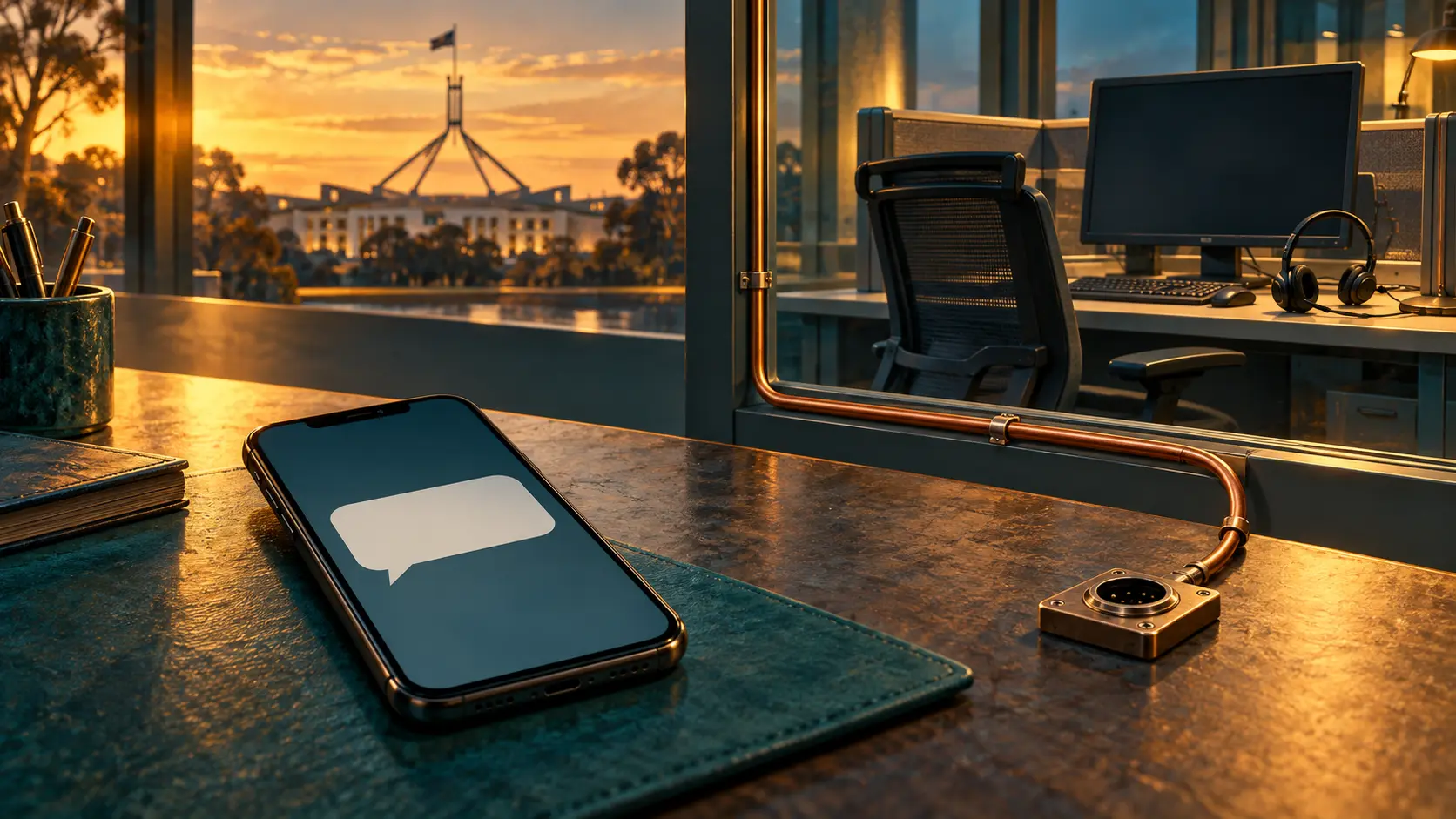
The chair behind the screen is the interesting purchase. Someone must occupy it when an emergency message arrives, and someone must keep paying after the demonstration finishes. Australia's new Triple Zero SMS experiment puts that recurring obligation behind a very familiar button.
The October 27 announcement says the Triple Zero Custodian is testing direct SMS for circumstances in which a voice call may be impossible or impractical. Accenture Australia has been engaged to run simulated tests reflecting real operating requirements. There is no public access to the experiment and no effect on the live service.
The intended benefit is concrete: another way to seek help when speaking is difficult. The current purchase buys evidence about how to provide it. A national promise would bring a longer bill, addressed partly to the institutions receiving the messages.
Delivery earns an intermediate tick
Page 12 of the official interim review names the stages under examination: initiation, delivery, receipt, triage and handover. The last two take the work firmly into emergency-service operations.
Who reads the request? Who identifies the appropriate service? What information travels with it, and who notices an unfinished handover? Those are sensible acceptance questions for the buyer. A sent indicator on a handset cannot, by itself, answer them. Published findings showing the completed chain would be much more useful than a neat animation.
Australia's existing voice service already crosses organisational boundaries. Page 6 describes Telstra as the Emergency Call Person, taking the initial calls and transferring them to 24 state and territory emergency-service answering points. Police, fire and ambulance are the responsibility of those governments. The architecture of a possible SMS service remains a design choice; the voice network's list of desks does not automatically become its specification.
Innovation meets the roster
The review's account of consultation makes the impending resource negotiation unusually legible. Consumer stakeholders emphasise access and alternatives. Industry emphasises staged implementation, testing across the whole chain and obligations aligned with control. Emergency-service organisations emphasise integration, funding and readiness before new access methods are promoted or regulated.
These are different views of the work to be financed. The report identifies workforce, training, technology, data governance and public messaging as implementation concerns. Accepting a piece of software does not allocate those costs across public institutions. Nor does a successful demonstration fill the next shift.
The procurement question is therefore where the supplier's deliverable ends. Making a message appear on a screen and making it part of an emergency-response workflow can involve different systems and budgets. A buyer who measures only the first can accept the product while leaving the receiving organisation to negotiate the work the public actually expects.
Modernisation is a roomy heading for a press release. A roster needs names and resources.
The rulebook has its own boundary
Pages 28 and 29 identify a specific limit in the existing legislative framework. The review says ACMA cannot use the ECS Determination to broaden the entities regulated or extend the obligations covered by that instrument to messaging or video.
The report distinguishes changes available within current powers from routes that could require primary legislation. The experiment can inform that choice. Technical success does not supply the legal authority needed for whichever operating model is selected.
Final recommendations are due to the minister by March 18, 2027. Implementation decisions would then sit with government and, where legislation is required, Parliament. The report's delivery date cannot staff a service.
The missing public evidence is a complete set of end-to-end test results and a funded implementation plan; those would change the assessment of operating readiness. Meanwhile, the Custodian's current page retains voice as the primary contact method. The report separately describes existing messaging-to-relay arrangements through the National Relay Service for people who are Deaf, hard of hearing or have a speech communication difficulty.
Buying the experiment is a useful step. Before teaching the public a new emergency habit, the buyer needs to settle who will be there to receive it after the shift changes.
Original documents
The linked sources are Australian government publications. The report text is attributed to Commonwealth of Australia, 2026, under CC BY 4.0. Acceptance and funding proposals in this article are the author's analysis.
Member Briefing
Deeper Profile Context
Sign in with the right membership level to unlock the full briefing and source notes.
Only for Strategic Circle
Strategic Circle
Open to all readers. Unlock profile briefings after joining and signing in.
Join Strategic CircleOnly for Leadership Alliance
Leadership Alliance
For qualified IP-asset owners and management; sign in to unlock alliance briefings.
Join Leadership Alliance