
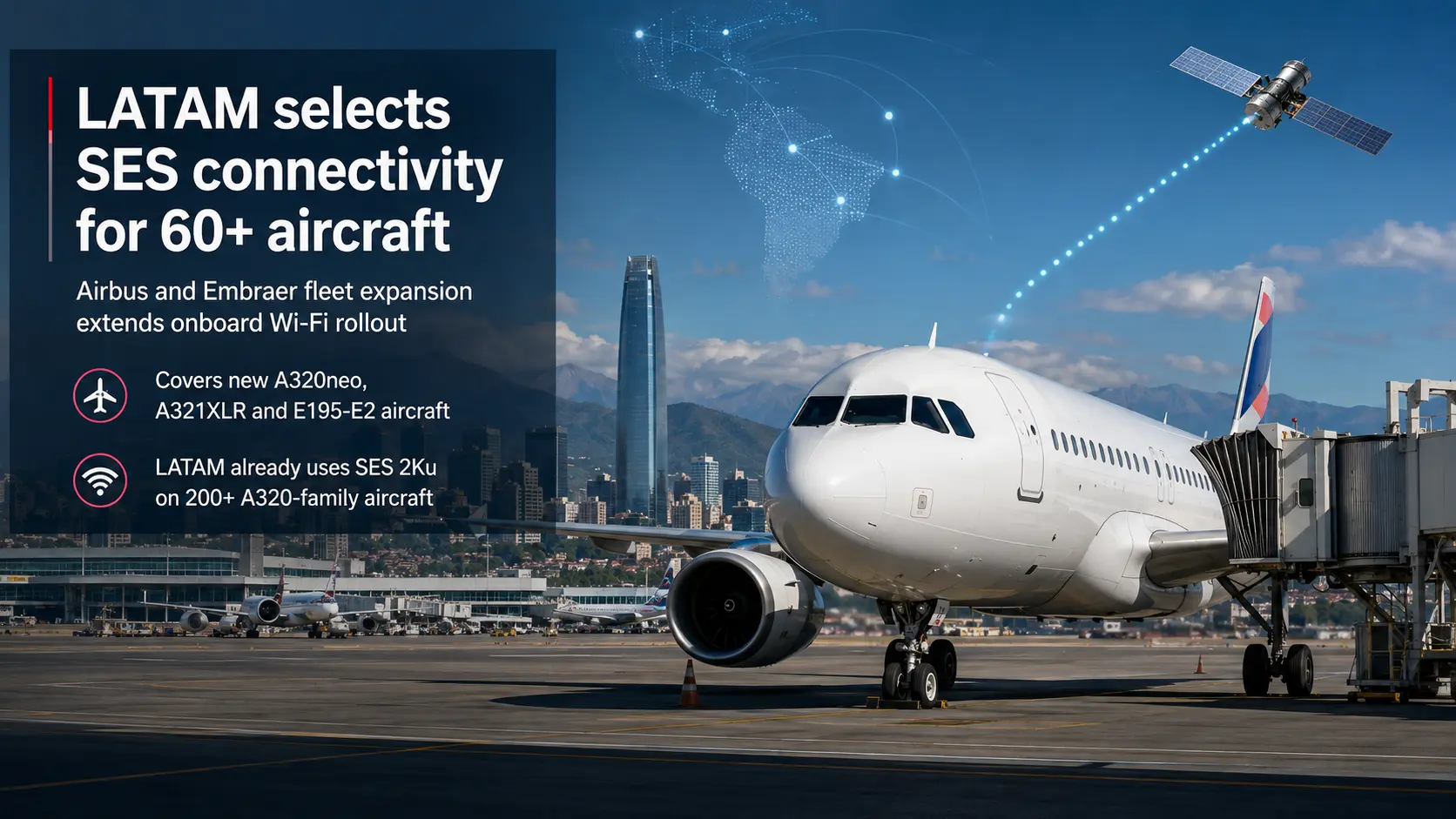
- New installations will cover A320neo, A321XLR and E195-E2 aircraft entering LATAM’s fleet over the coming years
- LATAM already uses SES 2Ku on more than 200 A320-family aircraft, but no installation timetable or service terms were disclosed
The fact
SES said LATAM Airlines Group had chosen its multi-orbit in-flight connectivity service for more than 60 new aircraft. The rollout will cover Airbus A320neo and A321XLR jets, as well as Embraer E195-E2 aircraft joining the fleet over the next few years. The system will use an electronically steered antenna less than seven centimetres high.
The deal builds on a relationship that has lasted almost a decade. SES says its 2Ku system is already fitted to more than 200 LATAM A320-family aircraft, and more than 250 aircraft across the wider fleet offer Wi-Fi. The companies have not said when installations will begin, which aircraft will be equipped first, how the service will be priced or what performance levels will be guaranteed.
The assessment
SES is adding the new system to a fleet where its equipment is already widely used. That gives LATAM continuity with an existing supplier, but the work is not a simple extension of the current setup. The system still needs certification, installation and integration across three aircraft types before passengers can use it.
LATAM will also be operating the new electronically steered antenna alongside the 2Ku equipment already fitted to much of its A320-family fleet. During the rollout, the airline will need to keep service consistent even though aircraft may use different hardware. SES has not published LATAM-specific data on reliability, capacity or performance. For BTW readers, the main challenge is fleet consistency. The number of aircraft ordered matters less than how many enter service, which routes they cover and whether passengers receive a similar connection across old and new installations.
What to watch
LATAM and SES have not said when the first aircraft will enter service or which types will be equipped first. Certification approvals, activated aircraft and route availability will show whether the rollout is keeping pace. Passenger service tiers and performance during full flights will indicate whether the new system delivers a consistent experience across the fleet.