Summary
- The new English NSIP biodiversity-gain objective applies to covered DCO applications made on or after 2 November 2026. A later change application does not itself trigger the mandatory 10% objective, though the Secretary of State may consider changes in biodiversity value when deciding it.
- A new application must include an outline gain plan and draft DCO requirements. The Secretary of State cannot grant consent unless satisfied that the statutory objective is met: at least 10% biodiversity gain.
A developer can put a similar scheme into the system one day later and face a different consent test. A covered application filed on 1 November 2026 stays outside the new mandatory NSIP objective; one filed on 2 November must arrive with an outline biodiversity-gain plan and draft DCO requirements. The law attaches its threshold to the application date, before the consent decision.
That changes what the applicant must prove. The Secretary of State cannot grant a new covered DCO unless satisfied that it meets the statutory objective of at least 10% biodiversity gain. A later application to vary an older DCO does not trigger that objective by itself, although the Secretary of State may weigh changes in biodiversity value. One day separates two application cohorts and two evidence burdens.
The scope is narrower than “British infrastructure”. The objective covers specified NSIP applications under sections 37 and 104 or 105 of the Planning Act 2008, as well as projects directed into the regime under section 35. It applies to NSIPs in England, including intertidal components as far as mean low-water mark. The marine environment beyond that boundary and infrastructure consented through Hybrid Bills are outside this requirement. Data centres have their own published biodiversity gain statement; that covers data-centre NSIPs, not every server building that seeks ordinary planning permission.
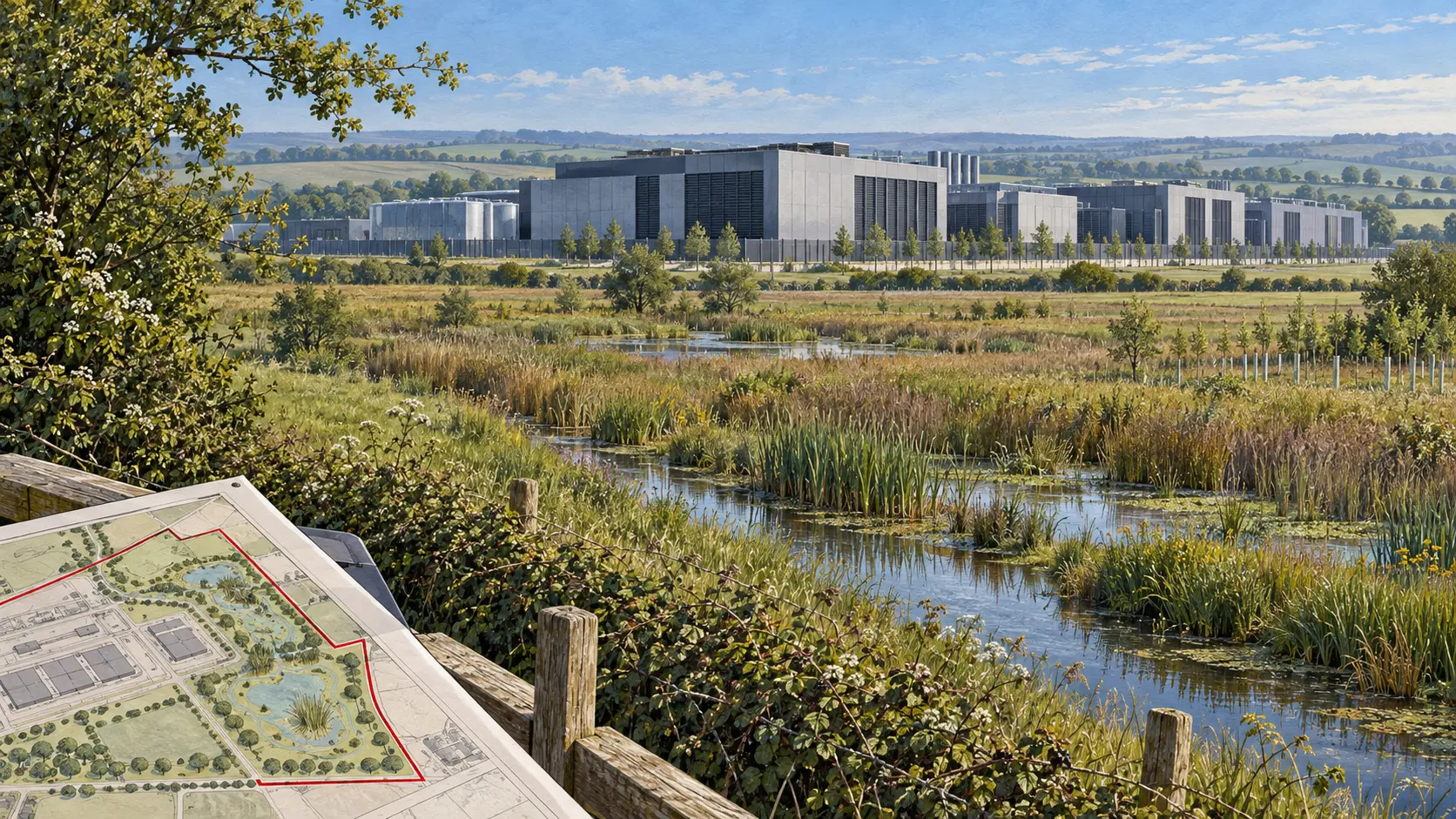
The number in the rule is a minimum: at least 10% biodiversity gain. Applicants use the statutory biodiversity metric and submit an outline biodiversity gain plan with a boundary map. For data-centre NSIPs, the baseline includes habitats within the order limits that the development will damage and areas used to deliver gains. Untouched habitat may be left outside the baseline. The map must distinguish affected ground, gain areas, retained habitat counted in the boundary and unaffected habitat excluded from it. The baseline therefore depends on a disclosed map as well as a percentage.
The plan follows the application into the consent process. The Examining Authority considers it during examination and reports to the Secretary of State, who may not grant consent without being satisfied that the objective is met. Gains can come from the site, registered off-site habitat, or both. Government credits are a last resort. Significant on-site gains must be legally secured, managed and monitored for at least 30 years; the data-centre statement says habitat should generally remain maintained for a longer-running project’s remaining life.
Defra kept the 10% objective after respondents called for a higher figure, citing alignment with the Town and Country Planning Act regime. The rule allows gains above the minimum, but the new legal obligation starts with the filing date. The first post-cutover application and examination will show how authorities test the boundary map, metric baseline and DCO conditions in practice.
Sources
Member Briefing
Deeper Profile Context
Sign in with the right membership level to unlock the full briefing and source notes.
Only for Strategic Circle
Strategic Circle
Open to all readers. Unlock profile briefings after joining and signing in.
Join Strategic CircleOnly for Leadership Alliance
Leadership Alliance
For qualified IP-asset owners and management; sign in to unlock alliance briefings.
Join Leadership Alliance