Summary
- A provider using the CRTC’s temporary stay may deliver a locked phone if it unlocks automatically within two business days; customers can still request a free unlock sooner.
- The CRTC dismissed a review application on 30 October, but attached the stay’s end to a future code decision rather than a calendar date.
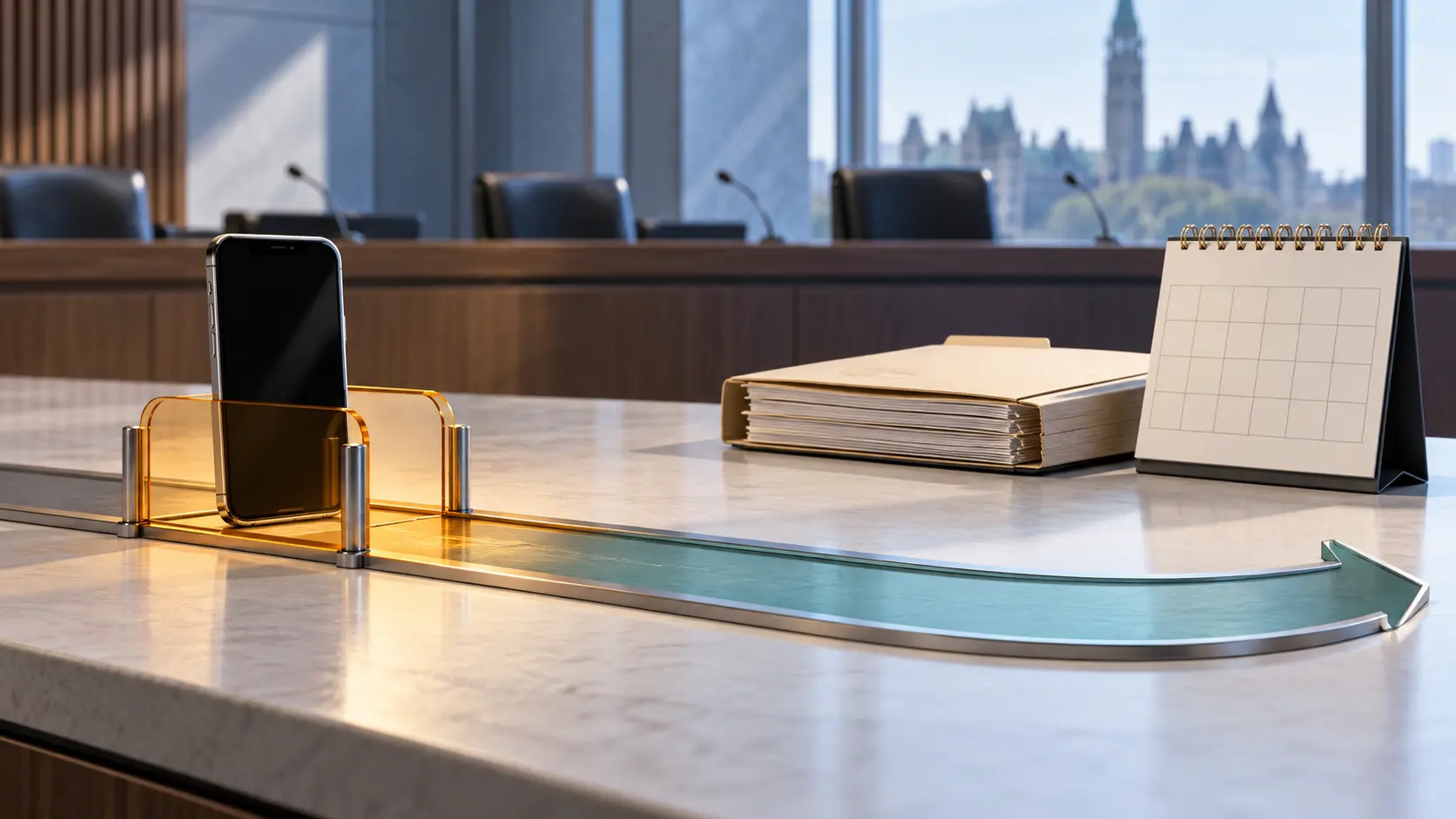
A two-day lock sits inside a longer decision clock
Canada’s Wireless Code starts with a clean rule: a device supplied for wireless service must be unlocked. If it is locked to a provider’s network, the provider must unlock it on request at no charge or give the customer the means to do so. In its 2017 review, the CRTC said the device must be unlocked at or before sale. The standard wireless trial lasts 15 calendar days.
On 14 August 2026, the CRTC temporarily stayed the at-sale requirement across the industry. A provider can use the stay if the device unlocks automatically within two business days after purchase. It must still unlock on request without charge, and it must make reasonable efforts to tell customers how long a device will stay locked, what that means, and how to request an unlock.
The two-day limit is a ceiling on automatic delay, not a mandatory waiting period for the customer. The free request right remains. What changed is the order of events: a phone may leave the point of sale locked, and the default unlock can follow later.
In a letter dated 30 October, the CRTC dismissed an application to review and vary Notice 2026-210. It said the application did not raise substantial doubt about the notice’s correctness. The Commission reasoned that a two-business-day unlock would likely have limited impact on a 15-day trial: customers could request an earlier unlock, and providers had to disclose the lock duration, leaving the option to test a device unlocked within the trial.
The 30 October letter contains no dated observations showing when trial-period unlock requests arrive, how quickly providers complete them, or how they relate to returns and cancellations; those records would change the assessment of a limited impact.
The next code could change the ruler
The CRTC sent the unlocking question to proceeding 2026-134, which aims to combine four consumer-protection codes. Its public hearing begins on 30 November. The stay does not expire when that hearing opens. Notice 2026-210 says it remains in force until the CRTC issues its decision in proceeding 2026-134, and the notice gives no date for that decision.
“Temporary” therefore has a legal endpoint but no scheduled calendar endpoint. A hearing begins; the record is examined; a final decision follows. Those are separate stages. The first date on the notice cannot stand in for the last.
The same proceeding puts another trial period on the table. The CRTC’s June working document for a unified Consumer Protection Code proposes a minimum 30-calendar-day trial for contracts with early-cancellation fees. It would start when service begins and allow cancellation without penalty under usage and device-return conditions. The Commission describes the document as a possible model for discussion. It has not been adopted. The October letter still relies on the current Wireless Code’s 15-day standard.
Notice 2026-210 also ordered providers using the stay to file, by 30 October, counts of devices sold locked, unlock requests granted or denied, later service cancellations tied to non-payment or fraud, and the practice’s effect on theft and fraud. The CRTC asked for as much public information as possible so other participants could assess the trade-offs. The record the Commission ordered should be part of the decision that keeps or ends the exception.
The final code decision must assess the unlock window against the trial period it actually adopts and the evidence providers were told to file. If the 30-day draft becomes the rule, a 15-day rationale will no longer describe the full test period. If the exception survives, the decision should give it a date or a verifiable termination condition. A short technical delay should not inherit the full length of an administrative proceeding by default.
Sources
Member Briefing
Deeper Profile Context
Sign in with the right membership level to unlock the full briefing and source notes.
Only for Strategic Circle
Strategic Circle
Open to all readers. Unlock profile briefings after joining and signing in.
Join Strategic CircleOnly for Leadership Alliance
Leadership Alliance
For qualified IP-asset owners and management; sign in to unlock alliance briefings.
Join Leadership Alliance