
Summary
- On 20 December 2010, the United Nations General Assembly extended the IGF’s mandate for five years and separately asked for an open process to review improvements.
- Markus Kummer coordinated the Secretariat through the first five annual meetings, but neither the extension nor the later improvement recommendations were decisions for him to make.
The order of two paragraphs in a resolution captured the tension. Resolution A/RES/65/141 extended the Internet Governance Forum (IGF) for another five years. It then invited the Secretary-General to continue convening it while recognizing a need to improve the Forum. A separate Commission on Science and Technology for Development (CSTD) working group was asked to collect and review proposals from Member States and other stakeholders. The resolution also reserved a later decision about continuation for the 2015 ten-year review. Renewal set a horizon; it did not settle what should change inside it. (A/RES/65/141)
That boundary was already part of the Forum’s design: in 2005, Secretary-General Kofi Annan described the planned IGF as a place to discuss difficult questions without decision-making power. (Kofi Annan’s account)
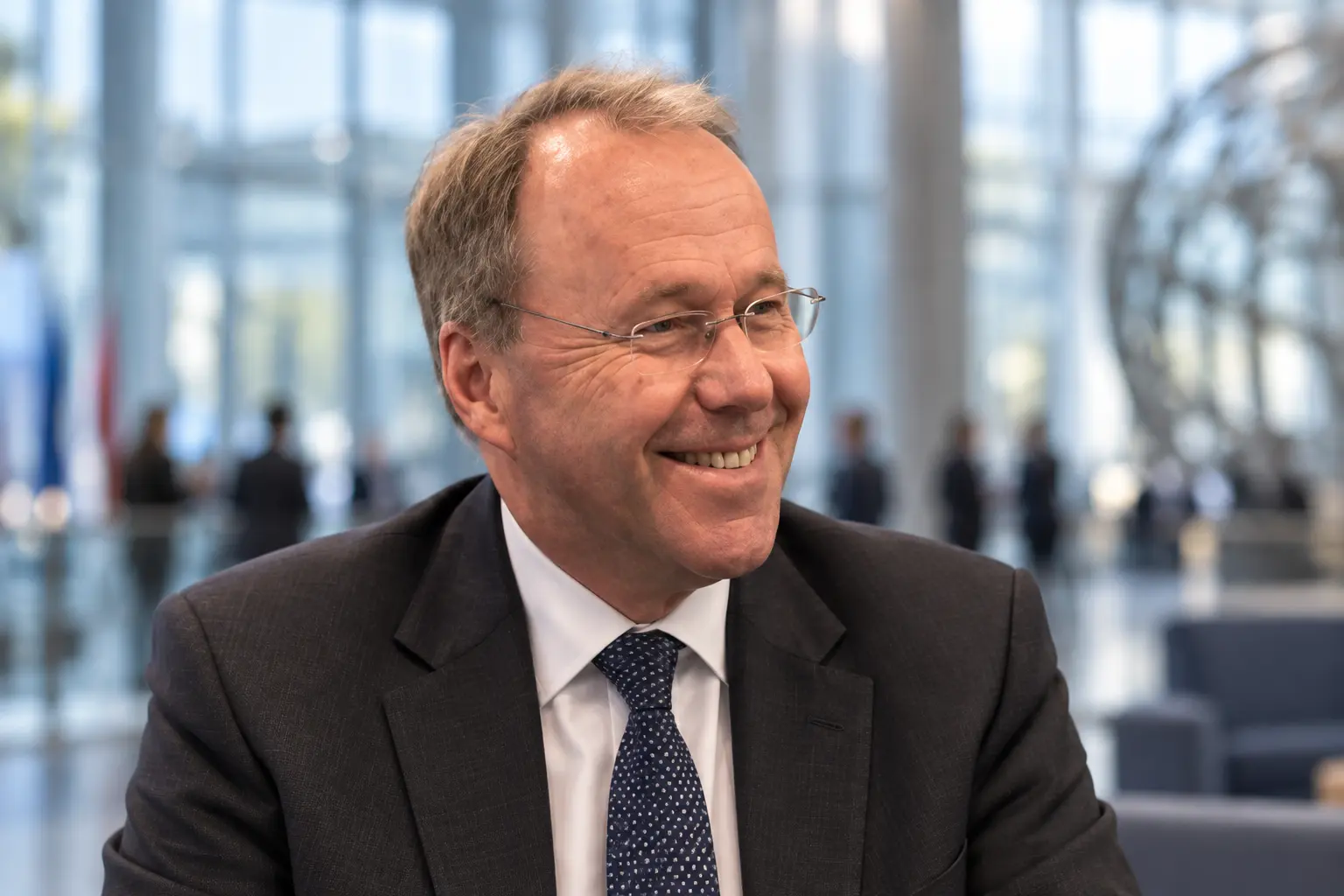
Markus Kummer had spent the previous years building the Secretariat that made this kind of meeting possible. A Swiss diplomat and former eEnvoy of the Swiss Foreign Ministry, he joined the United Nations in 2004. He first coordinated the Secretariat of the Working Group on Internet Governance (WGIG), then became Executive Coordinator of the Secretariat supporting the IGF. The IGF’s personnel record lists him in that role from 2006 to January 2011; the official biography credits him with organizing the Forum’s first five annual meetings. That is an important span, but it is not a mandate to decide what the Forum may authorize. (IGF biography; past personnel)
The distinction was already visible in Kummer’s 2004 paper to the World Summit on the Information Society (WSIS) preparatory process. He described a proposed two-tier method for WGIG: a bounded group would gather facts and draft a report, while open-ended consultations would let governments and other stakeholders contribute. The smaller group, he argued, could work efficiently; broad access would help the process remain legitimate. He explicitly described WGIG as a fact-finding and reporting body, not a negotiating group. This was his proposal for the working method, not evidence that he chaired the group or personally controlled its conclusions. (Kummer’s 2004 paper)
WGIG’s report was collective. It had 40 members, chaired by Nitin Desai, and met four times between November 2004 and June 2005 while holding consultations with stakeholders. The group proposed a forum for dialogue but could not agree on one model for broader oversight. Its members also set out several options. Treating that outcome as Kummer’s personal design would erase the difference between Secretariat support, chairing and the judgment of the appointed group. (WGIG report; UN release on the report)
That distinction mattered again at the first five-year renewal. The General Assembly’s decision preserved the Forum, while the CSTD improvement group had to determine what changes could command enough support. In 2011, ECOSOC recorded why the group had not completed recommendations in its first time frame: the volume and complexity of material, political sensitivity, divergent views and limited time. It extended the group’s mandate so the work could continue. The record does not blame Kummer; the improvement track was a separate process. (ECOSOC resolution 2011/16; CSTD working-group report)
Kummer left the coordinator post on 31 January 2011. At an open consultation three weeks later, the Secretariat was still operating under Chengetai Masango while longer-term arrangements were discussed. The transcript records Kummer’s proposal to renew the Multi-stakeholder Advisory Group provisionally for the February meeting, buying time to settle a more durable arrangement. It is a modest operational example of continuity: a meeting can proceed while authority over the next structure remains elsewhere. It does not show that one coordinator could settle the Forum’s mandate or the review’s disagreements. (23 February 2011 open consultation)
The episode is therefore not a story of a reformer who either succeeded or failed. It is a record of distinct powers placed on separate tracks. The Secretariat could schedule, organize and preserve a forum for discussion. Stakeholders could submit proposals. The CSTD group could assess them. The General Assembly could extend the mandate. When those functions are collapsed into the word “participation,” an audience may mistake access for authority and renewal for agreement. Kummer’s tenure makes the institutional boundary visible precisely because the process continued past his departure.
Member Briefing
Deeper Profile Context
Sign in with the right membership level to unlock the full briefing and source notes.
Only for Strategic Circle
Strategic Circle
Open to all readers. Unlock profile briefings after joining and signing in.
Join Strategic CircleOnly for Leadership Alliance
Leadership Alliance
For qualified IP-asset owners and management; sign in to unlock alliance briefings.
Join Leadership Alliance