
Region
Europe Middle EAST
Europe Middle EAST regional intelligence explains how companies, people, policy moves, network operations, investment signals, data centre demand, telecom execution, and market constraints shape infrastructure delivery in the same geographic market or governance area. The page connects published coverage with evidence, regional actors, operating dependencies, market context, and customer or regulatory exposure that may otherwise sit across separate topic or company pages. Readers can compare who is active, which signals are backed by public evidence, how local execution risk connects to broader internet infrastructure strategy, and what changes may affect customers, partners, regulators, or capital planning. Readers can understand the geography, the relevant infrastructure sectors, the public evidence base, and the practical questions that make the regional page more useful than a short listing of articles.
Europe and Middle East Institutional Trends
The Regulator Gets the Clock, the Buyer Gets a Verb
A manufacturer learns at nine in the morning that someone is exploiting a hole in a product it has already sold. Article 14 of the Cyber Resilience Act starts three clocks that day, and every one of them runs off something the manufacturer itself does. The duty owed to the people…
CASE FILE
AS6777 hands out the routes and originates nothing
AS6777 hands out the routes and originates nothing intelligence summary explains the development, the public evidence available to readers, the organisations involved, the regional context, market exposure, and the infrastructure consequences that may follow. The CASE FILE…
Europe and Middle East National Telecom
1&1 Built More Antennas. Its Wholesale Bill Grew Faster.
Germany's fourth mobile network commissioned more than 300 antenna sites a quarter in 2025 and lifted cash capex to €409.2 million. A few pages away, the same report puts the cost of using somebody else's network inside a €710 million line that prints no euro figure of its own.

Leaders
One Signature, Then a Greeting: Who Lets a Competitor Into Namex
Consorzio Namex publishes an admission rule in which one office-holder decides and a board later agrees. What the consortium's website publishes is a welcome.
Europe and Middle East Institutional
The Register Says What the System Is. Nothing Public Says What It Did.
A high-risk AI system in Europe gets a public database entry before it meets a single patient, passenger or loan applicant. Its first serious incident gets a letter to a national authority, under a clock that starts when the provider decides a causal link exists — and no…
Europe and Middle East Datacenter Trends
The Dutch queue has a price column, and your data centre is not in it
TenneT publishes a patient explanation of what happens when a high-voltage grid fills up: a waiting list forms, the first in line takes transport capacity first as congestion management or new investment frees it, and inside each priority category the order follows the date of…
Europe and Middle East National Telecom
Towercom Owes Nothing to a Bank. Its Only Creditor Owns the Company.
Slovakia's largest broadcast transmission operator reports no bonds, no drawn credit line and not one pledged asset. Its single borrowing is €74.3 million from the shareholder that owns all of it — while the one transmission contract a stranger can read outlasts that loan by four…

Europe and Middle East Institutional
SIDN's Statutes Say Who Can Fire Its Director. Its Board Page Says Two Names and No Dates.
Article 15(3) of SIDN's articles of association gives one seven-seat organ the power to appoint, suspend and dismiss the people who run .nl, behind a three-quarters majority in a meeting where three-quarters of the members are present. On 16 October 2026 that organ used the…
Europe and Middle East Institutional
The 500-kilowatt duty is European. Its penalty is a national number.
Directive (EU) 2023/1791 starts the data-centre publication duty on 15 May 2024, dates the first delegated act to 31 December 2023, and parks the rest of Article 12 at 11 October 2025. Three clocks. The consequence sits in a fourth place: a penalties article addressed to Member…

Europe and Middle East Regional ISP Trends
The most valuable permit in Europe is a silence, and a state may switch it off
Regulation (EU) 2024/1309 handed Europe three clocks and one asymmetry. Two of the clocks end in a document anyone can read: a written refusal, or a binding dispute decision a national body is obliged to publish. The third ends in the granting authority saying nothing — which the…
Europe and Middle East Institutional
Brussels publishes the average. Your facility stays in a drawer.
Article 4 of Delegated Regulation (EU) 2024/1364 turned out to be one sentence long, and that sentence points at an annex. The database, the annual clock and the publication duty live in Articles 3 and 5 — where the public artefact is a Member State and Union aggregate and the…
Europe and Middle East Institutional
No meter in Ireland says 'data centre'. The statistician decides.
The Central Statistics Office prints three rows of gigawatt hours for the last quarter of 2025 and no percentage at all. Between those two facts sits the number that Irish planning arguments keep quoting back at each other.
Europe and Middle East Datacenter
Germany Wrote a Data-Centre Rule and Handed the Ruler to the Operator
EnEfG decides who is regulated from a nameplate figure nobody measures, grades the survivors against a standard it cites rather than prints, and accepts the operator's own meters and own annual filing as the public record.
Europe and Middle East Datacenter
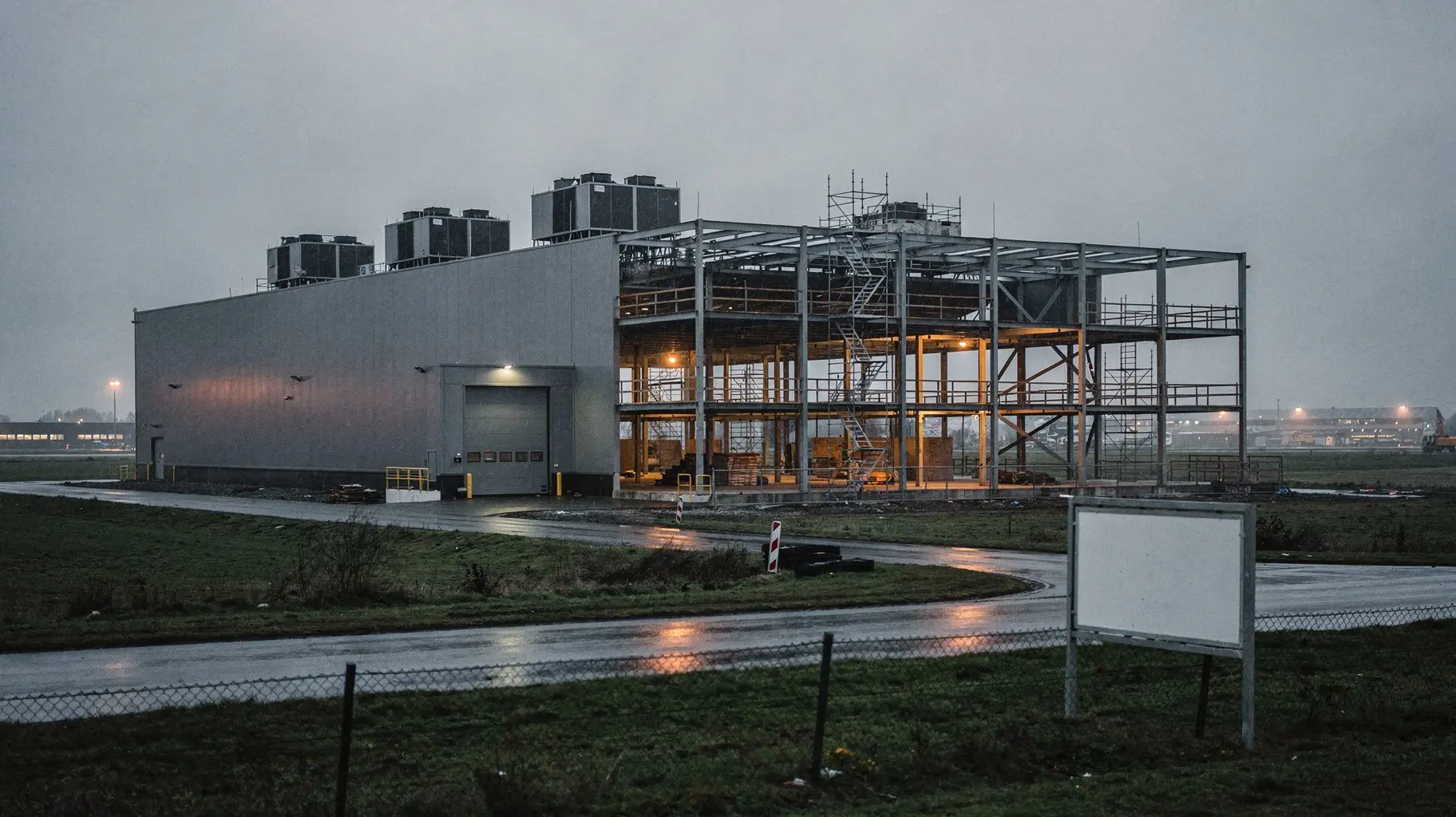
Amsterdam 6 Has a Registry Entry, a Postbus, and No Hall Yet
The Dutch company behind AMS6 appears in RIPE NCC's member list under its own legal name, with an Amsterdam PO box. On the operator's own site list, the hall that name points at is still under development.

Leaders
DENIC Names Its Board, Then Loses the Thread
Germany's .de registry publishes a two-track board — two members appointed by its supervisory board, two elected by its general assembly — printed beside four names. Which name sits in which track is the one line the page leaves out, and that line is what decides which body can…
Number Resource Society
RIPE NCC Counted Every Freeze and Published None of the Cases
A registry applied other people's sanctions to its own members and then published the arithmetic. The arithmetic is exact about quantity and empty at the only point where a stranger could check it — and the account of the report presents that emptiness as the design, not the gap.
Europe and Middle East Regional ISP
A second AS number the older pool could never have issued
A second AS number the older pool could never have issued intelligence summary explains the development, the public evidence available to readers, the organisations involved, the regional context, market exposure, and the infrastructure consequences that may follow. The Europe…
Europe and Middle East Institutional
CNIL prints the fine. The meter runs somewhere else.
A French data-protection sanction does not arrive as one number. On the authority's own description of its instruments it arrives as a sum fixed on the day, a date fixed in the same act, and a daily charge that begins only if that date passes unremedied — and the third part is…
Europe and Middle East Institutional
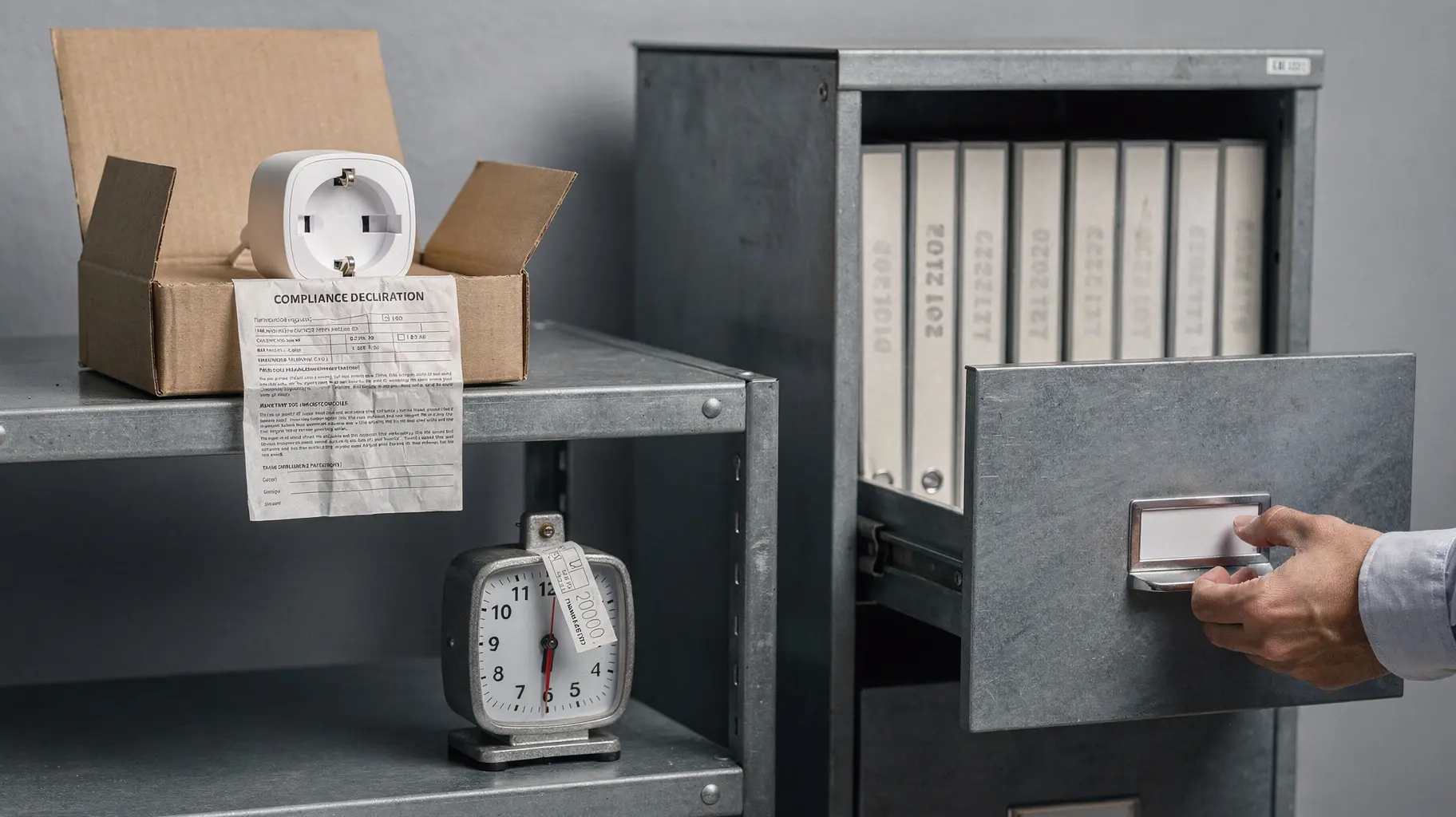
Britain's smart-device security gate ships in the box, signed by the company it binds
A carton on a shelf, a slip of paper taped to its side, and a steel drawer that stays shut for ten years. The Product Security and Telecommunications Infrastructure Act 2022 never sends an inspector into a factory. It makes the manufacturer put a declaration in with the product…
Europe and Middle East Institutional
Article 53 says 'sufficiently detailed'. The AI Office has the ruler
A provider of a general-purpose AI model must draw up and keep up to date a summary of the content it trained on. The statute never fixes how detailed that must be — it names a template the AI Office shall publish, and leaves the adjective to whoever writes it.