
Primary Domain
Internet Infrastructure
Within the Primary Domain facet, Internet Infrastructure intelligence groups reporting by primary domain so readers can follow a focused area of internet infrastructure, governance, connectivity markets, or digital capital. The page brings together related articles, public evidence, institutions, companies, people, regional exposure, operating dependencies, and market context that may otherwise sit across separate category pages. It explains the domain, the likely actor class, the market or governance context, and the source material readers should use when comparing signals. Operators, analysts, and governance readers can see how the same domain appears across events, profiles, market shifts, public-source evidence, regional dependencies, and longer-cycle infrastructure decisions over time.

History
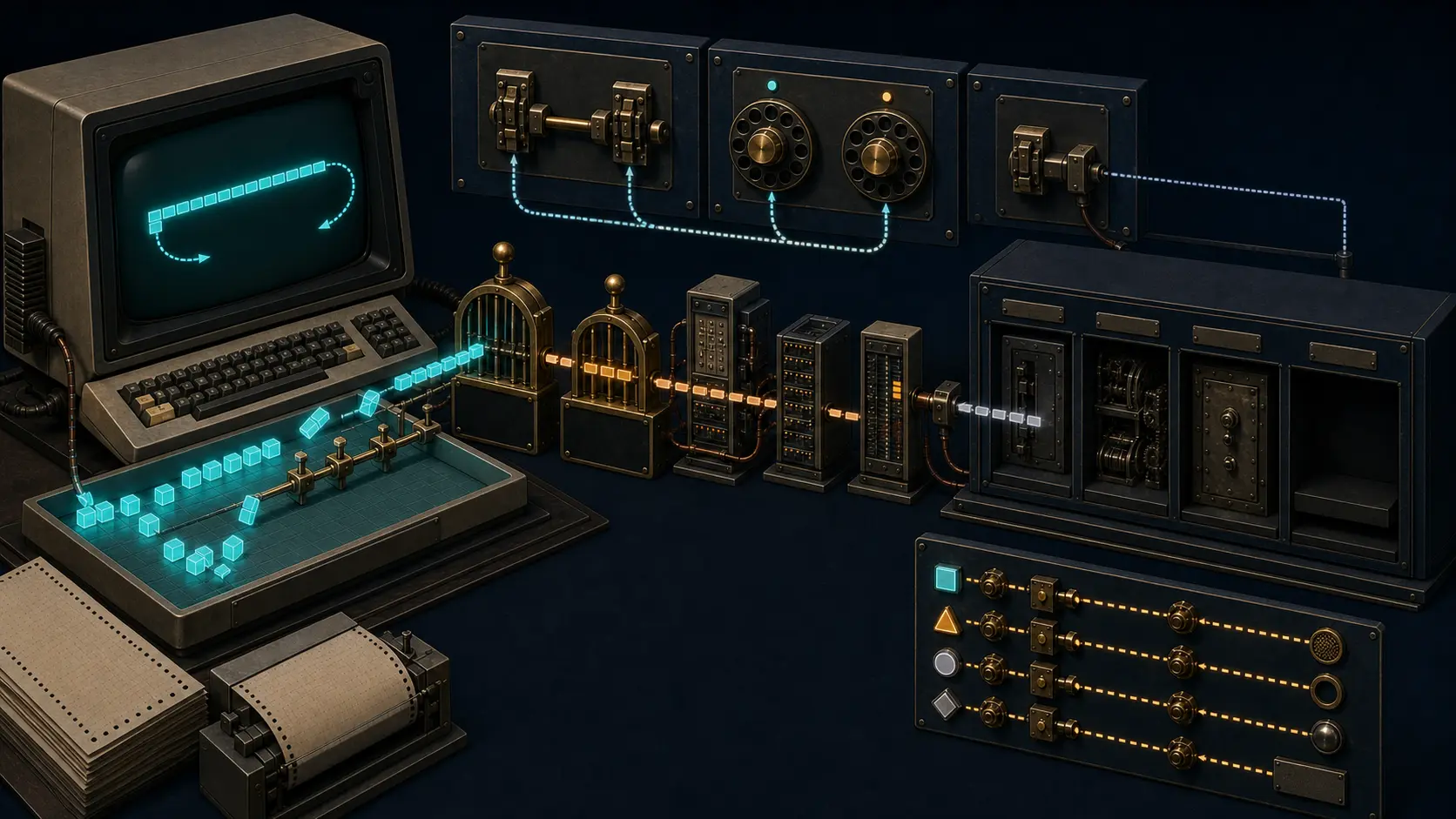
A Catalog Was Not an Interoperability Verdict: RFC 1292’s X.500 Snapshot
An implementation catalog can lower the cost of asking a sensible question without answering the harder questions that follow it. RFC 1292 gathered descriptions of X.500 software in January 1992 and arranged them by availability, component type, transport, pilot connectivity…
History
The Line Was Complete. The Command Had Not Run: RFC 1116 and Telnet Linemode
In character-at-a-time Telnet, a typist could wait for the network to see each key return. Linemode made the nearby terminal feel immediate: editing and echo could happen before the line crossed the path. That improvement also created a durable evidentiary trap. The completed…
CASE FILE
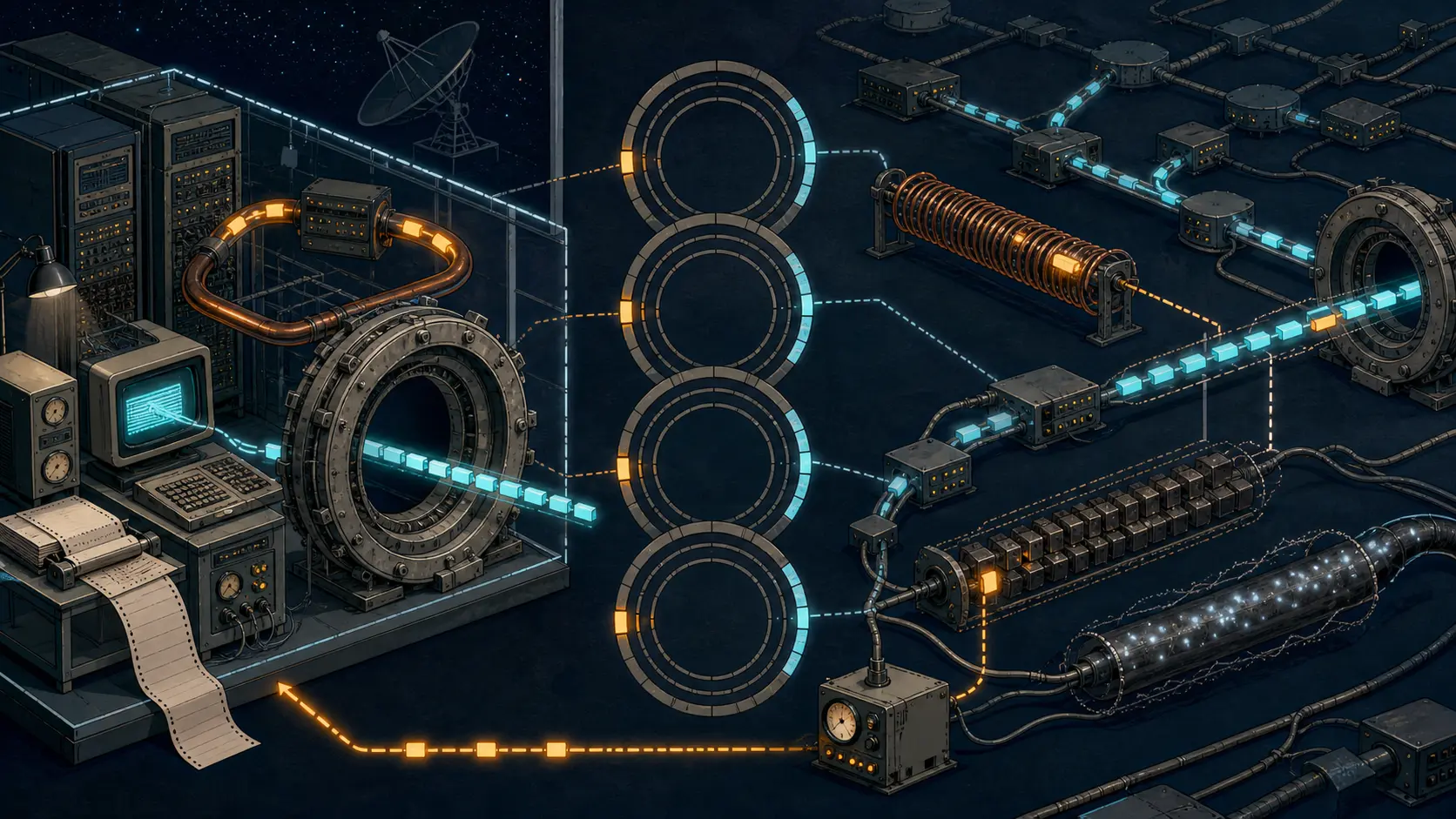
The Inventory Found the Algorithm. It Did Not Migrate the System: RFC 9958 and Cryptographic Agility
An organisation can catalogue every algorithm name it knows and still be unable to say which cryptographic path protects a consequential transaction. RFC 9958 makes the inventory indispensable. It does not allow the inventory to pronounce a migration complete.
History
It Worked at NASA. That Did Not Make It Safe for the Internet: RFC 1106 and RFC 1110
June 1989 produced an unusually honest sentence in protocol history: two experimental TCP extensions had been implemented and shown to work using NASA resources. Two months later, another RFC explained why one of them still could not be adopted for the general Internet. The test…
CASE FILE
The UUID Sorted. The Event Was Not Proven: RFC 9562 and the Boundary Between Identifier Order and Evidence Time
At 14:03, a review screen puts two rows in an immaculate order. The smaller UUIDv7 belongs to `reversal-requested`; the larger one belongs to `reversal-completed`. It looks like a ready-made account of what happened. But the first identifier may have been allocated before a…

History
Changing the Route Was Not the Same as Filtering the Packet: RFC 1104
In June 1989, RFC 1104 divided “policy routing” into mechanisms that were already easy to confuse. A network could change which reachability it disclosed, inspect a particular packet, assign scarce bandwidth or buffers, and record usage for later accounting. Each act could be…

History
A SHUT State Was Not an Off Node: RFC 1289 Kept the Existing Links
The word “shutdown” invites a clean story: an operator chooses a state, a node stops, and the work is over. RFC 1289 preserves a more demanding chronology. Its DECnet Phase IV MIB did not treat every admission restriction as an OFF node. `SHUT` allowed no new logical links, but…
CASE FILE
The Collector Received a Delay. It Did Not Receive a Verdict: RFC 9951
At 09:17, a collector receives a Flow Record with a mean delay, a maximum delay and an identifier for the transit point that exported them. By 09:20, someone wants the record to settle three larger questions: whether a customer suffered, whether a path changed, and which team…

History
The Memo Called It a Standard. The Record Did Not: RFC 1097
On 1 April 1989, a three-page RFC proposed a Telnet option for flashing messages too quickly for a user to notice. Its joke is easy to recognize. Its more durable lesson is quieter: the memo could call itself a standard, but it could not confer that standing on itself; a Telnet…

History
The Display Location Crossed Telnet. Access Still Belonged to X: RFC 1096
In March 1989, a small Telnet option solved an awkward problem of divided context. A person logged in to a remote host could start an X application there, yet that host did not know where the person's screen was. RFC 1096 let the Telnet client supply a display locator. The…
CASE FILE
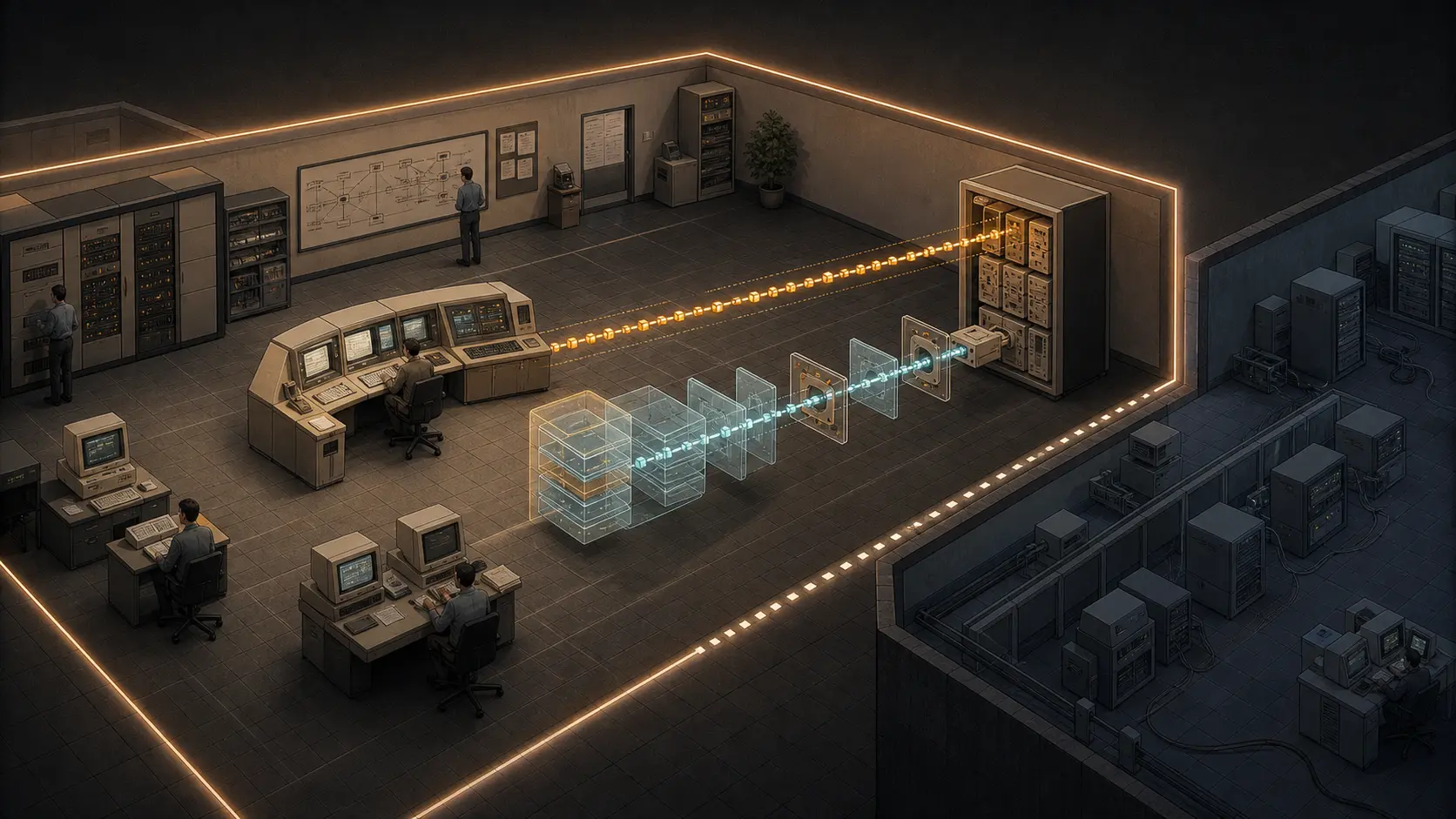
The Benchmark Found a Limit. It Did Not Grant a Capacity Claim: RFC 9971
A network benchmark often arrives in a meeting as a single number. That number then begins doing work it was never designed to do. It is used to imply that a cloud function has production headroom, that a supplier has met an obligation, that a release is safe, or that a customer…
History
Two Protocols Were “Recommended.” Only the Profile Said What Could Interoperate: RFC 1095 and CMOT
In April 1989, the Internet did not have one official answer to network management. CMOT and SNMP carried the same Draft Standard and Recommended labels, and both were meant to describe the same Internet MIB. Yet a shared catalogue of entities was not a shared system. RFC 1095…
CASE FILE
The Queue Found a Flow. It Did Not Find a Culprit: RFC 9957 and DOCSIS QProt
When a low-latency queue begins to grow, an operator wants a fast answer to a hard question: which traffic should lose the privileged path first? RFC 9957 describes a careful local answer for DOCSIS. It is not an answer to the wider and more tempting questions. A Queue Protection…

History
The Device Had a MAC Address but No IP Stack: RFC 1089’s One-LAN Management Channel
A repeater could shape the network and still be absent from the Internet that operators used to manage it. RFC 1089 solved that awkwardness by putting an ordinary SNMP message directly inside an Ethernet frame. The missing layers made the agent simpler. They also made the…
CASE FILE
The Packet Carried a Mark. It Did Not Deliver an Operations Verdict: RFC 9947 and SRv6 Measurement Authority
A marked packet is compelling because it seems to turn an invisible path into a fact. A loss bit, a delay bit, an identifier, a timestamp and a sequence value can all travel inside the same Segment Routing Header that tells the packet which segment endpoint to visit next. That is…

History
The Heartbeat Held an X.25 Subaddress. It Did Not Authenticate the Claim: RFC 1086’s TP0 Bridge
A TCP/IP host wanted an address in a network it did not inhabit. RFC 1086 let a bridge listen on an X.25 subaddress on that host’s behalf—but only while a separate TCP connection stayed open. The mechanism knew when to release a scarce slot. It did not know who deserved it.
CASE FILE
The Map Reached a Router. It Did Not Decide the Path: RFC 9962 and LISP-Decent
A network can reduce a control-plane dependency and still retain a decision boundary. RFC 9962 makes that distinction unusually visible. It lets LISP Tunnel Routers participate in distributing the EID-to-RLOC mappings they use, rather than leaving all mapping state with a…
History
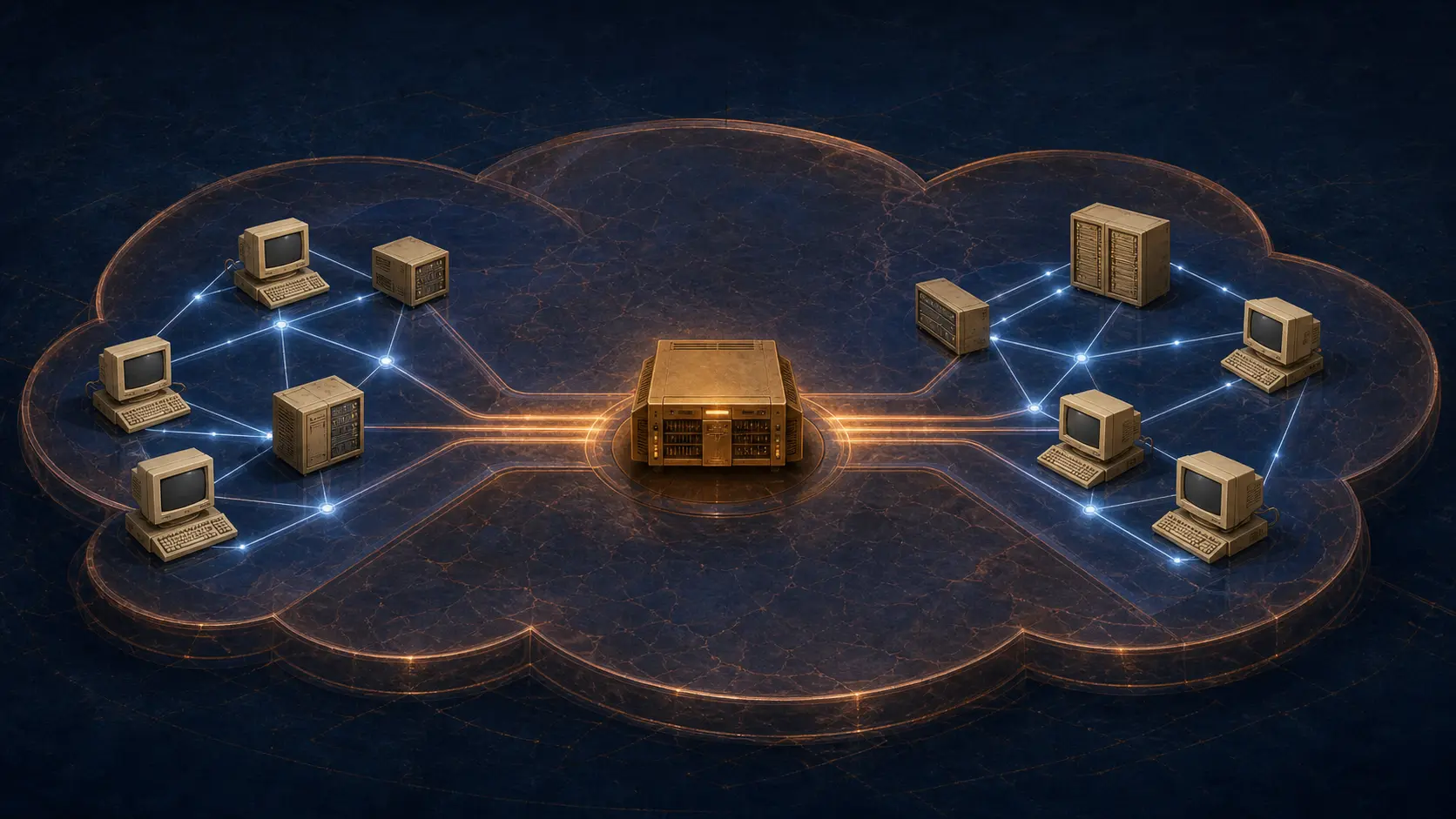
The Same Service Held Two Neighbors. A Router Still Stood Between Them: RFC 1209
Sharing a carrier service can make two machines look like immediate neighbors. RFC 1209, published in 1991 for IP over SMDS, made a deliberately narrower promise. A logical IP subnetwork was an administratively closed group on that shared service. Hosts could communicate directly…

History
Control-S Was a Command Only While the Option Held: RFC 1080’s Telnet Boundary
A terminal user presses Control-S. Did the keystroke pause the display, travel across the Telnet connection, or reach an editor as ordinary input? RFC 1080 made the answer depend on a small, revocable agreement—and kept the decisive mechanism at the user’s local Telnet process.
History
The NIC Looked Continuous. Its Registry Writes Had Paused: RFC 1261
In a service migration, the most reassuring things are often the things that travel cleanly: a familiar hostname, a working mailbox, a Help Desk number, a screen that resembles yesterday’s screen. RFC 1261 made a more sober distinction when the Network Information Center changed…