Summary
- The W3C’s first public Media Session draft in January 2020 specified page-provided media metadata and action handlers, while the browser selected at most one active session to present to the device.
- Its headset play/pause example routed one joint command according to the active session’s playback state. The 2021, 2023 and 2026 drafts continued to refine this shared switchboard between device controls and page-owned behavior.
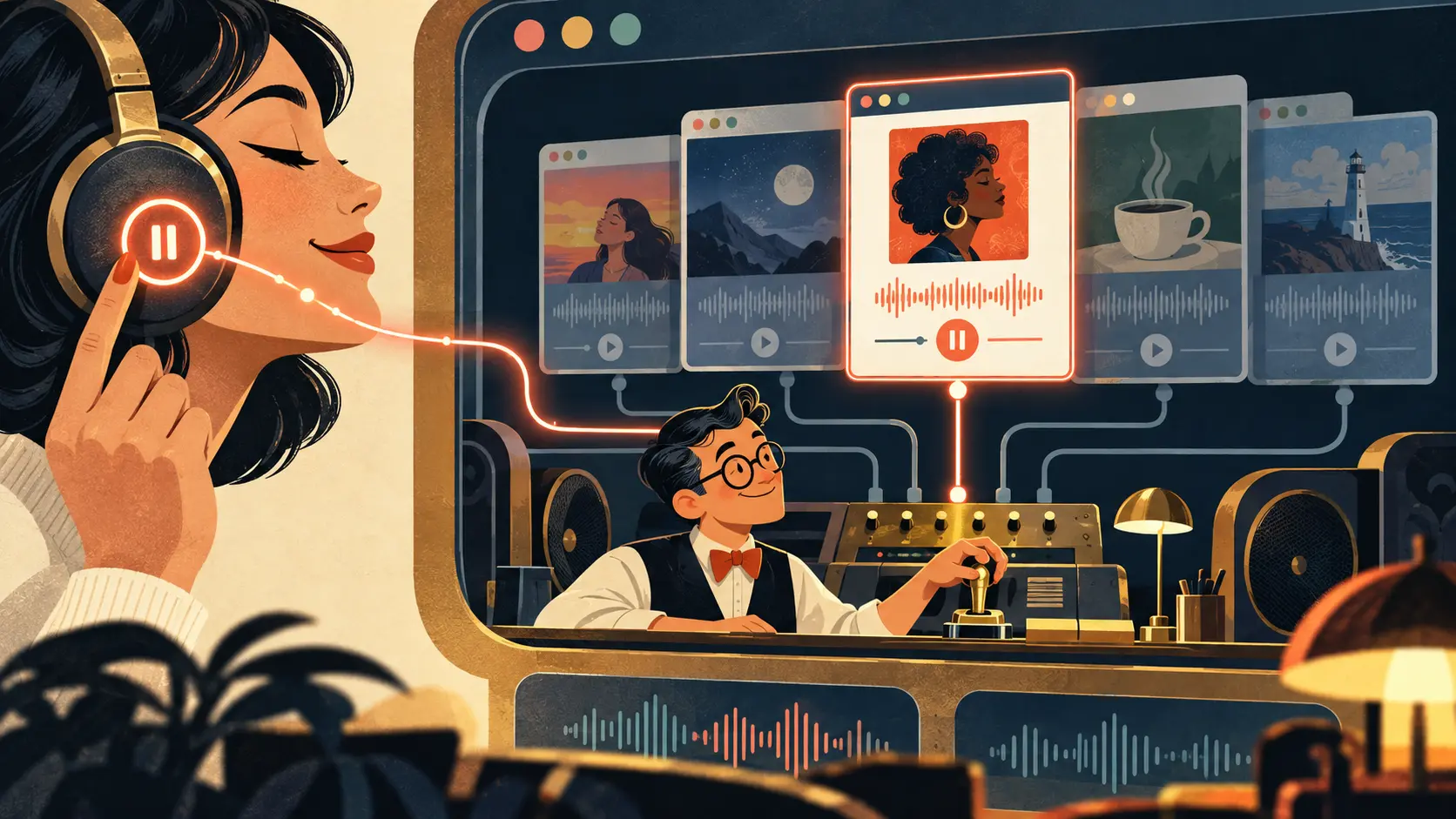
A listener closes a laptop lid, reaches for the button on a headset and expects the podcast to pause. The browser may have a song in another tab, a video waiting in a third and an advertisement whose audio ambitions exceed its editorial merit. The headset offers no dropdown menu. It sends one small instruction into a crowded building. Someone has to decide which room is on air.
The W3C’s first public Media Session draft of 30 January 2020 described that someone as the user agent. A document could supply MediaMetadata—title, artist, artwork and the like—for presentation in platform controls. It could also register handlers for actions such as play, pause or next track. The browser chose at most one active media session to show to the device. The page brought the program and its controls; the browser ran the routing desk.
The distinction matters because a browser page cannot simply seize the headset button by decorating its own play icon. A hardware key, lock-screen control or notification control sits outside the document. The listener sees one platform surface for several possible web players. The browser must select which session deserves that surface, then deliver a command the selected page understands. A site may describe a podcast episode beautifully and still be the wrong recipient when another tab is actually playing.
The 2020 draft even spelled out the awkward single-button command. A headset click can mean play or pause. For the active session, the browser examines actual playback state: if playing, it sends pause; otherwise it sends play. The June 2021 Working Draft kept that model alongside page-defined action handlers and metadata. The browser interprets the ambiguous physical gesture; the page decides what its own play and pause operations do. A podcast may resume an episode, while a live stream may reconnect. One button need not force every program into the same internal machinery.
The October 2023 Working Draft continued to describe an active session and the updates that follow a change of selection. Metadata on the platform surface and available actions must follow whichever session has the floor. That is the crucial housekeeping. Nobody wants yesterday’s album cover on the lock screen while today’s news briefing plays, or a “next” command delivered to a tab that finished hours ago.
The W3C publication history dates the first public draft to 2020 and records subsequent 2021, 2023 and 2026 revisions. Those versions show a continuing effort to make a web player intelligible outside its own tab. They also show why the browser cannot behave as a passive wire. Choosing a session is a decision about scarce attention at the device’s single control surface.
The June 2026 Working Draft keeps the one-active-session rule and an expanded action vocabulary. It includes position state, media metadata, playback state and handlers for commands that extend beyond the old song-player trio. Yet the central arrangement is recognizably the same. The browser presents one session to the platform; the selected page supplies information and handles the action. The headset button asks for a DJ, not ten separate volunteers shouting across tabs.
The arrangement gives publishers an incentive to keep their metadata and playback state honest. A title and artwork on a device screen are promises to the listener about what is playing. An action handler is a promise that pressing pause will pause the thing in their ears. The platform can route the instruction, but it cannot make a site’s playlist sensible or stop a page from claiming to be playing when it has gone quiet. Those are local choices with an immediate audience.
For the listener, success is almost boring. Press the button. The right program pauses. Press it again and it returns. The switchboard disappears from view, which is precisely what a good switchboard should do.
Member Briefing
Deeper Profile Context
Sign in with the right membership level to unlock the full briefing and source notes.
Only for Strategic Circle
Strategic Circle
Open to all readers. Unlock profile briefings after joining and signing in.
Join Strategic CircleOnly for Leadership Alliance
Leadership Alliance
For qualified IP-asset owners and management; sign in to unlock alliance briefings.
Join Leadership Alliance