Summary
- Hubble Heritage grew from a monthly web gallery into a route to carefully assembled scientific image products.
- The 2005 M51 release paired its colour picture with downloadable mosaics, weight maps and a record of processing decisions.
A galaxy makes an excellent publicity photograph. It never asks for a better side. Preparing its picture, however, can involve an impressive amount of tidying—and the awkward question of whether the thing you are about to erase is actually a star.
Hubble Heritage had been turning telescope observations into public pictures since 1998. By its fifth anniversary it had released more than 65 images on a monthly schedule. Astronomers and image specialists searched the archive; additional observing time could supply missing colour coverage or parts of a view. A public data store still needed people to make it inviting. NASA's 2003 account describes that work.
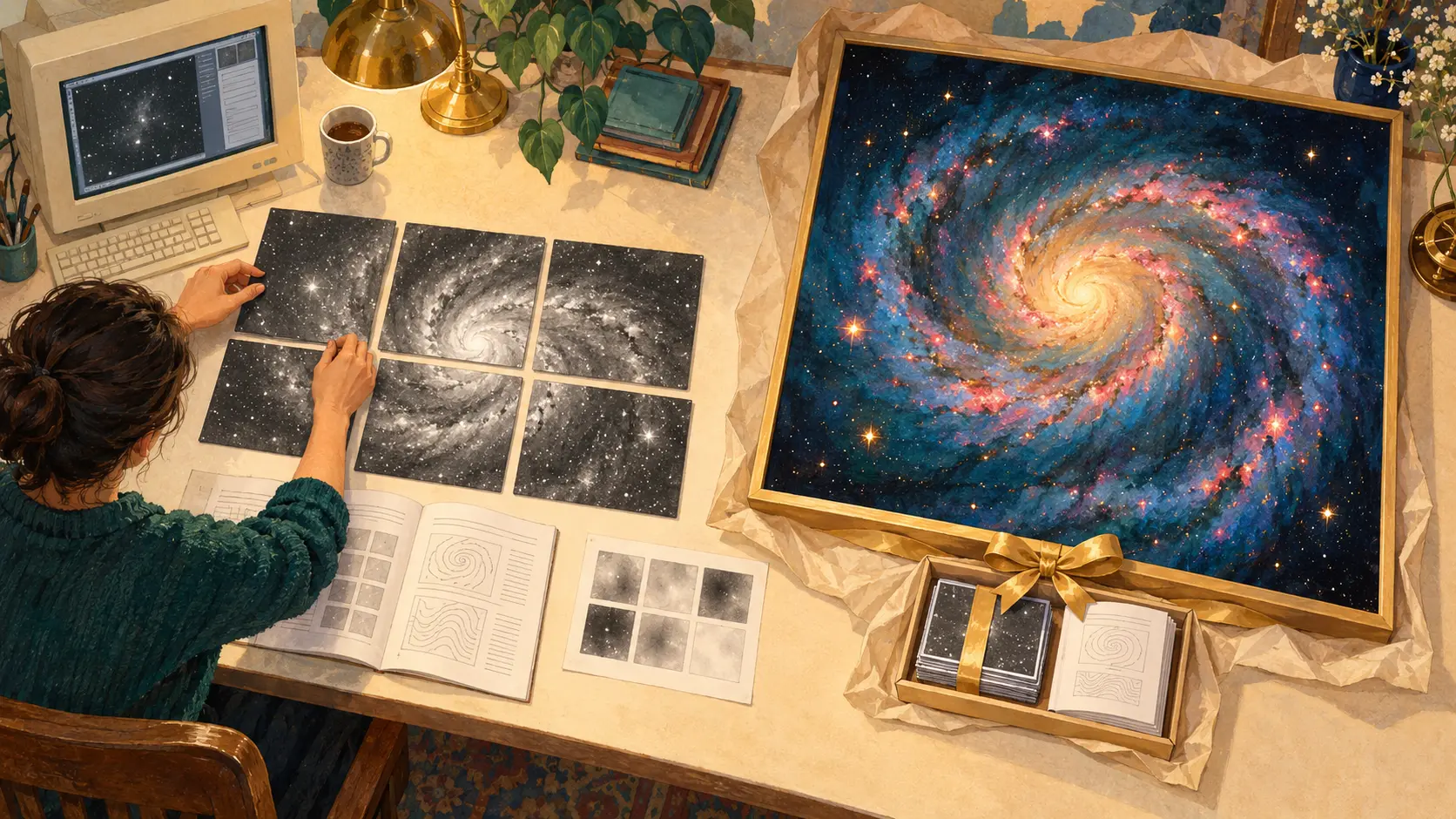
In January 2005 the team observed the Whirlpool Galaxy, M51, and its companion with Hubble's Advanced Camera for Surveys. Six overlapping fields, four filters and repeated exposures produced the material for a grand composite, released on 25 April for the telescope's fifteenth anniversary. The web visitor could enjoy the swirls and move on. The associated MAST page offered a longer visit: processed scientific images, previews and a detailed README, downloadable through a browser or anonymous FTP.
The files carried work that a publicity image could not show. The team had aligned separate exposures, combined them into mosaics and dealt with detector defects and stray signals. One hydrogen-alpha exposure with an unexplained high background was left out; a satellite trail in another was masked. A clean-looking result carried a history of deliberate choices.
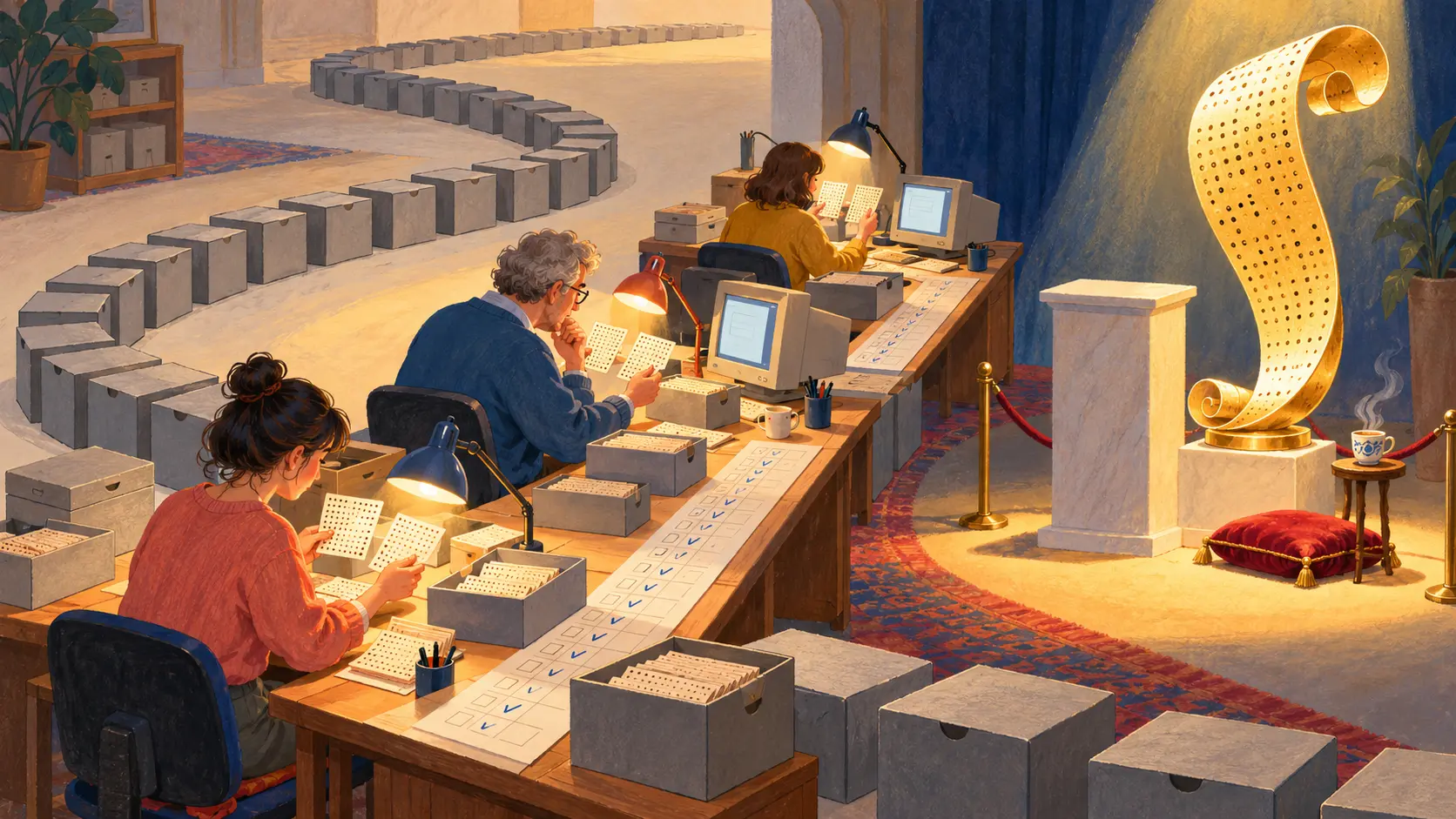
Those decisions left a useful companion: a weight map. Overlapping fields, gaps between detector chips and rejected pixels meant that the finished picture did not have the same effective exposure everywhere. The map recorded those differences. The team examined it to check both that unwanted features lost weight and that real bright objects survived. Even in astronomy, an overenthusiastic cleaner can do damage.
The team's 2005 paper laid out the choices. Because the galaxy occupied much of the image, the usual sky subtraction was switched off. Rejection thresholds were adjusted to protect bright cores. The authors also recorded a specific unfinished check: the first-version mosaics had not themselves been directly tested for photometric accuracy or stability of the point-spread function across the field. A subsequent researcher had something concrete to investigate.
Downloads came in sensible sizes for different jobs. Full scientific mosaics and their weight maps were about 420 MB per file; smaller versions served quick inspection and education, with tiny GIF previews for browsing. The distinction mattered on a web where admiring a galaxy and undertaking its analysis should require different amounts of waiting. The attractive picture opened the door. The accompanying files gave people a reason to stay.
Member Briefing
Deeper Profile Context
Sign in with the right membership level to unlock the full briefing and source notes.
Only for Strategic Circle
Strategic Circle
Open to all readers. Unlock profile briefings after joining and signing in.
Join Strategic CircleOnly for Leadership Alliance
Leadership Alliance
For qualified IP-asset owners and management; sign in to unlock alliance briefings.
Join Leadership Alliance