
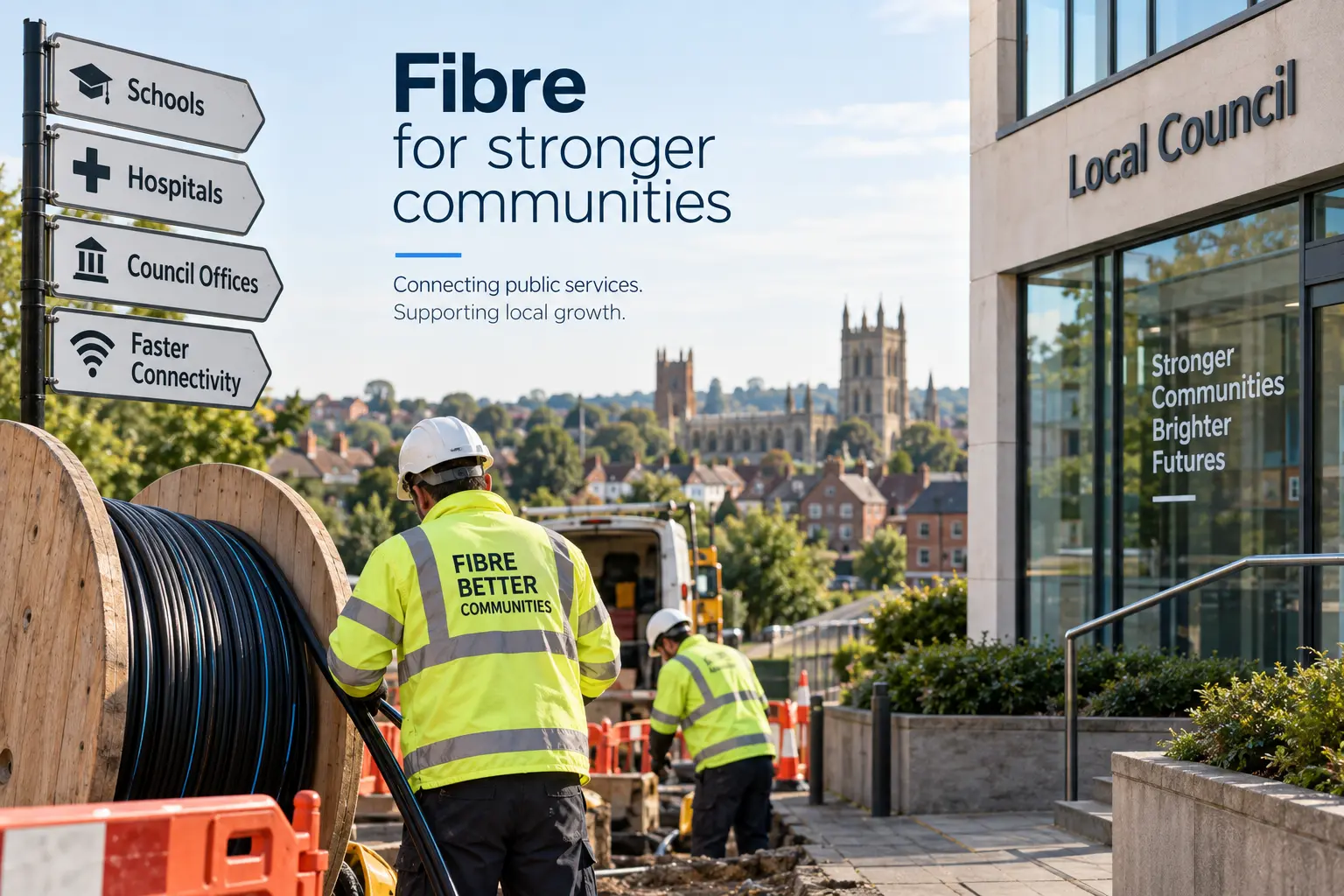
- A UK evaluation found that Local Full Fibre Networks funding helped new suppliers enter some markets, particularly where public contracts removed a barrier to investment
- Where operators were already expanding commercially, the programme mainly extended or accelerated coverage rather than creating new competition
The fact
A UK government evaluation found that the £200 million Local Full Fibre Networks programme helped suppliers enter some local markets, but had less influence where commercial deployment was already planned. The programme began in 2017 and used measures including public-sector fibre contracts and access to public infrastructure to encourage wider network investment. The new reports evaluate that earlier programme; they do not announce new funding.
The review found that public-sector contracts helped CityFibre establish projects in several areas by providing committed demand. In Northern Ireland, where Fibrus and Openreach were already expanding, the programme mainly supported smaller extensions around public-sector sites. The evaluators concluded that private investment remained the main driver of wider network growth.A companion review found that public organisations generally reported more reliable connectivity, although wider improvements also depended on their equipment, staff, and other resources.
The assessment
Public fibre funding will not have the same effect everywhere. Where a network builder is not yet sure there is enough demand to justify the investment, a council contract can provide an early customer and make entering the market more attractive.
It has less impact where operators are already building. Public money may help bring service sooner or extend coverage a little further, but it should not be credited for investment that was likely to happen anyway. Councils therefore need to be clear about what they want the contract to achieve before they spend the money.
For BTW readers, future tenders should be measured against that goal. If the aim is to bring a new supplier into the area, authorities should look at whether the contract actually influenced that decision. If the aim is to connect public buildings or reach more premises, those results should be measured separately rather than described as new competition.
What to watch
Watch whether future UK fibre tenders state clearly what public funding is expected to change, such as bringing in a new supplier, extending coverage or delivering a network earlier. Comparing those commitments with what is eventually built would show whether the lessons from the evaluation are being applied.
Member Briefing
Deeper Profile Context
Sign in with the right membership level to unlock the full briefing and source notes.
Only for Strategic Circle
Strategic Circle
Open to all readers. Unlock profile briefings after joining and signing in.
Join Strategic CircleOnly for Leadership Alliance
Leadership Alliance
For qualified IP-asset owners and management; sign in to unlock alliance briefings.
Join Leadership Alliance