Summary
- Switzerland's 2029 mobile-spectrum licences require each holder to cover at least half the population by 31 December 2033 using its assigned frequencies and own terrestrial radio installations.
- ComCom allows shared sites, masts and cables inside that minimum; the licensee's own transmitting and receiving units must provide the service. Operator-controlled small cells can count. A private customer's unreliable femtocell cannot.
The next Swiss mobile-spectrum auction has an architectural detail with a surprisingly domestic edge: a transmitter in a living room does not automatically become national infrastructure. In its 22 October answers to bidder questions, the Federal Communications Commission, ComCom, explains what a licensee can count toward the coverage promise attached to the frequencies available from 2029. The award is expected in the second quarter of 2027.
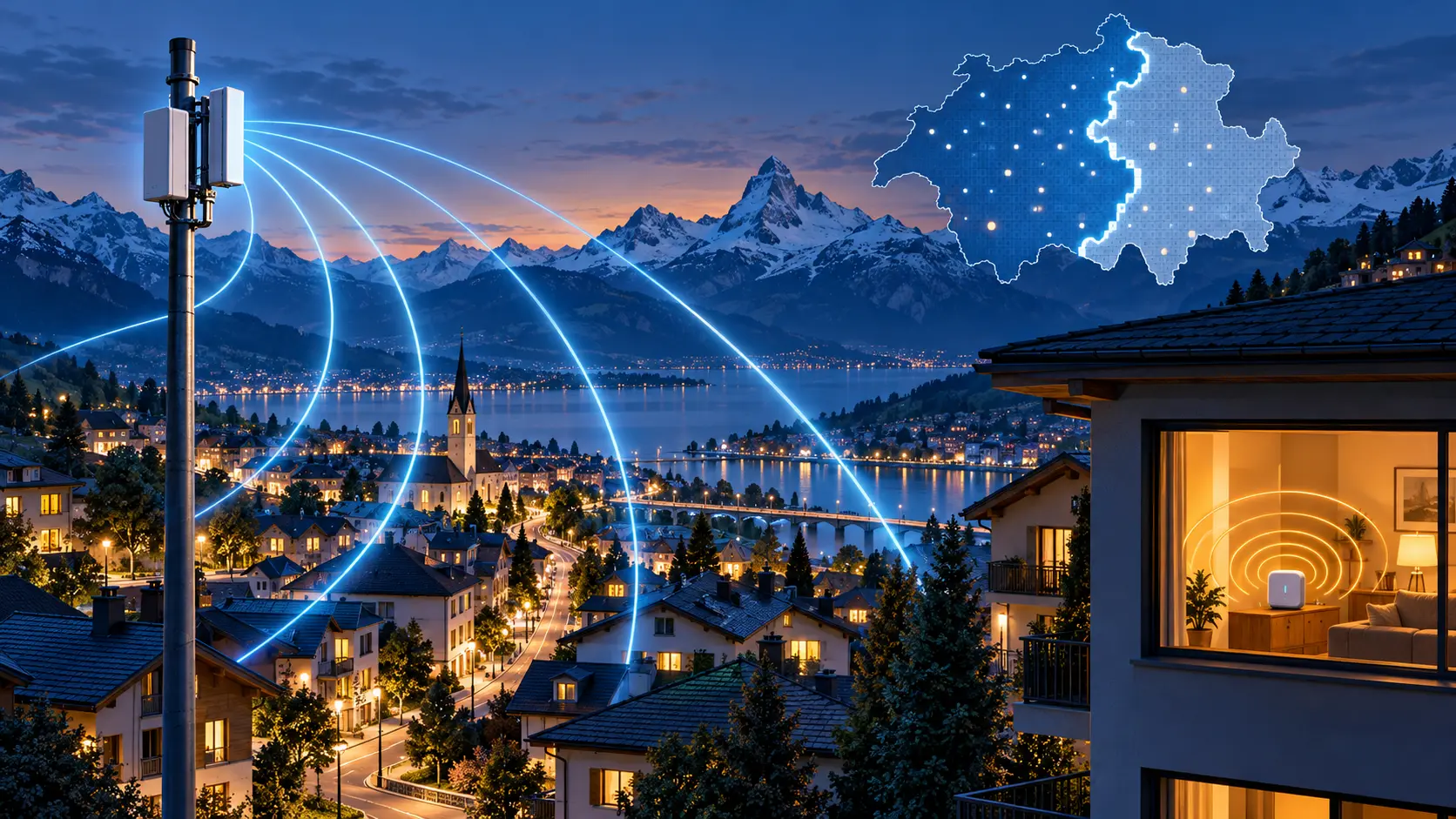
The tender sets a clear denominator: at least 50% of people in Switzerland must be covered by mobile service by 31 December 2033. It requires the winner to use its assigned frequencies and its own terrestrial mobile installations. Bidders must supply a map, projected population coverage and a timetable. ComCom can ask for more detail to test whether the plan holds water. A pretty heat map is therefore an opening statement, not the final witness.
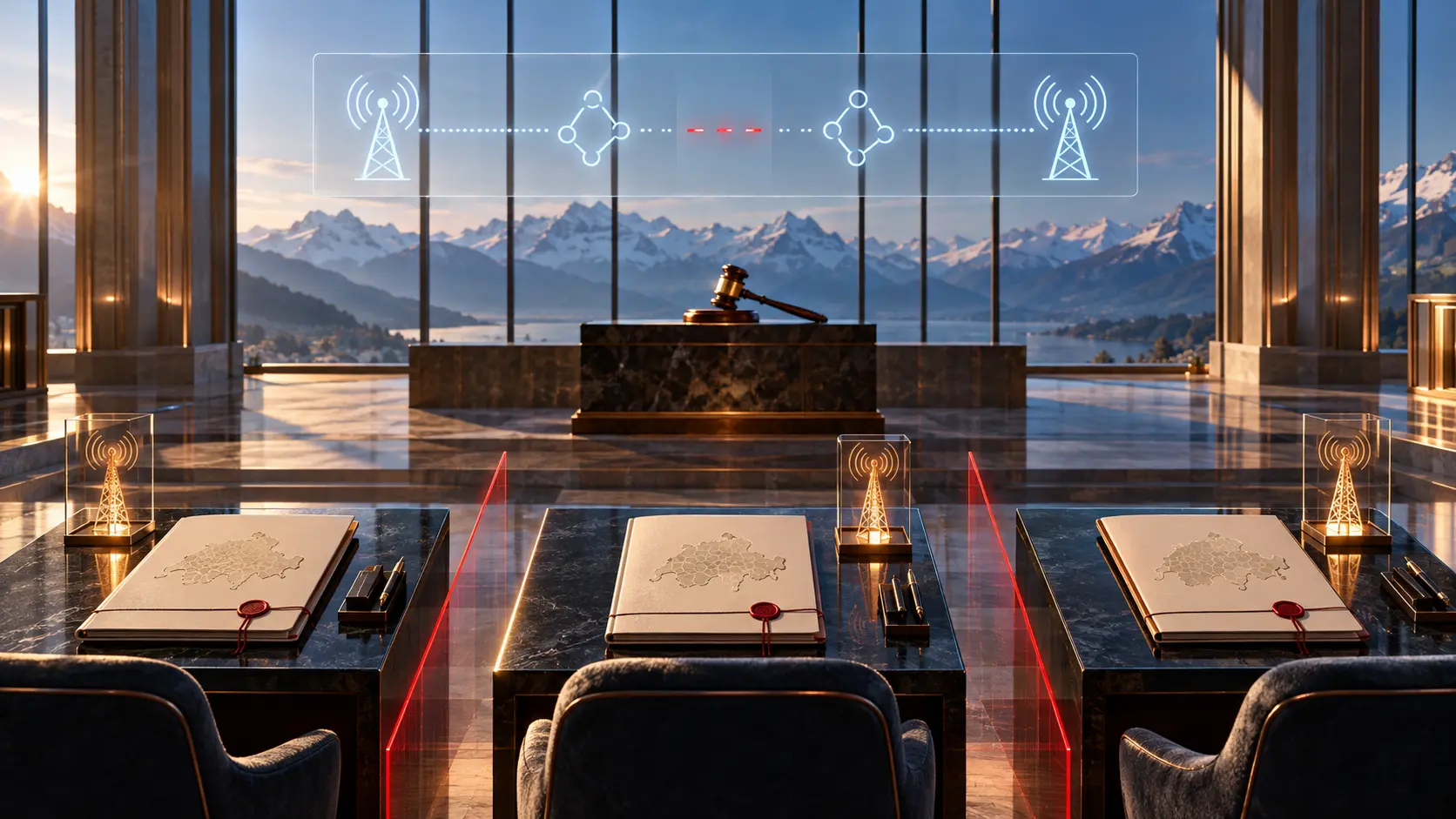
One bidder asked whether shared infrastructure could satisfy that duty. ComCom's answer draws the line inside the network. Operators may share passive elements such as a site, tower or cable. For the minimum coverage, each must use its own transmitting and receiving units; sharing active network elements does not fill the required half. Beyond the minimum, both passive and active sharing are permitted. Frequency pooling is currently barred and would need approval.
Another bidder tested the size of the radio. ComCom says “own terrestrial” is technology neutral: the rule does not demand a forest of high-power macro towers. An operator-controlled femtocell or other small cell may count if it uses the licensee's frequencies, forms part of its terrestrial network and supplies permanent, verifiable commercial mobile service. A femtocell installed by a customer, whose signal is not generally and reliably available to the population, stays outside the count. A tiny public cell can carry more regulatory weight than a large private signal.
The OFCOM award page frames the auction as a way to preserve and develop Switzerland's three mobile networks and competition. The coverage answers put an operator behind each promised patch of service. A shared pole is a cost choice. The public radio service must have an accountable owner.
Sources
Member Briefing
Deeper Profile Context
Sign in with the right membership level to unlock the full briefing and source notes.
Only for Strategic Circle
Strategic Circle
Open to all readers. Unlock profile briefings after joining and signing in.
Join Strategic CircleOnly for Leadership Alliance
Leadership Alliance
For qualified IP-asset owners and management; sign in to unlock alliance briefings.
Join Leadership Alliance