Summary
- On 18 August, the CRTC denied Ztar Mobile's request to regain access to Rogers' wireless activation management system after their resale relationship ended. The ordinary porting rule protects working numbers, not numbers already disconnected.
- Commissioner Bram Abramson agreed that Rogers need not reopen that system. His dissent proposed a narrower, temporary way to verify a former customer's claim to a number that has not been reassigned.
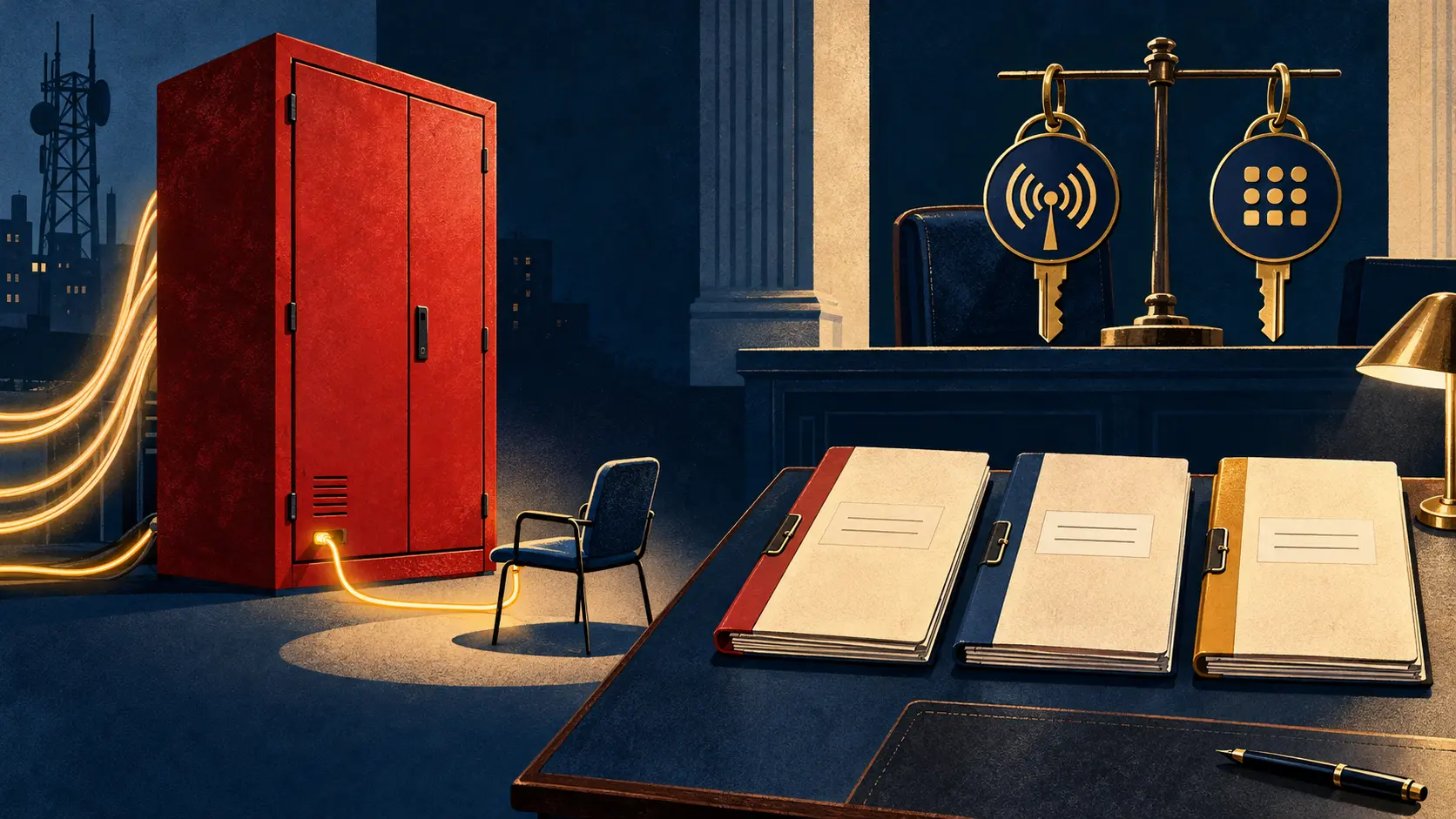
A telephone number can be too dead to port and too alive to give away. That is the awkward space exposed by the CRTC's 18 August Ztar decision. Rogers ended its resale service to Ztar on 11 December 2025, then let Ztar use its wireless activation management system for another six weeks. When that access ended on 22 January, Ztar asked the regulator to order it back. The majority said no.
Rogers had given notice and extensions over roughly a year. Ztar had time to move its customers. The CRTC found Rogers had met its obligations and would not compel a further extension after the wholesale relationship ended. It ordered Ztar to tell disconnected customers how to obtain another service and where to complain. That is a defensible allocation of a failed migration's commercial burden; a host cannot be turned into an unpaid permanent exit desk.
The trouble is the customer's number. Under the CRTC's wireless porting rule, a carrier may deny a port when the number is not working after suspension or termination. The majority said Ztar's unported numbers had been disconnected for more than six weeks when it applied; they had returned to Rogers' inventory and might already have been reassigned. The record concerned 30,000 to 40,000 numbers, a pool of possible claims rather than 40,000 proven people asking for them back. The majority also noted that most had shown no use in the preceding 90 days.
Commissioner Bram Abramson's dissent found a more precise missing part. He agreed that the application gave no basis to restore Rogers' whole management system. Yet Canada's numbering guideline listed by the CRTC places disconnected wireless numbers in an aging period of one to three months before reassignment. The ordinary reconnection purpose assumes the old provider is still there to confirm the customer. When that provider exits, the number may remain temporarily unavailable for someone else while the former user has no workable route to prove a claim.
Abramson proposed keeping only that proof function: Ztar, or a privacy-bound intermediary, would verify a person as the last user; Rogers would help only where an existing process could recover a still-available number. The window would close on reassignment or technical unavailability. It was a dissent, not the CRTC's order. The majority instead left customers with information about new service and complaints, and a warning that their old number may be gone.
There is one fact the ruling does not count: how many former customers actually sought an unreassigned number while a usable recovery path existed. That count would distinguish a theoretical hole from a recurring failure at provider exits. The structural hole is already visible. The network can retain a number in a waiting room; the relationship that proves who used it can disappear at the door.
Sources
Member Briefing
Deeper Profile Context
Sign in with the right membership level to unlock the full briefing and source notes.
Only for Strategic Circle
Strategic Circle
Open to all readers. Unlock profile briefings after joining and signing in.
Join Strategic CircleOnly for Leadership Alliance
Leadership Alliance
For qualified IP-asset owners and management; sign in to unlock alliance briefings.
Join Leadership Alliance