Summary
- RFC 1015 proposed connecting existing US agency research networks so an NSF-funded scientist at a NASA-connected university could reach an NSF supercomputer through interconnection rather than another campus connection.
- Leiner assigned separate jobs and bills: agencies kept control of their own networks; a proposed nonprofit IRIO would operate shared gateways and user services; agency operations contributions would initially be equal, with a projected FY1987 shared operations budget of $10 million. These were a plan's estimates and organization chart.
A scientist walks into an already connected university and needs a supercomputer financed by another agency. The network is there, the computer is there, and the grant letter is apparently at the wrong desk. Barry M. Leiner used precisely that configuration in his July 1987 RFC 1015: NASA-supported researchers at one institution already use a NASA-supported network, while an NSF-supported colleague needs an NSF supercomputer. Pulling a fresh university connection to NSFnet would solve the problem by making the cabling department happy. Connecting the agency networks would solve it for the researchers.
Leiner called the proposed arrangement an Interagency Research Internet, or IRI. Several federal agencies had built networks for their own scientific missions. Some were already joined through informal arrangements, but a scientist could still encounter an agency boundary as though it were a physical wall. The example exposed two costs of that boundary. One was a redundant connection to the same campus. The other was making a researcher's route to a resource depend on which agency had paid for the nearby network.
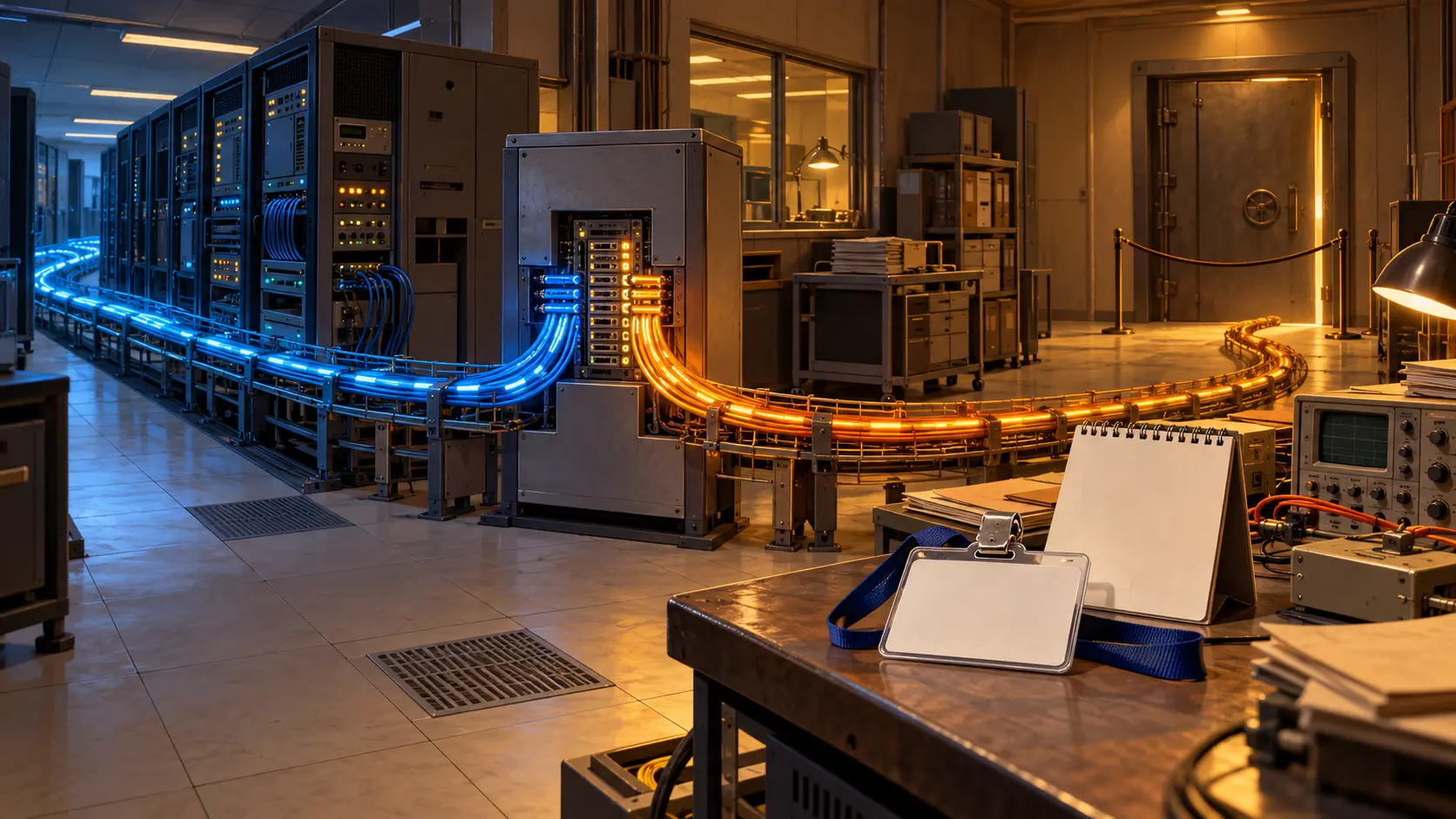
The proposed remedy began with IP gateways between the agency transit networks. An engineering study would decide where those gateways belonged and what capacity they needed. The plan also allowed for shared transit networks if useful. A common virtual packet network could then carry traffic among participating research communities. The goal was practical: a scientist should be able to reach a permitted resource through the connection already serving the institution, while the networks and resources kept their own access controls.
That last clause had a price tag and a governance chart. Each agency would retain control over its own network. The IRI organization would run the shared interconnection, gateways and any jointly supported transit, along with common user services. It would normally have no jurisdiction inside an individual agency network. The boundary was deliberately drawn: sharing a hallway did not hand one tenant the keys to every office. Accounting, privacy and access controls belonged in the design rather than being wished away by a new route.
Leiner proposed an independent nonprofit called the Interagency Research Internet Organization, or IRIO, to contract for shared engineering, operation, maintenance and user support. A Policy Board of funding agencies would direct it; its chair would rotate among agency representatives. A Technical Advisory Board would bring network engineers, connected networks and scientific users into the discussion. The IRIO would coordinate services while local support staff remained the scientists' first port of call. A federated network needed somebody to answer the phone when the shared part broke.
The funding mechanism was equally specific. Each participating agency would initially contribute an equal share of operations costs. Later, shares might reflect the number of users, traffic volume or the kind of support required. One agency would hold the contract and collect interagency transfers for the IRIO; the RFC had not yet chosen that agency. Research spending followed a different route: agencies kept research money within their own budgets and coordinated the work through the Policy Board. Shared operating bills went to one place; scientific research programs kept their separate ledgers.
The projected figures show the intended scale of shared operations. RFC 1015 estimated $10 million of IRI operations for fiscal 1987: $2 million in capital and $8 million in operation and maintenance. The table then projected $10 million for 1988, $11 million for 1989, $12 million for 1990 and $13 million for 1991. It estimated a separate $4 million of research funding for FY1987. The operations estimate covered shared interconnection and user services, while excluding each agency's own network costs. The avoided campus connection did not make the system free; it moved spending toward shared gateways, support and contracts.
That move made the plan more than an exercise in drawing lines on a map. A gateway could connect networks technically, but someone had to select its site, pay its bills, maintain it, help users and decide how participating agencies would share costs. Leiner divided the work so that agencies could cooperate without turning all their networks over to one owner. The IRIO would manage the common seam. Each agency would still manage the fabric on its side. A scientist who wanted a supercomputer should not have to understand the procurement chart, though the chart had to exist somewhere.
RFC 1015 called itself an idea paper and asked for discussion. Its NASA–NSF university is the paper’s illustrative design case. The paper laid out a proposed system, proposed contracts and estimated budgets. A later record of deployed gateways, payments and working user paths would be needed to assess what was built from it. The historical value of this draft is already visible: it showed that avoiding duplicate access required an agreement about who operated and paid for the connection between networks.
The punch line is an administrative one. One campus did not need a new entrance every time a research grant changed agency. It needed a route across the existing networks, plus a bill the agencies could share without surrendering their own keys. In the 1987 plan, the wire was the easy part to draw. The hard part was giving the shared middle a budget and an accountable operator.
Member Briefing
Deeper Profile Context
Sign in with the right membership level to unlock the full briefing and source notes.
Only for Strategic Circle
Strategic Circle
Open to all readers. Unlock profile briefings after joining and signing in.
Join Strategic CircleOnly for Leadership Alliance
Leadership Alliance
For qualified IP-asset owners and management; sign in to unlock alliance briefings.
Join Leadership Alliance