
Primary Domain
Internet Infrastructure
Within the Primary Domain facet, Internet Infrastructure intelligence groups reporting by primary domain so readers can follow a focused area of internet infrastructure, governance, connectivity markets, or digital capital. The page brings together related articles, public evidence, institutions, companies, people, regional exposure, operating dependencies, and market context that may otherwise sit across separate category pages. It explains the domain, the likely actor class, the market or governance context, and the source material readers should use when comparing signals. Operators, analysts, and governance readers can see how the same domain appears across events, profiles, market shifts, public-source evidence, regional dependencies, and longer-cycle infrastructure decisions over time.

History
WAIS Could Search a Database; Finding the Source Was a Separate Job
WAIS made a named database searchable across the network. In 1991, that still left a prior question for the user: which source should the client ask, and who had made it discoverable?

Europe and Middle East National Telecom
Space Norway’s shared optical standard is a resilience claim to test
Ciena will modernize Space Norway’s existing Svalbard cables and equip the new Arctic Way system with the same optical technology. That may simplify operations, but a shared equipment standard does not establish independent routes or tested continuity.

History
The International Link Came First; TCP/IP Came Later: Lithuania’s LITNET, 1991–94
Lithuania’s first route abroad was already useful before its research network had become an ordinary IP network. The early story runs through a satellite channel, X.25 packet switching and X.400 mail, then through a domestic link and a gradual TCP/IP transition.

History
The Phone Bill Became Minitel’s Payment Rail: Télétel, 1984–87
A Minitel user did not need a separate account with every information service. Télétel could carry a charge through the telephone bill, then route a share back to the provider. The convenience came with a trade: France’s telecom operator also controlled the settlement rules and…

Asia-Pacific National Telecom
Telstra’s AI anchor deal raises an Aura returns test
A contract described as “multiples of the Google deal” signals strong demand for Telstra’s Aura fibre. The comparison still has no public unit, while the Google arrangement exchanges terrestrial capacity for subsea access and Telstra’s published return target groups Aura with…

Leaders
Sander Steffann and the Procurement Test for IPv6
An IPv6 checkbox can appear in a tender long before a packet crosses an IPv6 network. Sander Steffann’s work on RIPE’s equipment guidance asks what a buyer can demand, what a vendor should be able to show, and what still has to be tested after purchase.

Africa Datacenter Trends
ANGONIX: Angola's internet exchange and the Atlantic cable layer
Angola's national internet exchange has operated since 16 March 2015 as a neutral platform run by Angola Cables and hosted at the AngoNAP Luanda data centre. Its operator's submarine cable layer is moving toward services of up to 800 Gb/s, while the exchange's own interconnection…

History
Karachi Went Online; Four Cities Still Waited for the Upgrade: Digicom in 1995
In August 1995, a Karachi company could offer a live route to the Internet while the service reported in four other cities still belonged to the slower world of stored mail. Pakistan’s first commercial online service was a real connection, but its launch did not make the same…

History
HotJava Moved the Web’s Extension Point to the Reader’s Machine
HotJava proposed a browser that could acquire behavior from the page’s server: an applet crossed the network and ran inside the reader’s browser. That made client-side execution the route to a more adaptable Web—and made the local security boundary part of the product.

Story
APNIC’s Prop-169 would make the IPv4 needs test match each delegation
APNIC has recorded consensus on a narrow change to its initial IPv4 needs test. The proposal would replace a fixed /23 planning reference with the delegation being assessed; the policy text, guidance and implementation record still need to be read separately.

North America National Telecom
Ripple’s sale gives fiber expansion two different scorecards
Eaton Fiber acquired Ripple Fiber as Verizon took most of Ripple’s existing customers and some network assets. The close expands a wholesale build platform, but its progress will only be legible if construction, customer migration and service continuity are measured separately.
SANOG
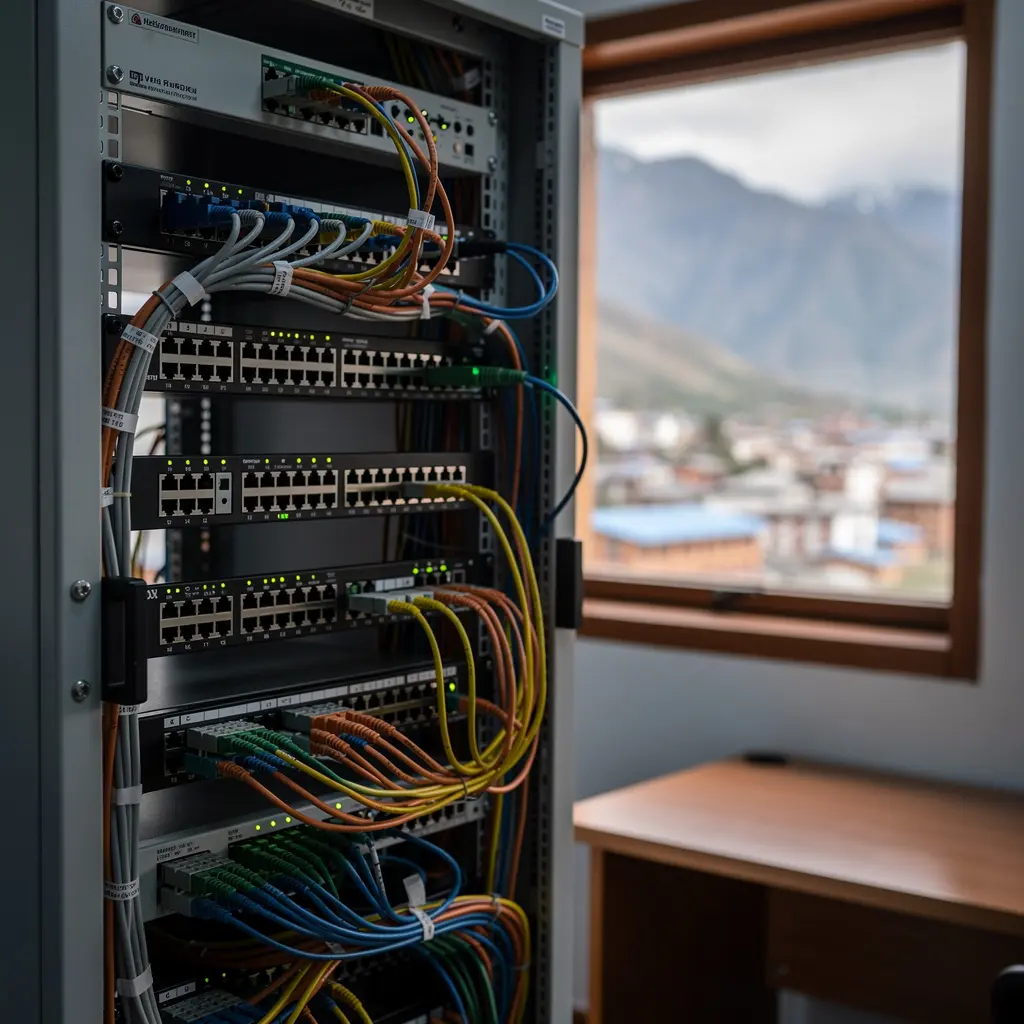
Bhutan Internet Exchange: membership, peering and the resource footprint behind national interconnection
Bhutan Internet Exchange: membership, peering and the resource footprint behind national interconnection intelligence summary explains the development, the public evidence available to readers, the organisations involved, the regional context, market exposure, and the…

History
The Mac Could Join; the Reflector Had to Carry Everyone: CU-SeeMe, 1993–1995
CU-SeeMe made a modest Macintosh a place to send live pictures across the Internet. A second entity could connect directly. A third changed the problem: the group needed a Unix machine to receive streams, copy them, and redistribute them. The apparent simplicity at the desktop…

History
Eight Institutions Built India’s Research Network Before Public Internet, 1986–95
India’s public Internet service arrived in 1995, but its research community had been building international connectivity for years. ERNET’s history is a story of institutions learning to operate a network together—and of the boundary between that shared research system and a…

Leaders
Markus Kummer and the IGF Renewal Before Reform
The United Nations renewed the Internet Governance Forum’s mandate in 2010 while a separate review was still gathering proposals for improvement. Markus Kummer’s years coordinating the Forum show why keeping a dialogue open and deciding what it may change are different jobs.

History
64 Terminals Had Not Been Tested Together: ARPANET’s 1972 Public Demonstration
In July, the plan for the October conference still had open questions about terminal capacity, applications, installation, documentation and human help. The public encounter with ARPANET began as an integration job.

History
The Network Was Free. The Internet Had to Pay Its Way: Zambia’s ZAMNET, 1991–95
A university email network reached hundreds through scheduled calls before Zambia had a direct Internet circuit. Turning that shared system into a public service demanded a company, outside financing and a way to pay recurring costs.

History
IMDb Was Searchable Before It Was a Website: The Usenet Movie Database, 1989–93
The searchable movie database grew out of Usenet lists before it had a website. Its early architecture joined scripts, volunteer maintainers, FTP copies, email queries and, later, a Cardiff web interface.

ICANN
The root key switched on schedule. Can operators prove their resolvers trusted it?
At 14:00 UTC on 11 October, the DNS root zone began using KSK-2024 to sign its key set. That establishes a public control-plane milestone. It does not establish what every recursive resolver had stored, whether its automatic update completed, or what any particular user…

History
BIND Put DNS Inside 4.3BSD
A distributed name service became a practical part of Unix administration when Berkeley’s BIND arrived as software that operators could configure, run and maintain with the rest of their system.