
Primary Domain
Internet Infrastructure
Within the Primary Domain facet, Internet Infrastructure intelligence groups reporting by primary domain so readers can follow a focused area of internet infrastructure, governance, connectivity markets, or digital capital. The page brings together related articles, public evidence, institutions, companies, people, regional exposure, operating dependencies, and market context that may otherwise sit across separate category pages. It explains the domain, the likely actor class, the market or governance context, and the source material readers should use when comparing signals. Operators, analysts, and governance readers can see how the same domain appears across events, profiles, market shifts, public-source evidence, regional dependencies, and longer-cycle infrastructure decisions over time.

Story
LACNIC’s Caribbean satellite fallback depends on an unstated trigger
Its CaribNOG 32 guidance pairs full-table routing over fibre with a default route over LEO. The post reports exercises, but no operator deployment, failover test or capacity result.

History
Cuba’s Four Networks Went International Before the 64 kb/s Link
A July 1996 field update described four Cuban networks exchanging information abroad while CENIAI was still seeking a direct IP connection. The 64 kb/s Sprint line that followed changed the kind of reach available; it did not create Cuban networking from nothing.
CASE FILE
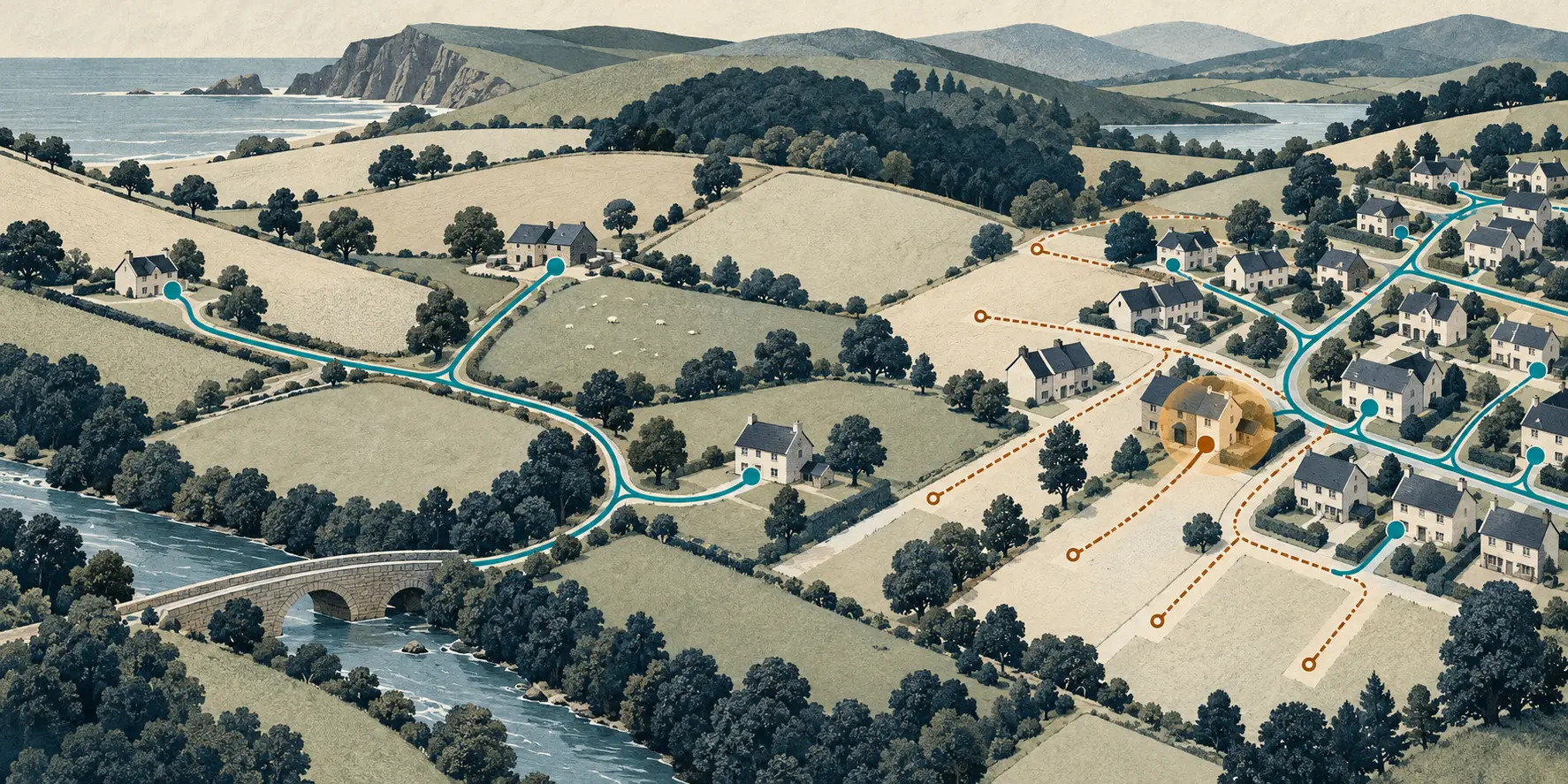
Under Review Is Not a Broadband Connection
The September 2026 National Rolling Open Market Review maps providers’ current and planned broadband coverage at individual UK addresses. Its classifications help decide where public subsidy may go, but a supplier claim, a credible build plan, a funded intervention and a usable…

Europe and Middle East Institutional Trends
Ofgem’s new self-build route stops at the shared grid
Ofgem paired a new statutory consultation with the rejection of an older code proposal. Customers may gain control of the connection they build, while shared reinforcement that can set the energisation date remains with the wider system.

History
TUBA Could Keep TCP and UDP. It Still Had to Replace IP
TUBA promised to preserve familiar Internet transports and applications while moving packets onto the OSI Connectionless Network Protocol. That boundary made its migration story more demanding than its reassuring name suggested.

CASE FILE
When the Prefix Returned, the Service Was Still Missing
A February outage at Cloudflare exposed a distinction that network contracts often compress into one word: “available”. A BGP advertisement can return before the service attached to that address does. For customers using Bring Your Own IP, ownership of the prefix was not enough…

Leaders
Greg Kroah-Hartman and Linux Long-Term Support Between Demand and Maintainer Capacity
A stable backport begins with a narrow technical test: the fix should already be upstream, be clear enough to review and solve a real user problem. Keeping an older kernel line alive is a different decision. It depends on whether the people and organizations that need that line…

History
One Gateway, Two Internet Providers: Samoa’s 1998 Dial-up Network
Samoa’s first-ISP chronology is unsettled, but a 1998 field report records a clearer milestone: Telecom Samoa installed a shared gateway so two retail providers could reach the international link. The cutover shows where the route, the customer service and the operational…

History
In 1993, GNN Turned an Internet Guide into an Ad-Supported Web Publication
A printed catalog became a navigable Web service. Its financing choice reveals how publishing, network policy and the limits of online payment met in the early 1990s.

Europe and Middle East Institutional Trends
Europe’s fibre target meets a 2026 funding cliff
Europe can report near-universal 5G signal coverage while fibre still reaches only three quarters of homes. The harder question is whether national plans connect that remaining build to money, places and accountable delivery after a large share of planned public funding is due to…
North America Regional ISP Trends
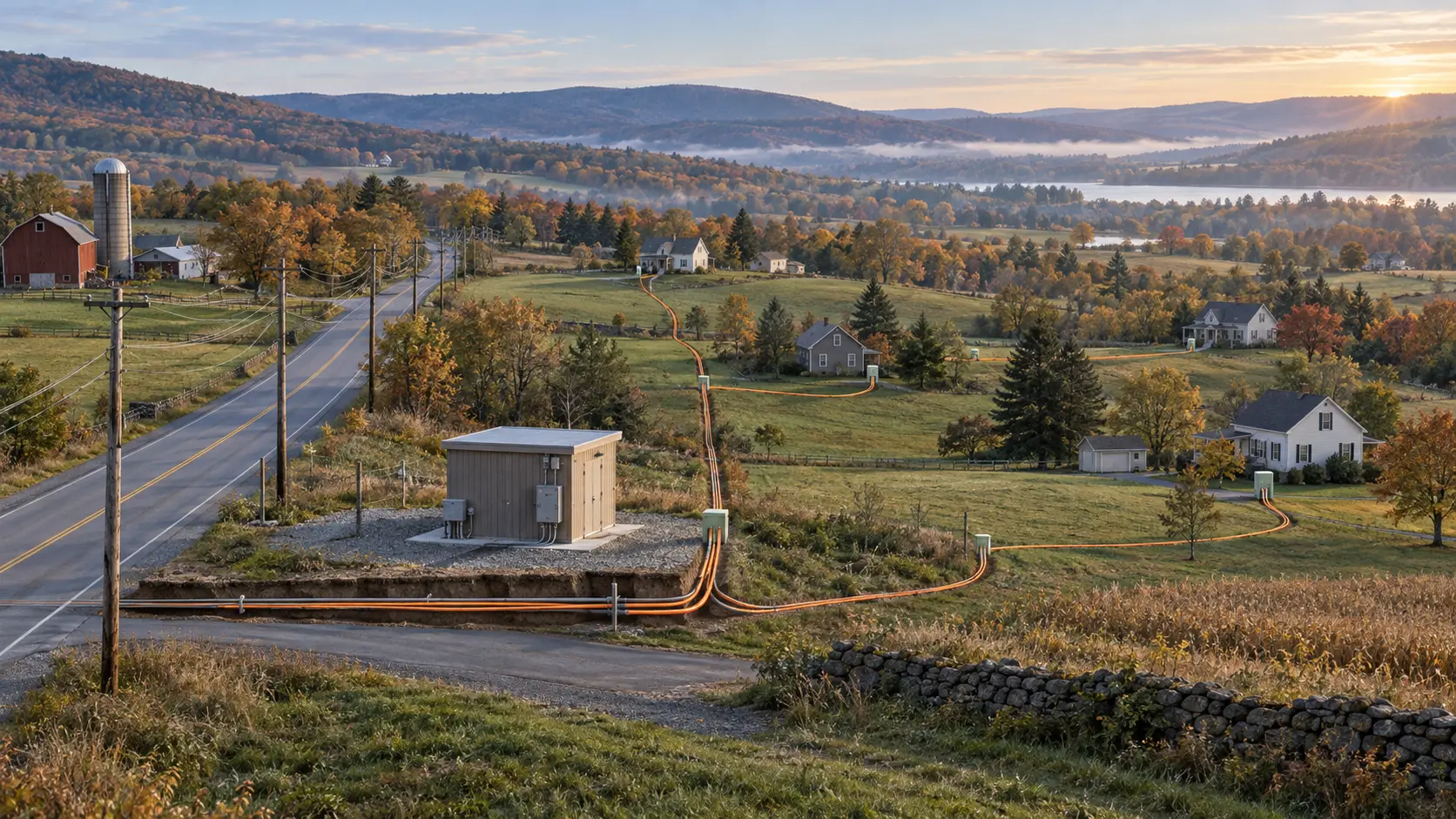
Madison County Connect has its first fiber customers. The network is still unfinished
First connections turn a publicly funded rural broadband build into a service that can be tested. They do not show how much of the planned network is ready, which addresses can order, or whether the published project scope still reconciles across funders and operators.

Leaders
Terry Manderson and the Reverse DNS Split That Needed Operators
A reverse lookup can lose its path before it reaches the PTR record. A resolver must first find the servers for the reverse zone itself. In 2010, Terry Manderson and Joe Abley proposed dedicated server names for IPv4 and IPv6 reverse DNS. Their RFC made separate operation…

History
Nepal Opened International Gateways to ISPs in 1999. NTC Still Held the Local Line
Nepal’s 1999 decision changed who could buy international capacity. It did not hand ISPs the wires connecting local customers to them.

North America Institutional Trends
The FCC drew SLTE into cable oversight. Key licensing rules still await a start date
The United States has marked submarine line terminal equipment as a point of regulatory control, not just a component beside the wet cable. But the rule’s headline date does not tell operators when every new duty begins: core provisions for SLTE licensing, security certifications…

Story
Digitel says IPv6 reaches five million devices; DNS headroom remains unmeasured
The Venezuelan mobile operator says IPv6 serves 74% of connected devices and carries 42% of mobile traffic. Its separate report of DNS-server load near 45% raises a capacity question, but supplies no measurement window or ceiling.

Global Datacenter Trends
TIA’s DCE 9000 reached first draft. Its certification chain is still in development
A first draft gives the data-centre industry a concrete supplier-quality proposal to examine. Whether a certificate can reduce duplicated audits or change procurement will depend on measurement rules, bounded scope and an independent assurance system that TIA says is still being…

Europe and Middle East Institutional Trends
A Code grant is a right-of-way instrument. EXA’s UK request is still pending
Ofcom’s proposal concerns who may exercise statutory rights over land and infrastructure, and on what evidence. It is not a notice that EXA has received those powers or begun a new UK build.

North America National Telecom Trends
Chicago’s second exchange is growing. Are the paths independent?
DE-CIX says its Chicago exchange has nearly quadrupled its traffic and become the city’s second-largest exchange. The more useful question for network operators is what the growth figures can prove about their own routes—and what remains hidden behind a larger footprint.

History
The Computer Had No Address Yet. BOOTP Told It How to Start
A diskless workstation had to ask the network for an address and a boot file before it could request the file that would start its operating system. BOOTP made that circular first exchange a protocol problem.

History
The Key Was Generated in Two Rooms: DNSSEC’s First Root KSK Ceremony, 2010
The signed root zone appeared in July 2010, but the public milestone concealed a more exacting sequence. A key was generated, protected, moved and accepted across two facilities before the root began carrying DNSSEC signatures. The interval between those steps shows what a…