Summary
- English Wikipedia moved from UseModWiki to a PHP/MySQL engine on 25 January 2002. Its converter moved the latest version of existing articles, while their earlier revision chains required later recovery. A project timeline records partial restoration in September 2002.
- In August 2002, participants sought old backups and argued that contributor history mattered for attribution. In December 2010, developer Tim Starling reported finding three 2001 backups and two logs covering changes from 15 January to 17 August 2001. Discovery of the files was another recovery step, not an automatic addition to every live page history.
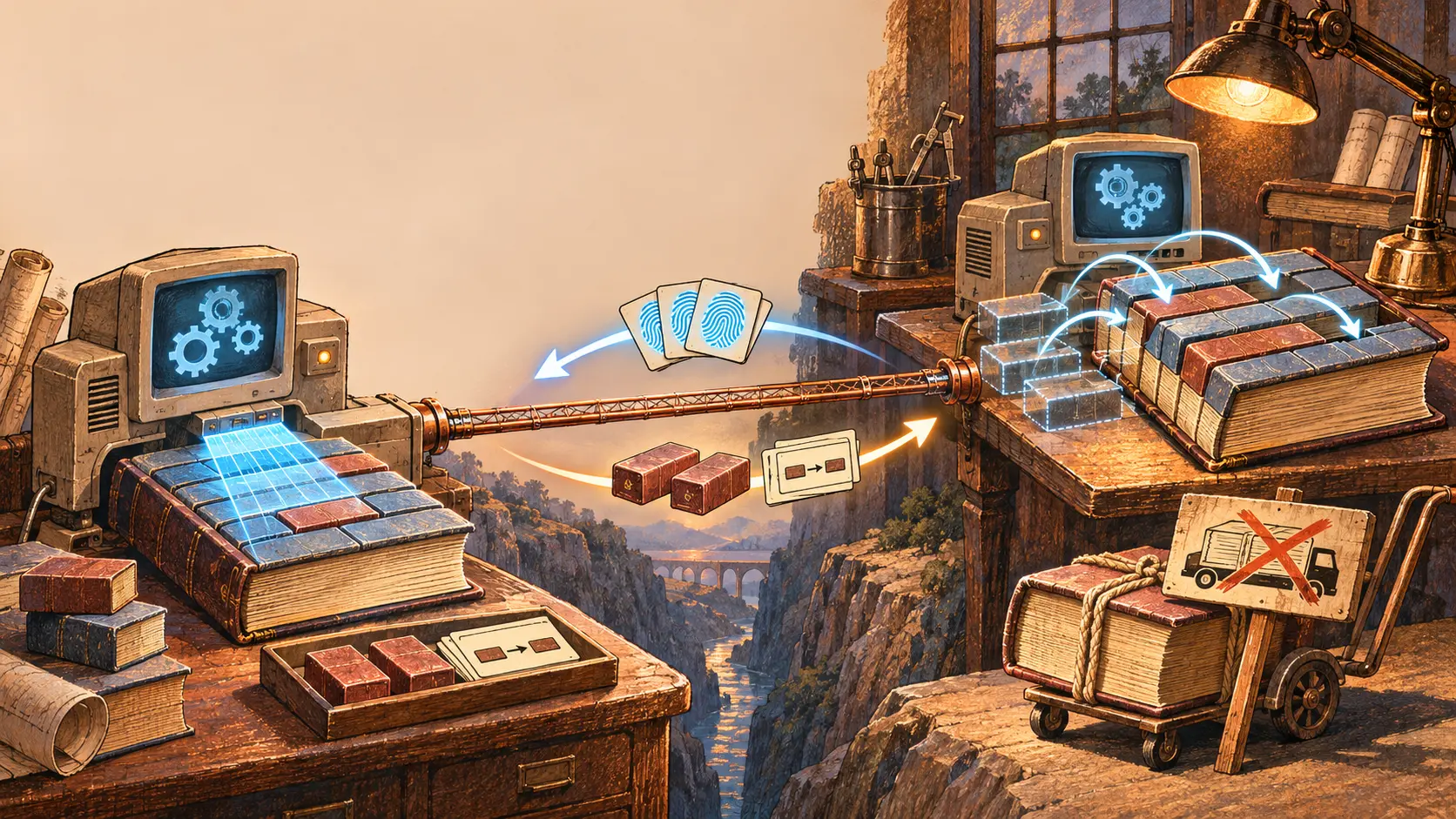
An encyclopedia can remain readable while forgetting how it was written. English Wikipedia’s project timeline dates its move to a PHP/MySQL engine to 25 January 2002. The previous system, UseModWiki, was a Perl program that kept pages in individual text files. Magnus Manske’s replacement was built for Wikipedia’s growing traffic and its own editing needs. The MediaWiki project history describes a converter that carried the latest version of the articles into Phase II. A reader could open the page in the new system. The chain of changes that produced it had a separate fate.
The new engine did more than replace files with database rows. It brought namespaces, including dedicated talk pages, plus watchlists, contribution views and maintenance pages. Those tools made the expanding project easier to run. Yet the migration boundary was drawn around current page text. An article’s latest words could cross while earlier versions and the attribution attached to them remained in old storage. The project timeline records a partial restoration of UseModWiki history in September 2002, months after the cutover.
The gap was visible to people doing the work. On 27 August 2002, developer Brion Vibber asked the Wikipedia mailing list whether people still wanted the old revisions restored. He could adapt an import script to the newer database, he said, but needed the old data. He thought he had a backup from shortly before conversion and wanted a later one. A restoration plan therefore depended on two separate things: software able to insert revisions and a copy of the revisions worth inserting.
Another participant, Axel Boldt, answered that the history of contributors mattered for the project’s license attribution. Daniel Mayer offered a fallback: if attaching older edits to current page histories proved too difficult, the current history page could link to the old one. He also pointed to pages he had manually moved between titles, where the route to an author trail could break even when both sets of edits survived. These were participants arguing over a working record, not a ceremony for a successful migration.
The old software had already complicated the job. In a December 2010 message, Wikimedia developer Tim Starling explained that UseMod had purged old page revisions after roughly a month. The earlier restoration script had recovered only revisions that had not yet been purged. The 2002 converter’s choice to bring the latest page text and the old program’s own retention behavior were distinct limits on the visible history.
Then Starling opened an old SourceForge archive, wiki.tar.gz. It held three complete backups of Wikipedia text from February, March and August 2001. He also found that UseMod had appended changes to files named diff_log and rclog; according to his account, those logs recorded changes from 15 January to 17 August 2001. He published a link to an 8.4 MB archive of the logs. The discovery enlarged the evidence available to reconstruct early edits. A later reply in the same thread describes an attempt to convert a backup into XML, including an invalid file with control characters and a filtered version. Even after discovery, restoration remained engineering work.
The eight-year interval says something precise about digital memory. In 2002 the site needed to serve pages under increasing load; moving the current text solved that immediate problem. Contributors wanted older revisions connected to the new histories so authorship remained traceable. In 2010, an archive that had survived outside the live database changed what could still be recovered. The page, the visible history tab, the backup and the raw change log were four different records. Treating one as proof that the others were intact would have hidden exactly the work the participants were trying to do.
Original records
- MediaWiki project history and Wikimedia project timeline: the 2002 cutover, latest-version conversion and partial later recovery.
- Brion Vibber’s August 2002 message: import script and missing backup question.
- Axel Boldt’s reply and Daniel Mayer’s reply: attribution concern and proposed linked-history workaround.
- Tim Starling’s December 2010 discovery thread: backups, logs and later conversion work.
Member Briefing
Deeper Profile Context
Sign in with the right membership level to unlock the full briefing and source notes.
Only for Strategic Circle
Strategic Circle
Open to all readers. Unlock profile briefings after joining and signing in.
Join Strategic CircleOnly for Leadership Alliance
Leadership Alliance
For qualified IP-asset owners and management; sign in to unlock alliance briefings.
Join Leadership Alliance