Summary
- Pioch’s contribution page records removing public email references in 1996–2002, publishing a new address in August 2002 and changing it again in August 2006.
- Readers had to acknowledge the instructions before revealing the contact address. Useful corrections remained welcome, while individual replies were unlikely.
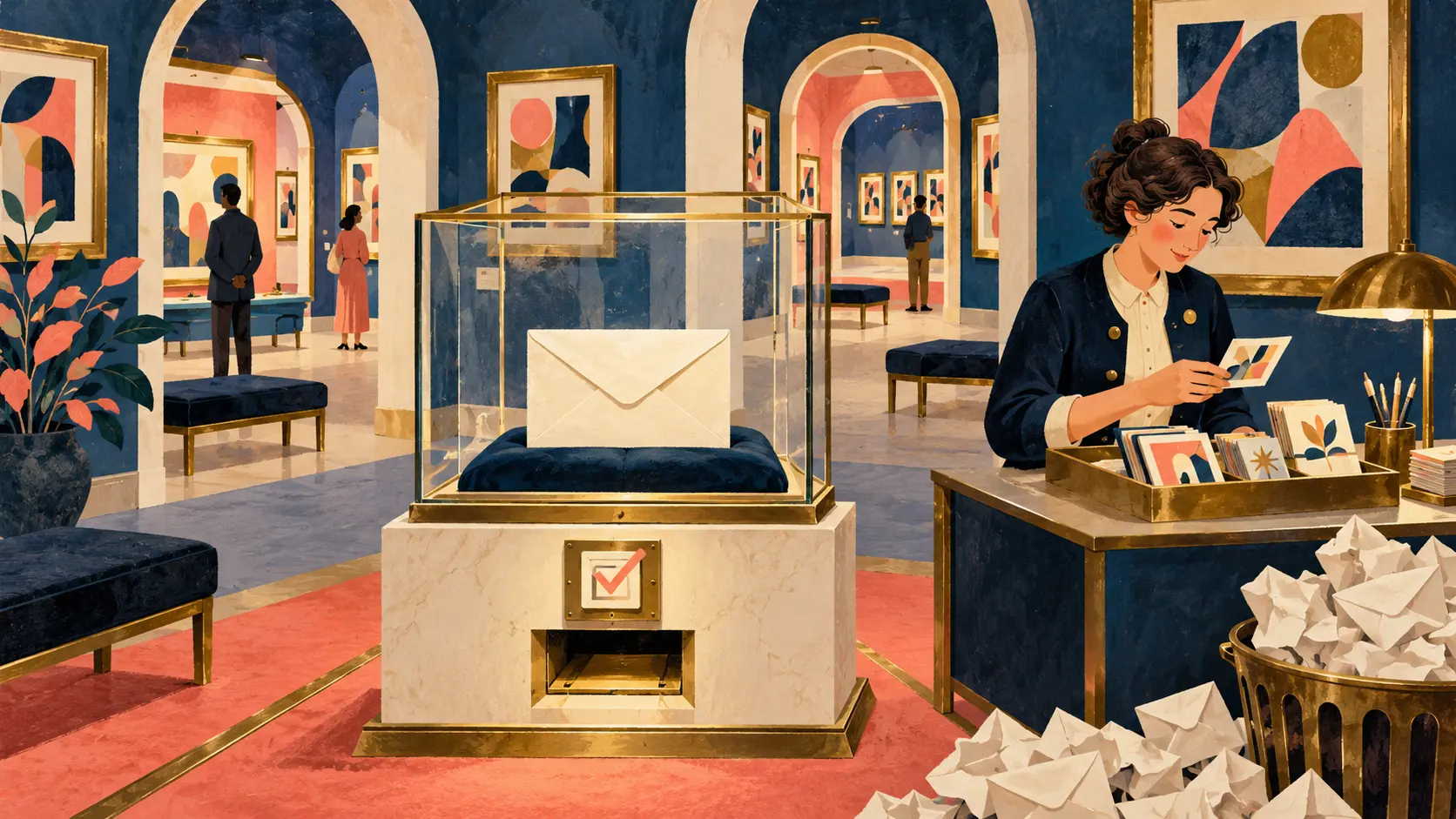
Before the WebMuseum would show you its feedback email address, it wanted a little reassurance. Tick the box saying you had read the instructions. Then press Reveal.
The address had acquired the sort of ceremony usually reserved for a fragile exhibit.
Nicolas Pioch’s contribution page, retained with a July 2007 date, explains how it got there. In a historical note, he says he removed references to his email address from the web during 1996–2002 because of the amount of junk mail. He made a new address available in August 2002. By August 2006, spam had driven another change.
The checkbox and Reveal button presented that August 2006 address. JavaScript was required. Visitors were asked to send other people to the contribution page, keeping the address itself out of web pages and mailing lists where it could be harvested again.
An exhibit that ate the weekends
Pioch’s About page says WebMuseum had occupied his nights and weekends since mid-March 1994. He wanted more art on the Internet, and visitors helped expand and improve the exhibit.
The same page advertised access at any hour, all year. Keeping pictures available to a worldwide audience gave the project a distribution problem as well as an editorial one.
The network page dated August 2006 offered a practical answer. Readers could choose a nearby mirror from hosts in Europe, Asia and the Americas, with the expectation of faster access. It named ibiblio as the master site and provided anonymous rsync access for copying the files.
The galleries had several places to live. Pioch’s contribution page still had to explain what one person could do with the mail they attracted.
A mailbox with office hours of its own
The instructions set out a modest ambition: he would do his best to collect the mailbox at least once a month. Messages that made it through the spam filtering would be read, but an individual reply was unlikely. Answering everyone would consume the free time he wanted to spend developing the WebMuseum.
The page also specified which requests would go unanswered. General questions about artists, inquiries about omissions and attempts to get an attic painting identified or valued were sent elsewhere. One example was dated 8 August 2002: a request for more information about Michelangelo Buonarroti.
An art website had apparently begun to look like a personal homework service, with a valuation desk attached.
The mail he actually wanted
The same page actively invited corrections: weak passages, typing errors, awkward English and firmly established mistakes in attribution or identification. Pioch explained that French was his native language. Extra pictures and biographies were welcome contributions too.
That distinction gave a visitor something useful to do. A specific correction could improve an existing page. A vague request for more material created a fresh assignment for the person already maintaining the collection.
The address could change again; the contribution page was intended to remain the place to find it. Referring people there also put the instructions in front of the next sender.
WebMuseum’s contact ritual made a small part of the exhibition’s upkeep visible. The files could be copied across hosts. Reading a correction, deciding what it changed and writing back still needed somebody’s evening.
Member Briefing
Deeper Profile Context
Sign in with the right membership level to unlock the full briefing and source notes.
Only for Strategic Circle
Strategic Circle
Open to all readers. Unlock profile briefings after joining and signing in.
Join Strategic CircleOnly for Leadership Alliance
Leadership Alliance
For qualified IP-asset owners and management; sign in to unlock alliance briefings.
Join Leadership Alliance