
Europe and Middle East Regional ISP Trends
Europe and Middle East Regional ISP Trends
Regional ISP trend intelligence tracks regional ISP market trends, broadband expansion, fibre deployment, peering economics, access-network competition, and local connectivity investment in Europe and the Middle East, giving readers a fuller view of the demand shifts, capacity constraints, platform strategies, capital timing, regulatory pressure, and operating assumptions behind the market.

Latest Coverage
Latest from Europe and Middle East Regional ISP Trends
230 articles

Europe and Middle East Regional ISP Trends
Promservice: the cost of keeping address capacity commercially ready
Promservice Ltd. appears in RIPE records associated with sizeable IPv4 and IPv6 allocations. Yet a dated RIPEstat view did not see two exact aggregate prefixes announced. That contrast is not evidence of failure. It is a due-diligence prompt: registry association, route…

Europe and Middle East Regional ISP Trends
Proftelecom-Service: the cash-flow test behind local network reliability
Proftelecom-Service sells a simple promise—local internet access—across Labytnangi, Kharp and Obskaya. Behind that retail price sits a less visible operating system of upstream capacity, access equipment, field repair, customer support and billing flexibility. Public records show…

Europe and Middle East Regional ISP Trends
Professional Programming Company: when a registry-linked address block is not proof of delivery
Professional Programming Company Ltd. markets connectivity, cloud and managed IT services in Saudi Arabia. RIPE links an ALLOCATED PA /22 entity to its organisation record, yet RIPEstat saw no public origin for that block on 5 September 2026. The gap is not an outage verdict. It…

Europe and Middle East Regional ISP Trends
DORIS: what a detailed routing policy proves when no routes are visible
DORIS: what a detailed routing policy proves when no routes are visible intelligence summary explains the development, the public evidence available to readers, the organisations involved, the regional context, market exposure, and the infrastructure consequences that may follow.…

Europe and Middle East Regional ISP Trends
Farlep-Invest: the missing fault map behind a 100-hour continuity claim
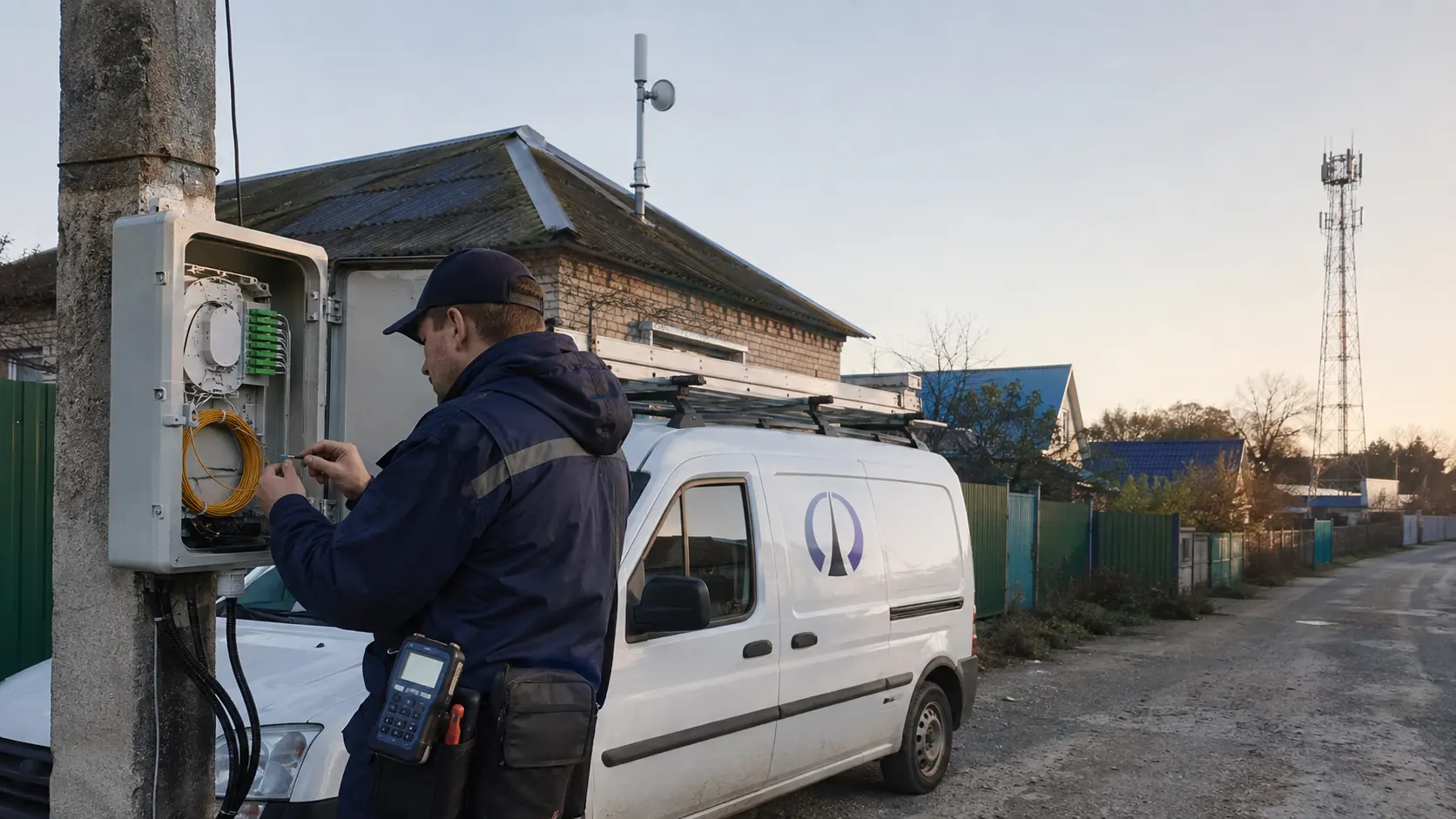
Farlep-Invest says Vodafone Gigabit Net home-internet customers can remain online for more than 100 hours during central-power outages. The number is striking. Its real value, however, depends on a fault map the public filing does not provide: which network segments are…
Europe and Middle East Regional ISP Trends
Prime-Service: the price parity hiding two different access futures
Prime-Service’s public retail surface puts GPON and WiMAX beside one another at matching displayed price points, but with sharply different advertised speeds. That contrast turns an ordinary tariff table into a due-diligence question about technology, upgrade paths and who…

Europe and Middle East Regional ISP Trends
Poyrazwifi: the wireless footprint that makes repair capacity the real product
Poyrazwifi: the wireless footprint that makes repair capacity the real product intelligence summary explains the development, the public evidence available to readers, the organisations involved, the regional context, market exposure, and the infrastructure consequences that may…

Europe and Middle East Regional ISP Trends
Plusine Systems: three public names, separate responsibilities
Plusine Systems appears in public evidence under a legal name, the Axians commercial brand and the registered autonomous-system name PLUSINE-AS. Those identities can be joined, but the join does not answer every operational question. For a buyer, the useful work is to map which…

Europe and Middle East Regional ISP Trends
PLAZMATELEKOM's 20,000-subscriber claim still leaves the last mile to verify
PLAZMATELEKOM presents itself as a regional network with 20,000 active subscribers, 120 connected settlements and fibre across Ingushetia's larger population centres. The useful question is not whether those figures sound substantial, but what they mean at a specific address when…

Europe and Middle East Regional ISP Trends
Platon's 99.9% uptime promise leaves the failure boundary to verify
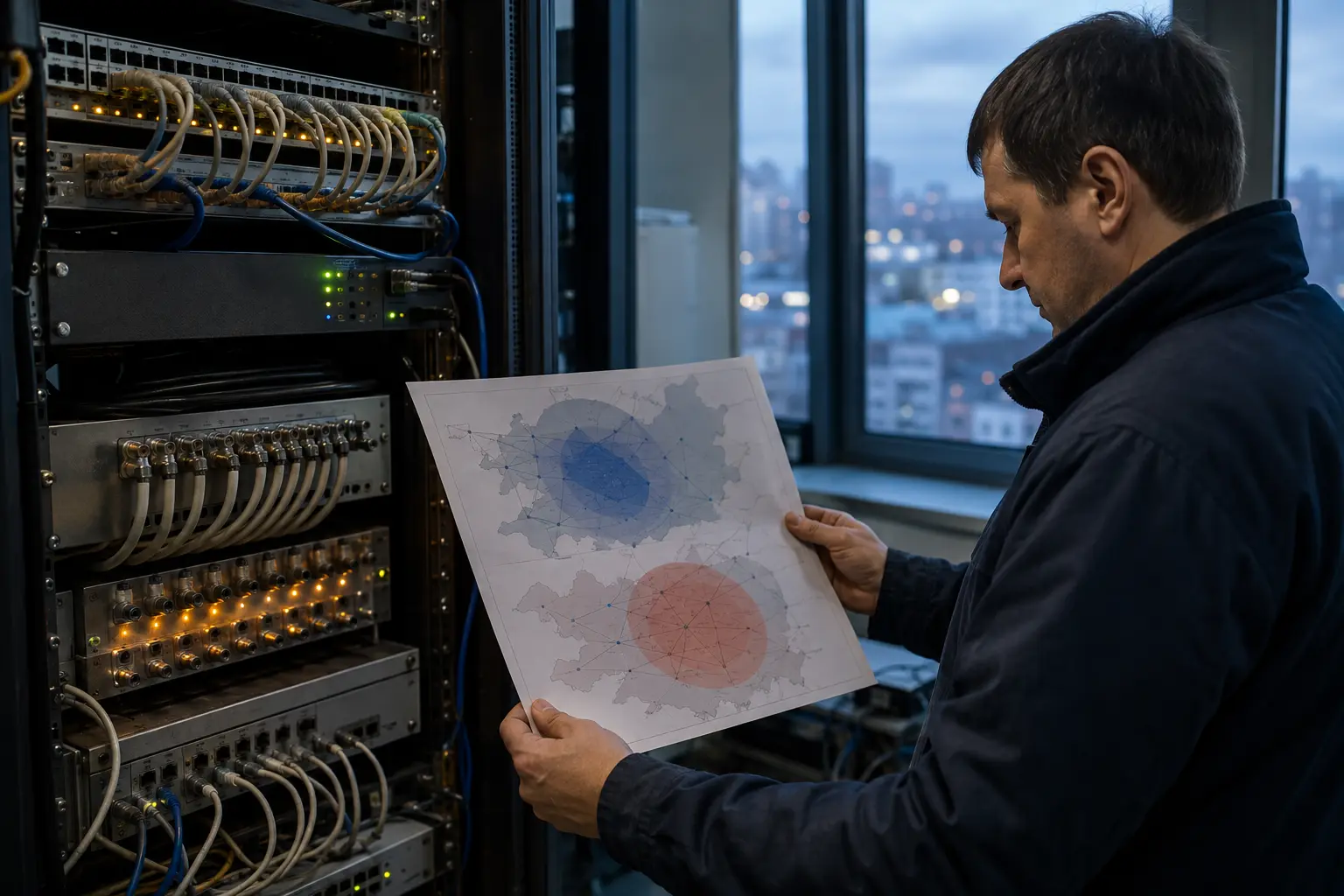
Platon Technologies presents a compact hosting proposition: its own infrastructure, a stated availability guarantee and two optical routes to the exchange SIX. The useful diligence question is not whether those claims sound reassuring, but where each promise begins and ends.
Europe and Middle East Regional ISP Trends
PKP Ferrit’s registry footprint makes operator identity a due-diligence question
PKP Ferrit’s public records connect a company name, an Internet-number allocation and an observed route origin. They do not collapse those layers into proof that one organisation currently controls every operational or contractual part of the service.

Europe and Middle East Regional ISP Trends
Pishgaman Ofogh Barkhat’s route boundary makes locality a due-diligence question
A local registration record is useful evidence, but it is not a map of every controller who can affect a customer’s data path. Pishgaman Ofogh Barkhat LLC illustrates why buyers should separate those questions before turning “local” into a resilience claim.

Europe and Middle East Regional ISP Trends
OXG’s new funding partner cannot order a fibre customer
Societe Generale S.A. has agreed to buy half of Vodafone’s German fibre venture. The deal addresses the supply of capital; turning installed connections into paid usage is a separate task.

Europe and Middle East Regional ISP Trends
Satellite Ltd's power-backed business tiers need a failure map
Satellite Ltd sells reserve power as a visible feature of selected business tariffs. That turns continuity from a broad promise into a priced distinction—and makes the exact boundary of what stays powered the most important part of the offer.

Europe and Middle East Regional ISP Trends
Two fibre circuits are not diverse until their routes are proven
Two access services can arrive on separate invoices and still disappear in the same civil-works incident. Resilience begins when the shared failure domains are made visible, not when procurement adds a second supplier name.

Europe and Middle East Regional ISP Trends
SeaExpress’s AS31444 makes route visibility easier than route-authorisation accountability
SeaExpress’s AS31444 makes route visibility easier than route-authorisation accountability intelligence summary explains the development, the public evidence available to readers, the organisations involved, the regional context, market exposure, and the infrastructure…

Europe and Middle East Regional ISP Trends
SC TECHNOLOGICAL's low-price fibre tiers make recovery economics the real product
Technological advertises fibre from €2.90 a month, no annual commitment and a portfolio that extends into voice and television. The compelling question is not whether those prices look attractive. It is what must keep working—and who must pay for recovery—after a customer…

Europe and Middle East Regional ISP Trends
A tenant's fibre request is not an operator's right to enter the building
The installer has an order number, a coil of fibre and a resident waiting upstairs. The riser door is locked. The work pack says the customer has requested service, but it contains no signed access agreement, no completed notice chain and no court order. A simple phrase begins to…

Europe and Middle East Regional ISP Trends
Trifle's pioneer story needs a current operator-control map
Trifle's pioneer story needs a current operator-control map intelligence summary explains the development, the public evidence available to readers, the organisations involved, the regional context, market exposure, and the infrastructure consequences that may follow. The Europe…

Europe and Middle East Regional ISP Trends
VOLZ’s 120-hour node-power claim needs a failure-domain ledger
VOLZ has put an unusually concrete number beside network continuity: batteries at 14 large Kyiv communications nodes that the operator says can sustain power for 120 hours, backed by generators for emergencies. The number is valuable because it identifies a real control. It is…