- Pembina estimates Meta's Alberta data centre could add C$267–C$462 a year to average household electricity costs between 2027 and 2031
- Alberta says Meta pays its own grid and connection costs and expects nearly C$200 million a year in transmission fees; Pembina argues the additional demand can still lift wholesale power prices
- The province has approved a 970MW grid allocation for the first phase, while Meta calls the projected bill increases speculative
The fact: 970 megawatts, C$267–C$462, and a C$200 million cheque
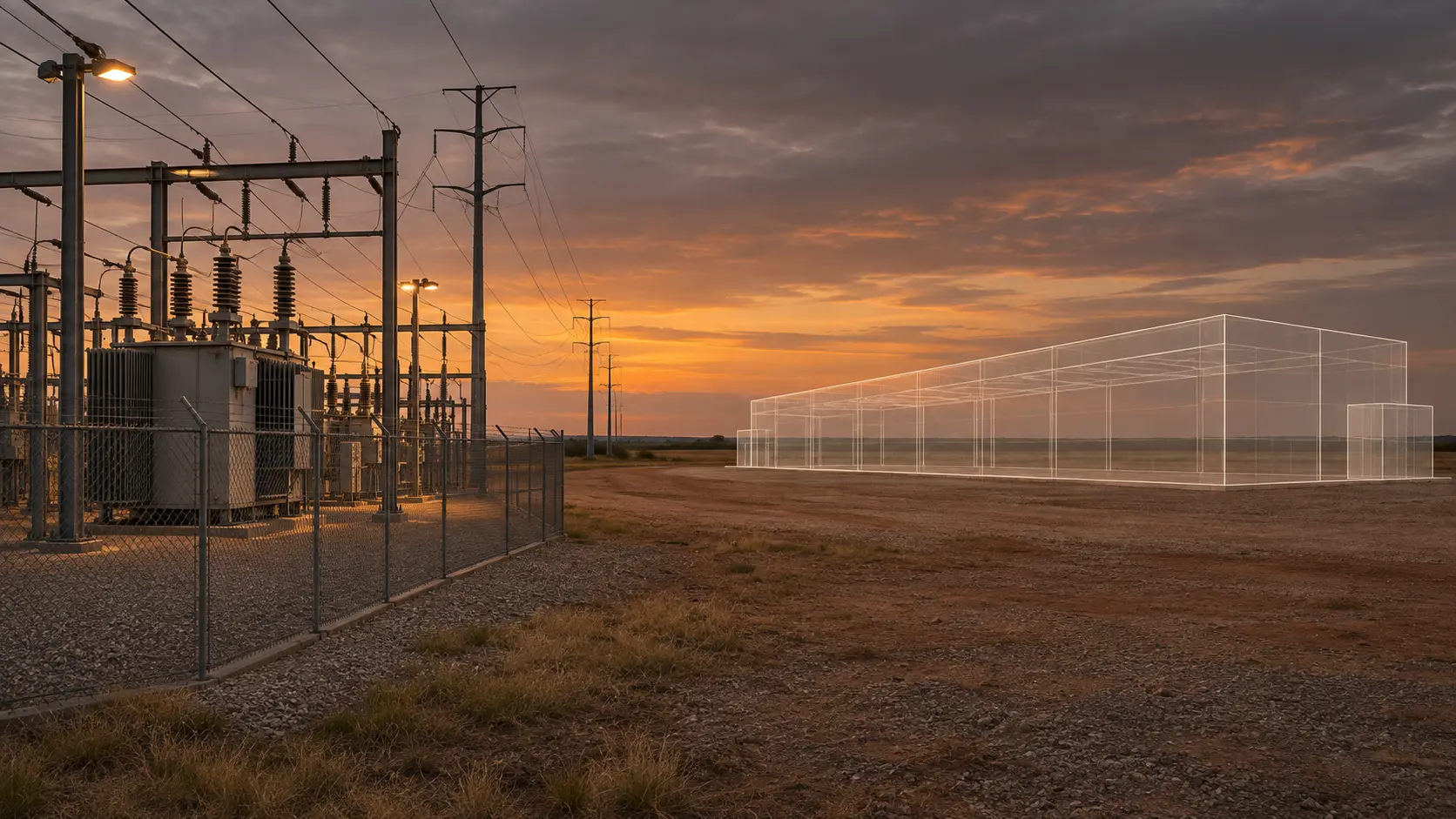
Strip away the press releases and a data centre is a hole in the grid shaped like a building. Alberta has just agreed to cut a 970-megawatt hole for Meta's first phase, and the argument now underway is about who stands at the edge of it holding the bill.
The Pembina Institute puts the household cost of that hole at C$267 to C$462 a year between 2027 and 2031. Its reasoning is not that Meta dodges its connection charges. It is that new demand tightening a wholesale market before new generation shows up moves the price every buyer pays, not merely the one that caused it.
Alberta's government disagrees, and its case is straightforward: Meta pays for its connection and associated infrastructure, and the province expects close to C$200 million a year in transmission fees from the project. Meta has likewise called Pembina's bill-increase modelling speculative. All three statements can be true at once, which is precisely why the dispute rewards close reading. These are forecasts, not meter readings, and they will live or die on when the campus, its associated generation and other new supply actually enter service.
The assessment: paying for the wires is not paying for the power
Two different markets get tangled in this argument, and the tangle is not accidental. One is the cost of connecting a facility: substations, transmission upgrades, the copper and steel that haul 970 megawatts from the bulk system to the server hall. The other is the wholesale price of energy, set at the margin by whatever the next megawatt costs to produce.
Meta can write a cheque for the first and still move the second. A connection charge is a capital settlement; a wholesale price is a continuous auction. Drop a load the size of a small city into that auction before the supply side catches up, and the clearing price rises for everyone bidding — including households that never signed a hyperscaler agreement.
Timing is the whole ballgame. If generation arrives alongside the load, the price pressure stays a rumour. If the load energises first and the generation queue slips — the usual outcome where interconnection studies run for years — the pressure is real, and it lands on the bill.
What to watch: energisation dates, ramp rates and the generation queue
Three numbers will settle this faster than any model: Meta's first energisation date, how much load actually connects at that moment, and when the associated generation reaches commercial operation. A 970MW allocation is a permission, not a draw. Data centres ramp in blocks, and the gap between the first block and the last is where forecasts go to die.
Once the campus is running, watch Alberta's wholesale prices and the province's new generation commitments. If prices hold flat while 970 megawatts of load comes online, Pembina's model was too pessimistic. If they climb, the province will have learned the expensive way that a transmission fee is not a price hedge.
The bill, in the end, will be settled by a calendar rather than a contract — by whether the megawatts and the machines arrive in the same year.
Member Briefing
Read the full trend briefing
Members read the full briefing with the source notes behind every finding.
Strategic Circle
A daily briefing in your language, built from changes we have verified.
Join for USD 20/monthCancel anytime.
Members also get the full research library, a daily briefing on the networks they follow and the private forum.