
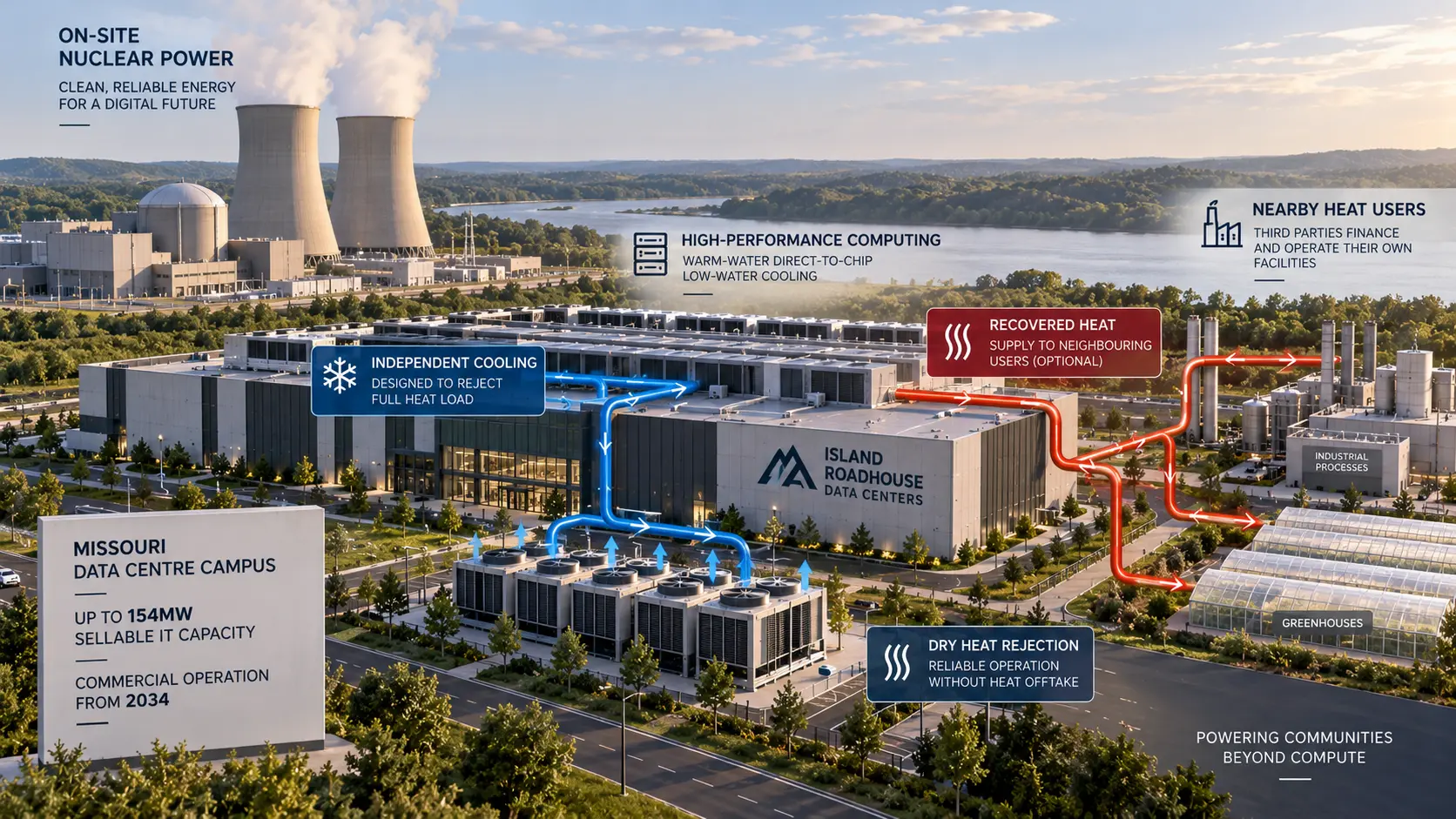
- Island Roadhouse plans a Missouri data-centre campus with up to 154MW of sellable IT capacity from 2034
- Recovered heat could be sold to nearby users, while the campus is designed to cool itself without external heat demand
The fact
Island Roadhouse Data Centers detailed plans on 9 September for a Missouri campus combining proposed on-site nuclear generation, low-water cooling, and the sale of recovered heat to neighbouring users. The initial phase targets up to 154MW of sellable IT capacity and commercial operation from 2034.
The cooling design combines warm-water direct-to-chip circulation with dry heat rejection. Island Roadhouse says outside users could buy recovered heat through a thermal network, with third parties financing and operating their own heat-using facilities. The data centre would retain enough independent cooling capacity to reject its full heat load if no customer takes the recovered heat.
US Department of Energy guidance identifies warm-water cooling and heat reuse as options for recovering useful thermal energy from computing systems, but it does not establish the performance of this project. The proposed nuclear generation would also require regulatory review before construction and operation. Island Roadhouse has not reported measured water use, carbon performance or heat-recovery results from an operating facility.
The assessment
The design allows the data centre to keep cooling its servers even if no one buys the recovered heat. That matters because demand from a nearby factory or other heat user may change over time. Island Roadhouse says the campus would still be able to reject its full heat load, so its cooling system would not depend on an outside customer being available.
Heat sales can therefore be considered separately from the data centre's basic operation. Island Roadhouse would need a customer, a physical connection and agreed supply terms before recovered heat could generate revenue. Until those arrangements exist, the amount of heat available for reuse should not be treated as heat already sold.
For BTW readers, this gives the project a clearer operating model. The data centre is designed to function without a heat buyer, while any later heat agreement could provide an additional source of revenue. Whether the wider campus reaches operation remains a separate question, with the proposed 2034 start still dependent on development work including nuclear licensing.
What to watch
Watch for engineering evidence showing that the campus can reject its full heat load without external offtake, followed by a named heat customer and connection agreement. Progress on nuclear licensing and construction will separately determine whether the proposed campus can reach its 2034 operating target.
Member Briefing
Deeper Profile Context
Sign in with the right membership level to unlock the full briefing and source notes.
Only for Strategic Circle
Strategic Circle
Open to all readers. Unlock profile briefings after joining and signing in.
Join Strategic CircleOnly for Leadership Alliance
Leadership Alliance
For qualified IP-asset owners and management; sign in to unlock alliance briefings.
Join Leadership Alliance