Summary
- IREN’s Mackenzie subsidiary has agreements for up to about $2.4 billion of GPU and ancillary-equipment financing. After a batch of equipment is accepted, the borrower requests funding through a roughly $1.2 billion secured facility and $1.2 billion of notes on a pro-rata basis. Both carry 9% annual interest; each funded tranche matures 30 months after its own funding date.
- The subsidiary pledges the financed equipment and associated rights. IREN Limited guarantees the subsidiary’s payment obligations, subject to the agreements’ cure periods, while the parent grants no security interest in its own assets for this package. The company has not established an actual August-facility draw balance in the cited annual report.
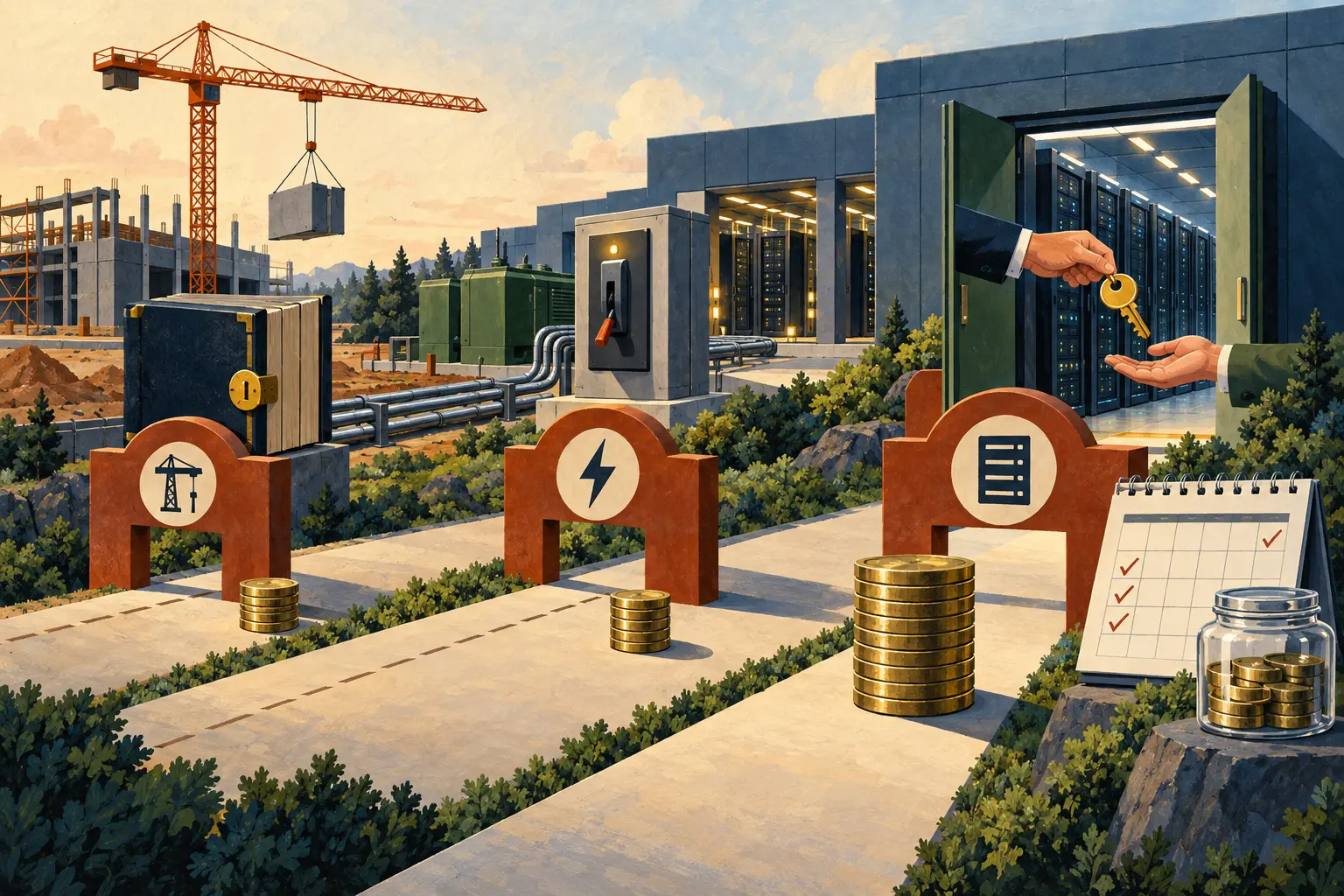
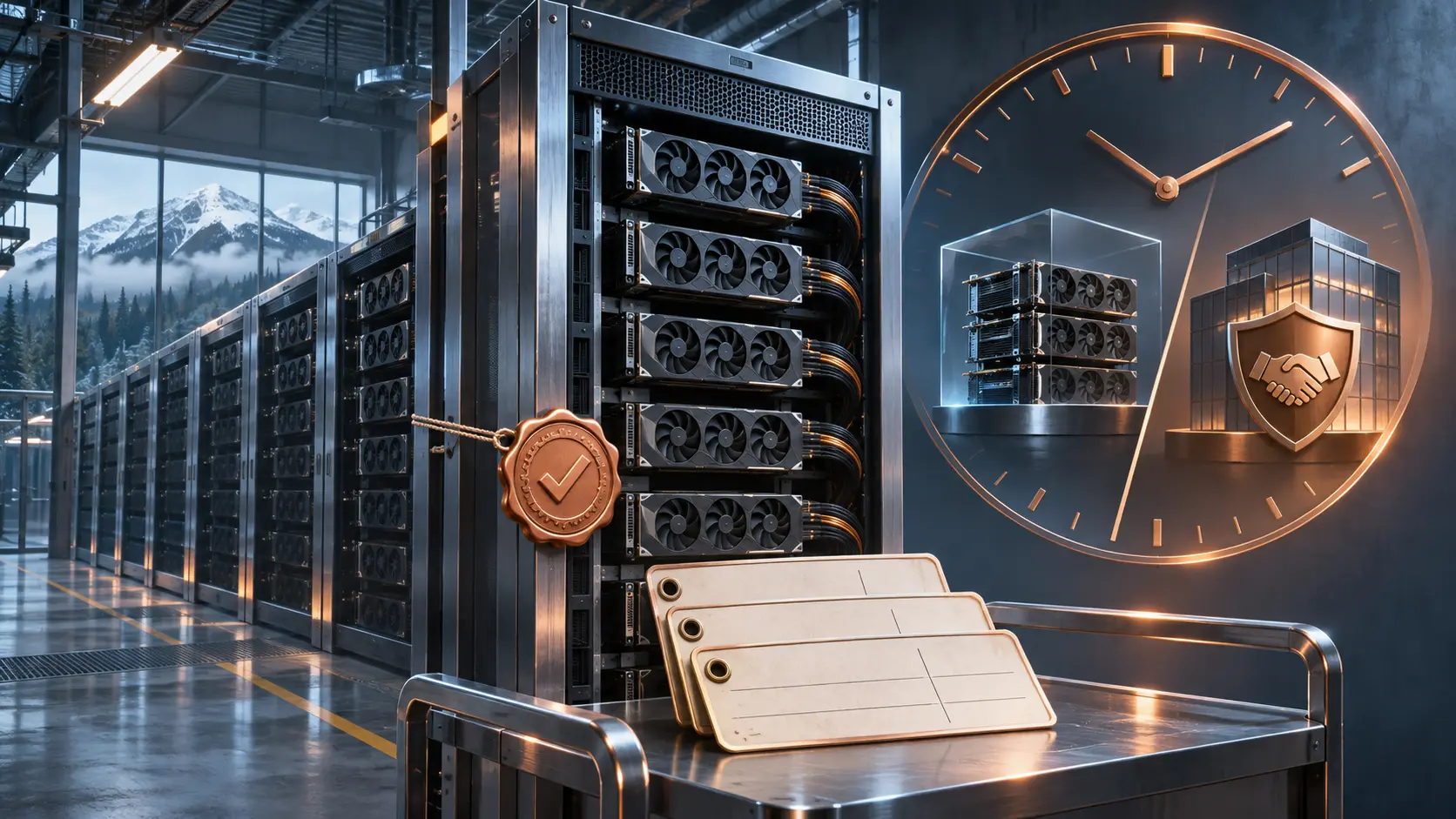
The GPU is accepted at the loading dock. The repayment date is set at the funding desk. A paying customer has a different clock.
IREN’s fiscal 2026 annual report lays out a financing package for GPUs and ancillary equipment at its Mackenzie facilities in British Columbia. IE Mackenzie Compute Ltd, a wholly owned subsidiary, signed agreements on 25 August 2026 for aggregate financing of up to about $2.4 billion. One half is an approximately $1.2 billion master financing and security agreement; the other is approximately $1.2 billion of senior notes. The word “up to” matters. A financing commitment is a ceiling on available funding, while a funded tranche is an obligation with a date attached.
The borrower requests money after the relevant equipment is accepted. It draws the secured facility and issues notes proportionately. The availability period runs to 31 December 2026, the date by which IREN expected staged equipment delivery. Each borrowing and note issue then matures 30 months after its own funding date, not 30 months after the first box is delivered or after every GPU is installed. Both instruments bear a fixed 9% annual rate. Principal amortizes under the applicable schedules. The annual report does not give a current drawdown total for this August package.
IREN calls the Mackenzie financing enough to cover 90% of the associated GPU capital cost in its SEC-filed results presentation. That is an issuer measure of acquisition funding. A piece of hardware can be fully financed and still be waiting for a workload; the debt calendar will follow the draw. The report’s risk discussion says weak or variable demand for AI cloud services can leave an equipment borrower short of the cash needed to pay its financing. The customer contract, equipment acceptance, funding request and service commencement and cash collection belong on separate lines in the analyst’s notebook.
The lenders have two paths to protection. IE Mackenzie grants a first-priority security interest in the financed equipment and related rights. IREN Limited unconditionally guarantees its subsidiary’s payment obligations, subject to applicable cure periods. The guarantee covers payment, not every performance duty; it imposes no financial-maintenance covenant on the parent, and the parent did not pledge its own assets for this package. That legal boundary still leaves the parent on the hook for the borrower’s payment bill. A default can accelerate outstanding sums and open enforcement against the equipment.
IREN’s presentation puts a price tag on the distinction between customer groups. It describes the Mackenzie financing, supporting deployments for customers it calls non-investment-grade, at 9%. The same presentation describes financing tied to its Microsoft contract at roughly 6%. These are the issuer’s descriptions of different funding packages, not a blended cost of every GPU IREN owns. The three-point difference is a market signal about where lenders see repayment risk. IREN says customer prepayments, alongside the newer GPU financings, provide funding beyond associated GPU capex for other data-center work.
That cash helps build the platform; it does not erase the 9% terms on funded Mackenzie debt.
What changes the calculation next is concrete: how many GPUs are accepted, how much of each facility is actually drawn, the first amortization schedule, and the revenue those particular machines earn. The full financing agreements were promised for a later quarterly filing. Until their draw and payment records arrive, $2.4 billion describes capacity to borrow, not the balance already borrowed.
Official sources
Member Briefing
Deeper Profile Context
Sign in with the right membership level to unlock the full briefing and source notes.
Only for Strategic Circle
Strategic Circle
Open to all readers. Unlock profile briefings after joining and signing in.
Join Strategic CircleOnly for Leadership Alliance
Leadership Alliance
For qualified IP-asset owners and management; sign in to unlock alliance briefings.
Join Leadership Alliance