Summary
- A May 2025 field trial carried 1.2Tb/s per wavelength over a 4,300km Hawaiki section. The operator now advertises more than 135Tbps of system design capacity.
- BW Digital owns Hawaiki after its completed 2022 acquisition. Terminal upgrades, landing facilities and new cable projects compete for capital while customers buy usable connections.
The Pacific is an expensive place to replace a cable. Hawaiki has been pursuing a more agreeable habit: teach the electronics at its ends to do more with the fibre already underwater. The ocean gets to keep its flooring. The operator gets another chance to sell capacity from a route whose construction bill has already arrived.
Hawaiki Submarine Cable LP operates the roughly 15,000km system connecting Australia, New Zealand, American Samoa, Hawaii and the US West Coast. It entered service in 2018. BW Digital's current project page puts its design capacity above 135Tbps and records an expansion of the Hawaii landing site and facilities in 2025. That combines two kinds of work: more capable transmission equipment and the places required to house and connect it.
The upgrade lives on shore
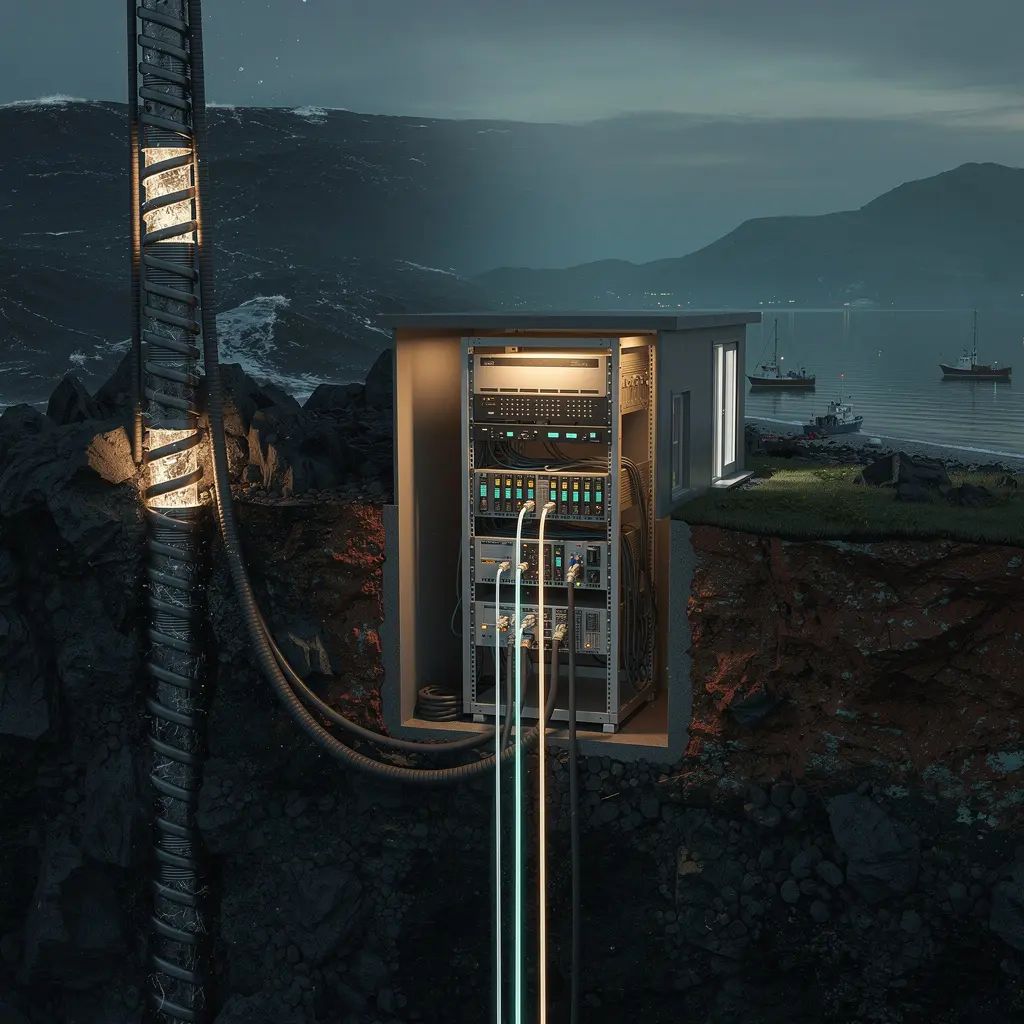
In November 2020, Hawaiki announced a WaveLogic 5 Extreme deployment with Ciena. The commercial attraction was straightforward: higher channel rates, fewer wavelengths to install and manage for a given amount of traffic, and a lower cost per bit. A submarine system has an unusually useful separation between the long-lived wet infrastructure and electronics that can improve on a shorter cycle.
A later result makes that mechanism tangible. On 30 May 2025, Ciena and BW Digital reported a field trial of 1.2Tb/s on one wavelength over a 4,300km Hawaiki section. It used WaveLogic 6 Extreme, Waveserver platforms and Ciena's submarine line-terminating equipment. More information occupied the optical channel over that tested distance. The company also described improvements in space and power per bit, useful constraints when the next upgrade must fit inside a landing facility.
For a buyer, the decisive number belongs to a specified service between specified endpoints. A design-capacity figure describes the system's advertised potential; a field trial demonstrates a particular transmission configuration. A delivered circuit adds the contractual work: capacity allocation, interfaces, onward links and restoration. Buying an impressive number and discovering the endpoints cost extra would be an exceptionally modern way to miss the boat.
The island customer buys a chain
The Avaroa Cable arrangement announced in September 2022 illustrates what a useful connection looks like. The Cook Islands' state-owned wholesale operator selected Hawaiki to supply capacity from the Manatua termination in Apia to Sydney. The route combined several links, including the Samoa–American Samoa cable and Hawaiki's American Samoa branch.
For that customer, the ocean-crossing asset is one part of a connected journey. Increasing the capability of Hawaiki can improve what is available on its leg; the whole service still depends on the other legs and the handovers between them. This gives the operator a commercial role beyond owning submerged fibre: assemble a route a wholesale customer can actually use. The publicly announced deal was worth several million dollars, though it did not disclose a unit capacity price.
One owner, two kinds of expansion
BW Digital completed its acquisition of all shares in Hawaiki Submarine Cable Limited Partnership and International Connectivity Services Limited on 16 May 2022. The Singapore-based BW Group subsidiary gained an operating Pacific cable as a foundation for its wider infrastructure business. That places the decisions about upgrades, facilities and new routes within a broader investment portfolio.
The distinction is visible on the current project list. Alongside the operating Hawaiki system, BW Digital lists Hawaiki Nui 1 as a development project linking Singapore, Batam, Jakarta, Darwin and Sydney, with planned completion in 2027/8. The new project is aimed at a different route opportunity. An optical upgrade squeezes more service from an existing path; building another path changes the geography of the business.
Both can be valuable, but they answer different customer needs. A buyer short of capacity on the current route may welcome faster optics. A buyer trying to survive a shared physical failure needs to examine where its alternative actually travels. Sending more bits through the same geography is a fine engineering achievement. Geography remains stubbornly unimpressed.
Member Briefing
Read the full trend briefing
Members read the full briefing with the source notes behind every finding.
Strategic Circle
A daily briefing in your language, built from changes we have verified.
Join for USD 20/monthCancel anytime.
Members also get the full research library, a daily briefing on the networks they follow and the private forum.