
Topic
AI Infrastructure Economics
Within the Topic facet, AI Infrastructure Economics topic intelligence connects articles that share a specific subject, signal focus, or monitoring theme. The page gives readers a richer path through related reporting, source evidence, market actors, and infrastructure implications, with enough context to understand why the topic matters across company movements, governance decisions, regional exposure, and operational risk. Readers can compare recurring signals, affected organisations, public evidence, market context, service continuity, procurement, competition, compliance, and strategic planning questions behind the subject instead of stopping at a thin list of matching articles. It explains what the topic covers, which infrastructure actors or policies are involved, what evidence supports the coverage, and why the subject may matter for operators, customers, investors, and policy readers.

Asia-Pacific Institutional Trends
Samsung backs ASML High NA for 2028 DRAM
Samsung plans to use ASML's High NA lithography in volume DRAM production from 2028, while a separate larger-mask programme remains years away.

Global Datacenter Trends
PwC sees data-centre capex reaching $31.6tn
PwC expects annual data-centre investment to keep rising through 2050 as servers, GPUs and other computing equipment are replaced repeatedly.

Global Institutional Trends
Qualcomm launches Dragonwing chips for edge AI
The Q-2390 and IQ-2390 bring AI, vision and connectivity into compact commercial and industrial systems, with evaluation kits expected in early 2027.

Europe and Middle East Datacenter Trends
Saudi data-centre capacity rises 57% since 2024
Savills says Saudi Arabia's live IT capacity has grown 57% since 2024, while government plans call for 3GW of data-centre capacity by 2030.

Global Datacenter Trends
Microsoft targets 38GW of data-centre capacity by 2032
Bloomberg reports that Microsoft wants to more than triple its data-centre capacity by 2032, with a larger share of the fleet built for AI workloads.

Europe and Middle East Datacenter Trends
UAE rethinks 5GW AI campus after Iran war
Reuters says the 5GW project may shift from one Abu Dhabi campus to multiple UAE sites, while Stargate UAE's first 200MW remains targeted for 2026.

North America National Telecom Trends
Verizon tests crowd sensing on its existing 5G network
A Dallas trial turns radio-channel changes into a crowd-density map. The commercial question is whether that extra network output can earn a place in venue operations.

Global Cloud Services Trends
Quill puts SQL data churn on the AI bill
RavenDB's new agent platform leaves the SQL system of record in place. Its copy of that data creates a different commercial question: how much does keeping context current cost?

Asia-Pacific Datacenter Trends
GMO picks Ishikari for GPU cloud expansion
GMO Internet has chosen Ishikari Bay New Port for a new GPU cloud site, where power, network access and other infrastructure are still being worked out.

Asia-Pacific Datacenter Trends
China ties computing growth to power and fibre
China is tying computing expansion to power and fibre planning, making coordinated delivery central to new projects.

Global Cloud Services Trends
HyperPod's model cache puts a value on warm-node placement
AWS now preloads model weights and container images for inference. The gain comes from reusing prepared nodes; expansion onto a cold node still depends on the original download path.

Asia-Pacific Institutional Trends
South Korea chip exports jump 270% in early September
South Korea’s chip exports surged 270% in early September, lifting semiconductors to nearly half of total export value.

Asia-Pacific Institutional Trends
Micron offers Taiwan staff rewards as union talks continue
Micron announced new Taiwan staff rewards while union talks remained unresolved, with no confirmed production or delivery disruption.

Asia-Pacific Cloud Services Trends
Enflame lists in Shanghai to fund new AI chips
Enflame's IPO will fund two new chip generations and software development, but customer readiness still has to be proven.

North America Institutional Trends
Corning’s Equity-Sale Stop Button Does Not Erase the Settlement Queue
A phone call can suspend new sales under Corning’s US$2 billion equity programme. It does not give the company a general right to recall trades already made. That distinction turns a flexible financing headline into a more demanding operating question: which shares remain merely…
North America Datacenter Trends
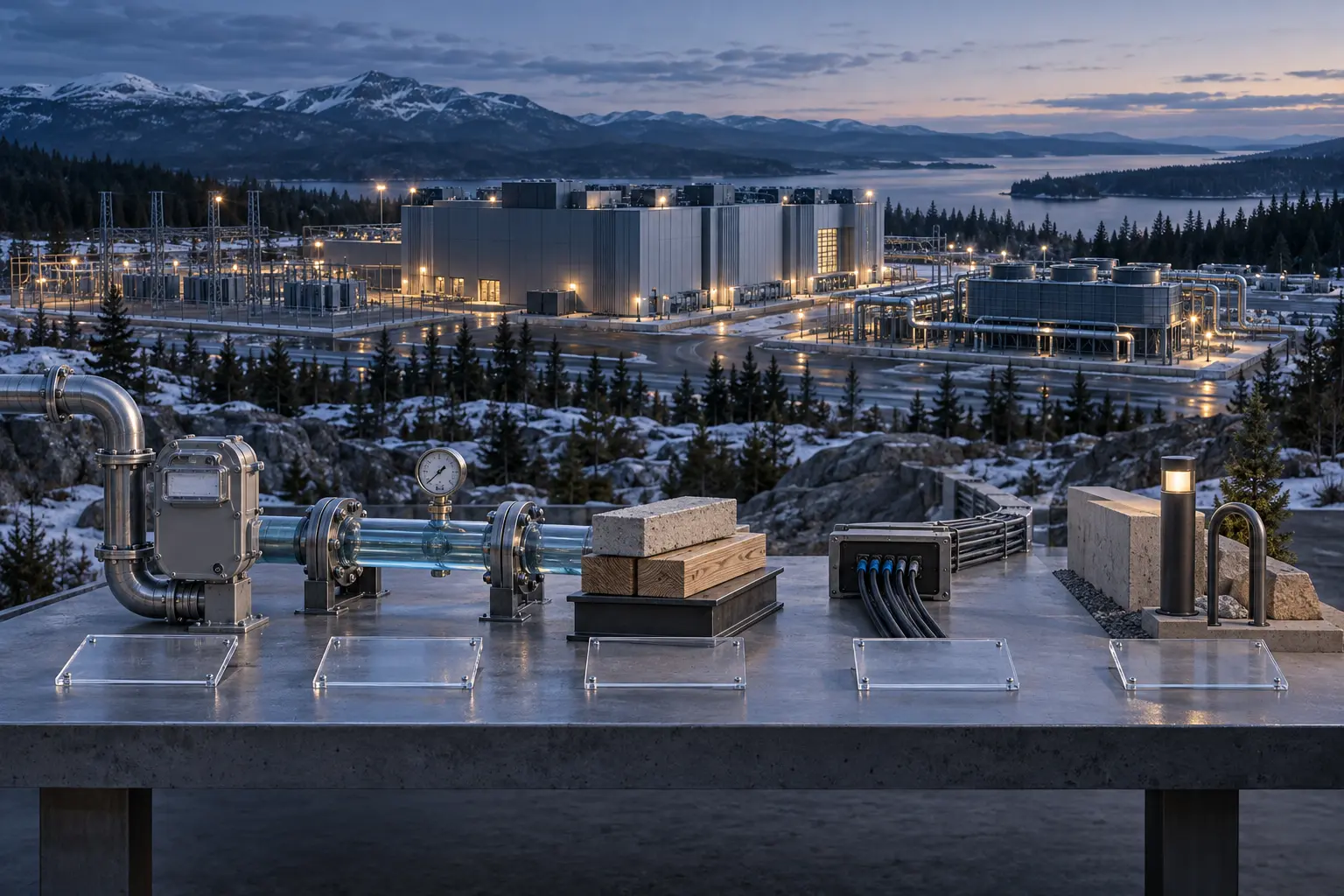
Canada’s Data-Centre Principles Still Need a Project-Level Receipt
“Must” is a strong word, but it is not a receipt. Canada now says a data centre must pay the electricity-system costs it causes, limit water impacts, disclose local effects, leave durable benefits and add strategic value. That is a useful national test. Yet a mayor, utility…

Global Cloud Services Trends
ibex Has AI Agent Implementations but No Unit-Economics Bridge
One customer contact can now take three economically different routes through a contact centre. An AI agent may resolve it without a person. Software may assist a human who still owns the conversation. Or the contact may pass straight to a human queue. ibex says it has delivered…

Global Datacenter Trends
Celero's optical bet tests the geography of AI campuses
A new funding round brings attention to the links between AI buildings. Their useful reach has to be judged alongside delay, power and the work that crosses them.

North America Datacenter Trends
Project Phoenix Has a 2GW Campus. Its Power Receipt Has Five Meters
Ground was broken in Shippingport with a 2-gigawatt promise on the data-centre side and a 205,000-dekatherm-a-day contract on the fuel side. Those figures are both real disclosures, but they do not meet in the middle. Between them sit conversion losses, the plant’s own load…

North America Cloud Services Trends
DigitalOcean's $725m facility gives later draws less time to repay
The cloud operator can request equipment funding until September 2027, but every advance must amortise by September 2030. The financing spreads hardware payments without removing the pressure to put that hardware to work.