Summary
- Adani Enterprises and Jabil moved from a June statement of intent to an October non-binding MoU for a proposed 50:50 data-centre hardware joint venture.
- The “multi-gigawatt” description refers to the combined power capacity of computing systems the racks could support; it does not disclose annual rack output or customer deliveries.
For a data-centre operator, compute becomes real when a delivered rack fits the site’s power, cooling and network design—and someone is accountable for installation and failures. Adani Enterprises and Jabil have proposed a vehicle to make that equipment. Their 50:50 headline is still only a non-binding framework.
The October announcement is a real step in definition, but it is not yet the step that turns a manufacturing proposal into an operating business. In June, the parties said they intended to form a strategic alliance and were working on definitive operational frameworks and formal documentation. On 13 October, they said they had signed a non-binding memorandum of understanding for a proposed 50:50 joint venture. That framework remains subject to definitive agreements, approvals and customary conditions. Jabil’s own release says the parties may not satisfactorily negotiate and execute a binding agreement. (Adani Enterprises; Jabil, 13 October; Jabil, 15 June)
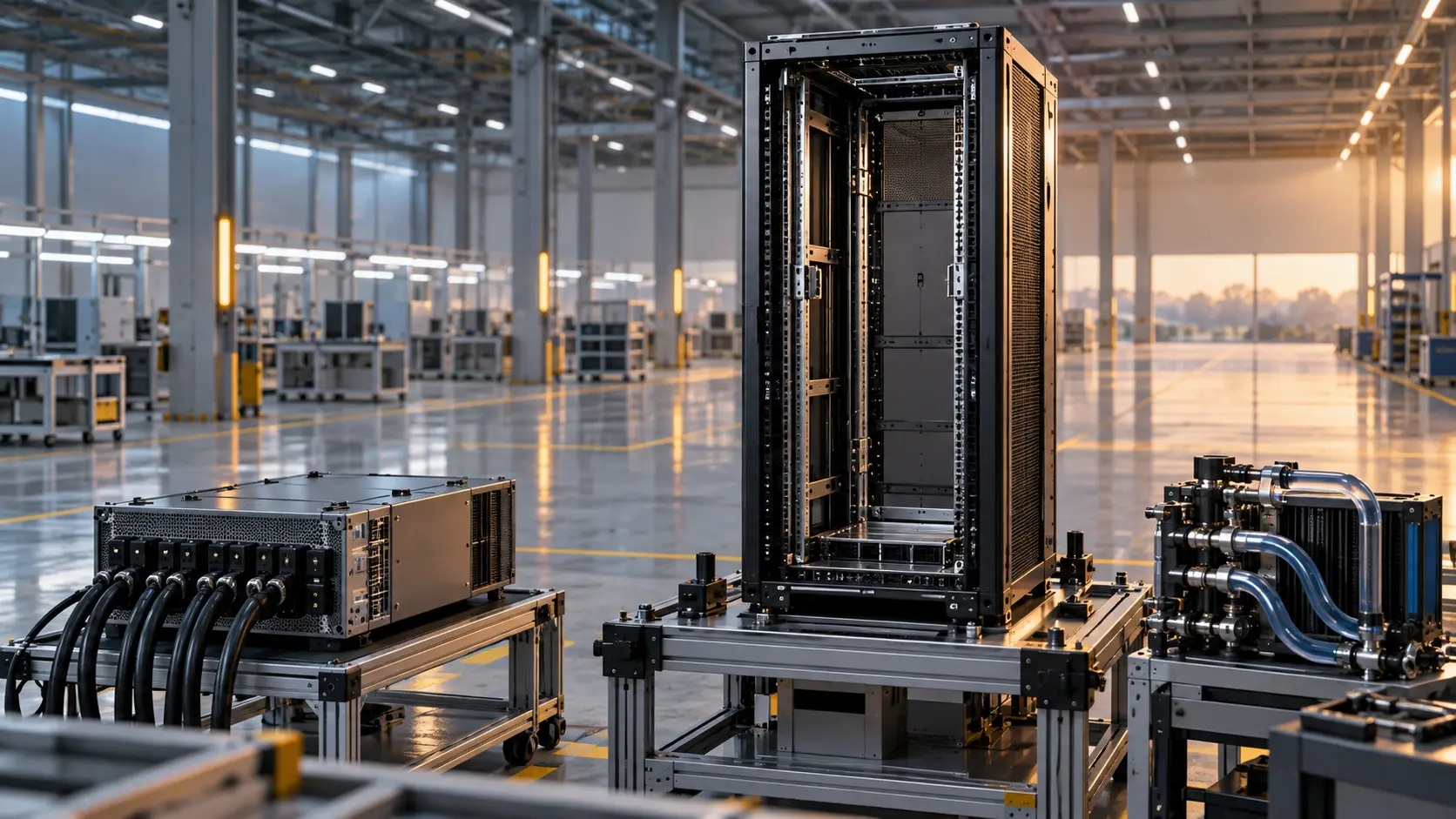
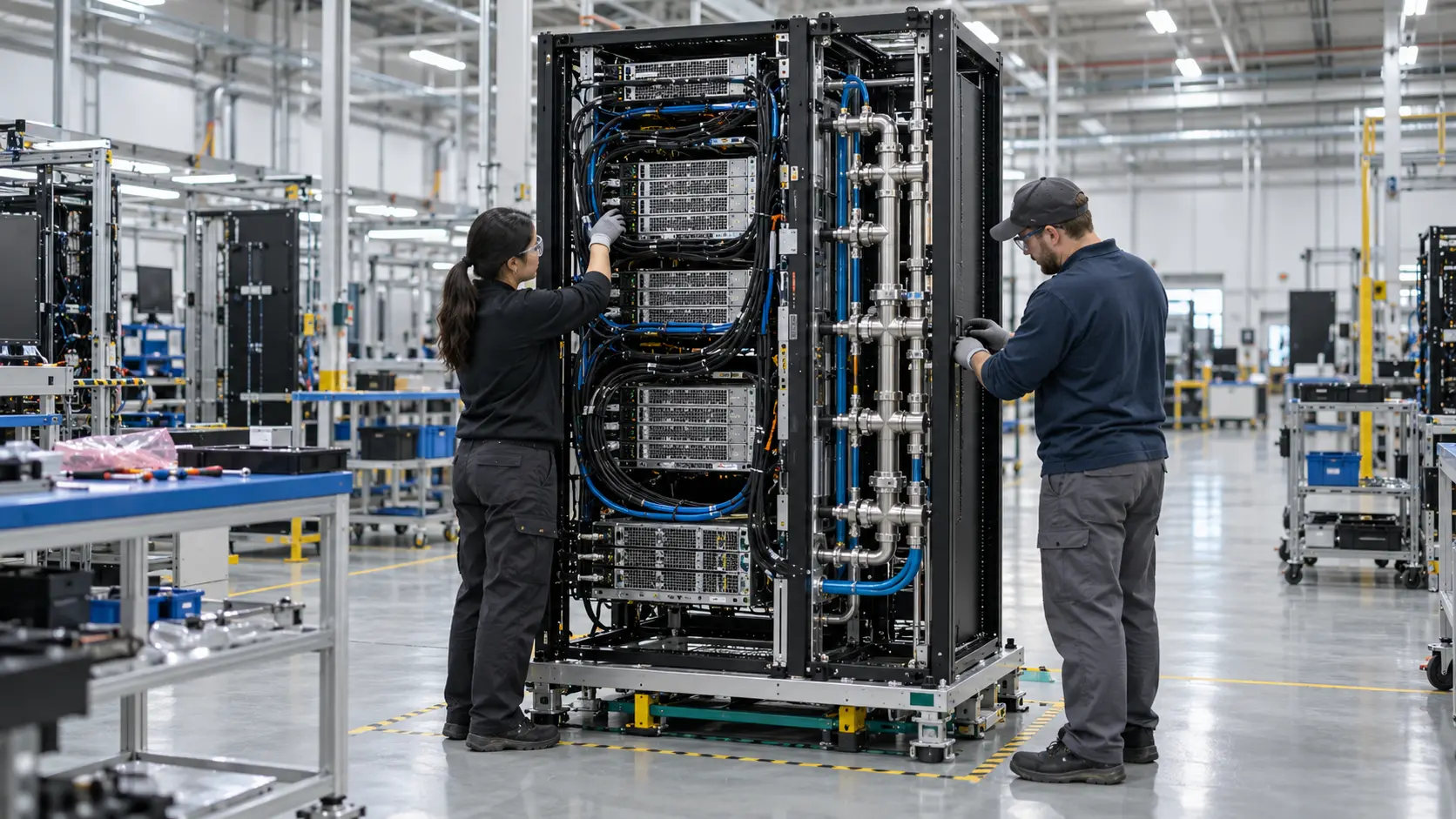
The proposed scope is broad: AI racks, servers, storage and networking equipment, alongside power-distribution units, liquid-cooling systems and transformers. The partners also refer to installation and commissioning services. That list sketches a supply chain around data-centre infrastructure, from rack assembly to systems that deliver power and remove heat. It does not establish which products will be made first, where they will be built or who has ordered them.
The capacity phrase needs particular care. The release describes multi-gigawatt AI-rack manufacturing capacity supporting computing systems with several gigawatts of combined power capacity. Gigawatts measure power, not a count of racks produced each year. Without rack configurations, production rates, yield and delivery schedules, the wording cannot be converted into annual output or commissioned compute capacity.
The public record reviewed here names no factory site, construction or commissioning date, project capex, equity-funding schedule, customer order, purchase commitment, production ramp or warranty allocation. Those details may exist in private negotiations; their absence from the announcements is not evidence that planning has stopped. It does mean that public readers cannot yet trace the proposal from a corporate framework to funded equipment and customer use.
The test of conversion is sequential: definitive agreements; a named and permitted site; disclosed funding responsibilities; equipment and production milestones; then customer-backed output and installation. Each is a different proof point. A signed JV agreement would clarify governance and obligations, but would not itself prove a functioning factory. A capacity target would still need an operating definition: racks built, systems tested, power available and equipment accepted by customers.
For now, October is more concrete than June because it states a proposed ownership split and a non-binding framework. The next useful update is not another scale adjective. It is evidence of which conditions have been satisfied, who bears the capital and execution risk, and when the first customer-accepted system is expected.
Member Briefing
Deeper Profile Context
Sign in with the right membership level to unlock the full briefing and source notes.
Only for Strategic Circle
Strategic Circle
Open to all readers. Unlock profile briefings after joining and signing in.
Join Strategic CircleOnly for Leadership Alliance
Leadership Alliance
For qualified IP-asset owners and management; sign in to unlock alliance briefings.
Join Leadership Alliance