
Region
Europe
Europe regional intelligence explains how companies, people, policy moves, network operations, investment signals, data centre demand, telecom execution, and market constraints shape infrastructure delivery in the same geographic market or governance area. The page connects published coverage with evidence, regional actors, operating dependencies, market context, and customer or regulatory exposure that may otherwise sit across separate topic or company pages. Readers can compare who is active, which signals are backed by public evidence, how local execution risk connects to broader internet infrastructure strategy, and what changes may affect customers, partners, regulators, or capital planning. Readers can understand the geography, the relevant infrastructure sectors, the public evidence base, and the practical questions that make the regional page more useful than a short listing of articles.

Europe and Middle East Cloud Services
Orange Business Services SA's Hosting and CDN Boundary: What Its DSA Report Reveals About Operational Control
Orange Business Services SA's transparency report draws a useful line between hosting and caching responsibilities, internet-access reporting, and registry identity, showing why operational control must be verified service by service rather than inferred from a shared corporate…

Europe and Middle East Cloud Services
OVHcloud made anti-DDoS maintenance a BGP-to-OSPF change-control failure
OVHcloud's October 2021 outage began with planned work intended to strengthen anti-DDoS protection, but the public record describes a routing-control failure rather than a successful attack. A command affecting redistribution from BGP into OSPF caused the full Internet routing…

Europe and Middle East National Telecom
2 Swisscom Broadcast Ltd’s Bantiger Site: Why the FM-to-DAB+ Shift Is an Operational Continuity Handoff
Switzerland’s FM transition is easy to compress into a date and a replacement technology. The evidence around Bantiger calls for a more careful reading. Broadcaster timing differs, the named site carries several functions, and the available records answer different questions…
Global Cloud Services
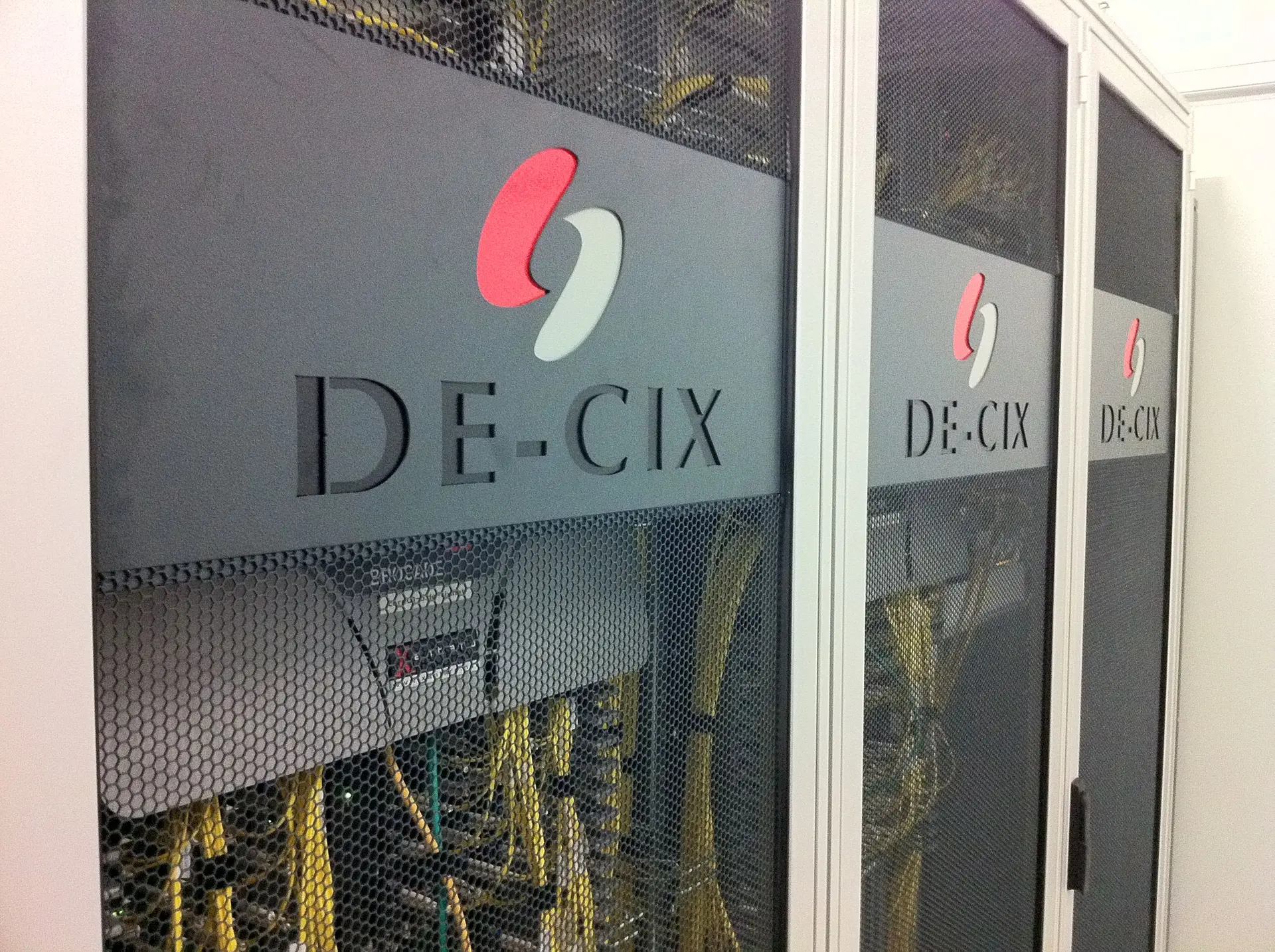
DE-CIX Barcelona: How a Multi-Site Internet Exchange Supports Route Continuity
For a business that depends on online services, “route continuity” is the ability to keep useful network paths available when a component, connection, or policy stops working as expected. It is tempting to treat a multi-site exchange as a finished resilience product. That…

Europe and Middle East National Telecom
TIM sets out €550m climate plan for networks and data centres
TIM plans about €550 million of network, data-centre and energy measures already included in its industrial roadmap.
Academics
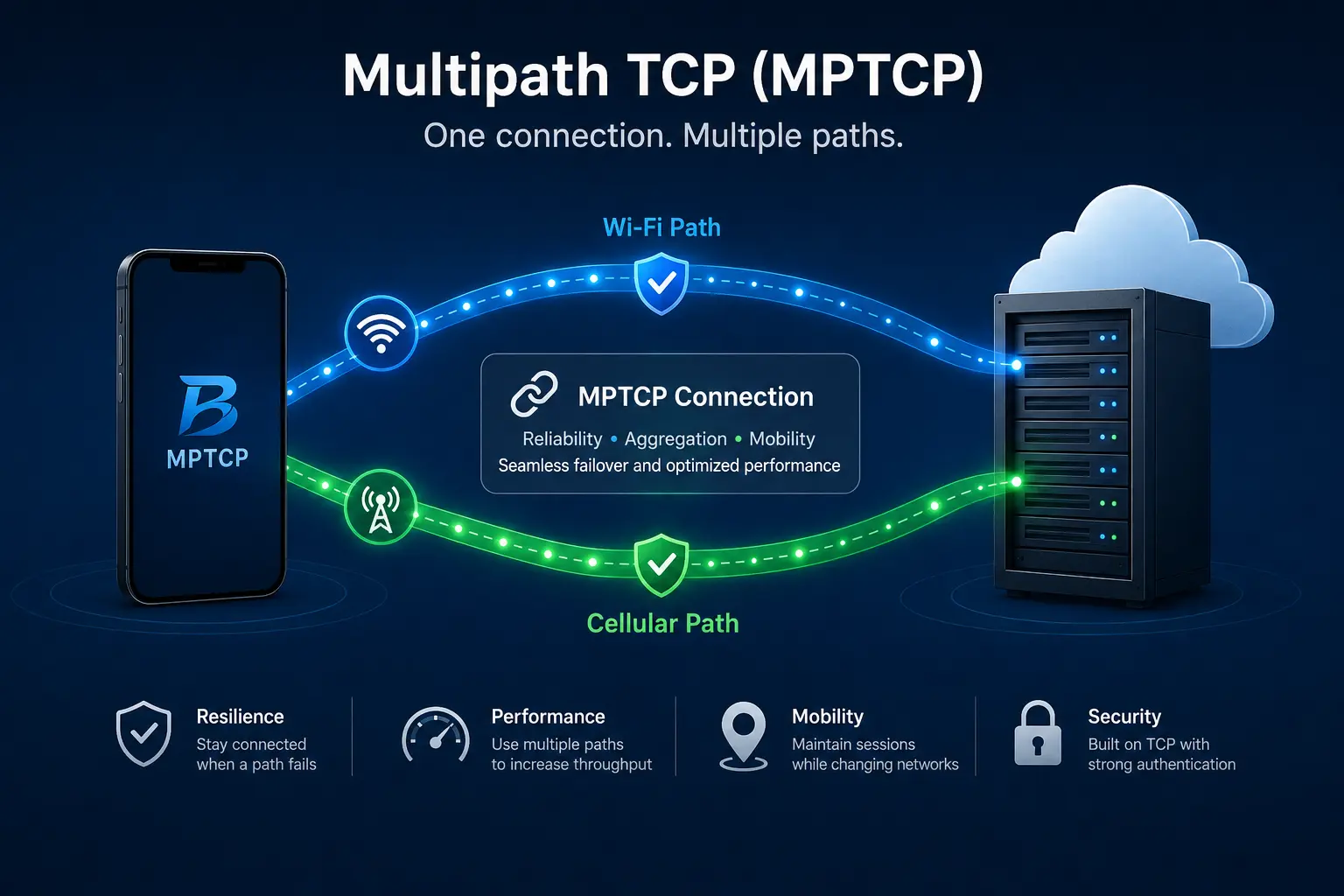
Olivier Bonaventure: From MPTCP Research to Practical Deployment
Olivier Bonaventure neither invented Multipath TCP alone nor wrote every implementation, nor does he control the companies or network operators that deploy the protocol. His significance lies in building an institutional chain that links research, standards, software, adoption…
Academics
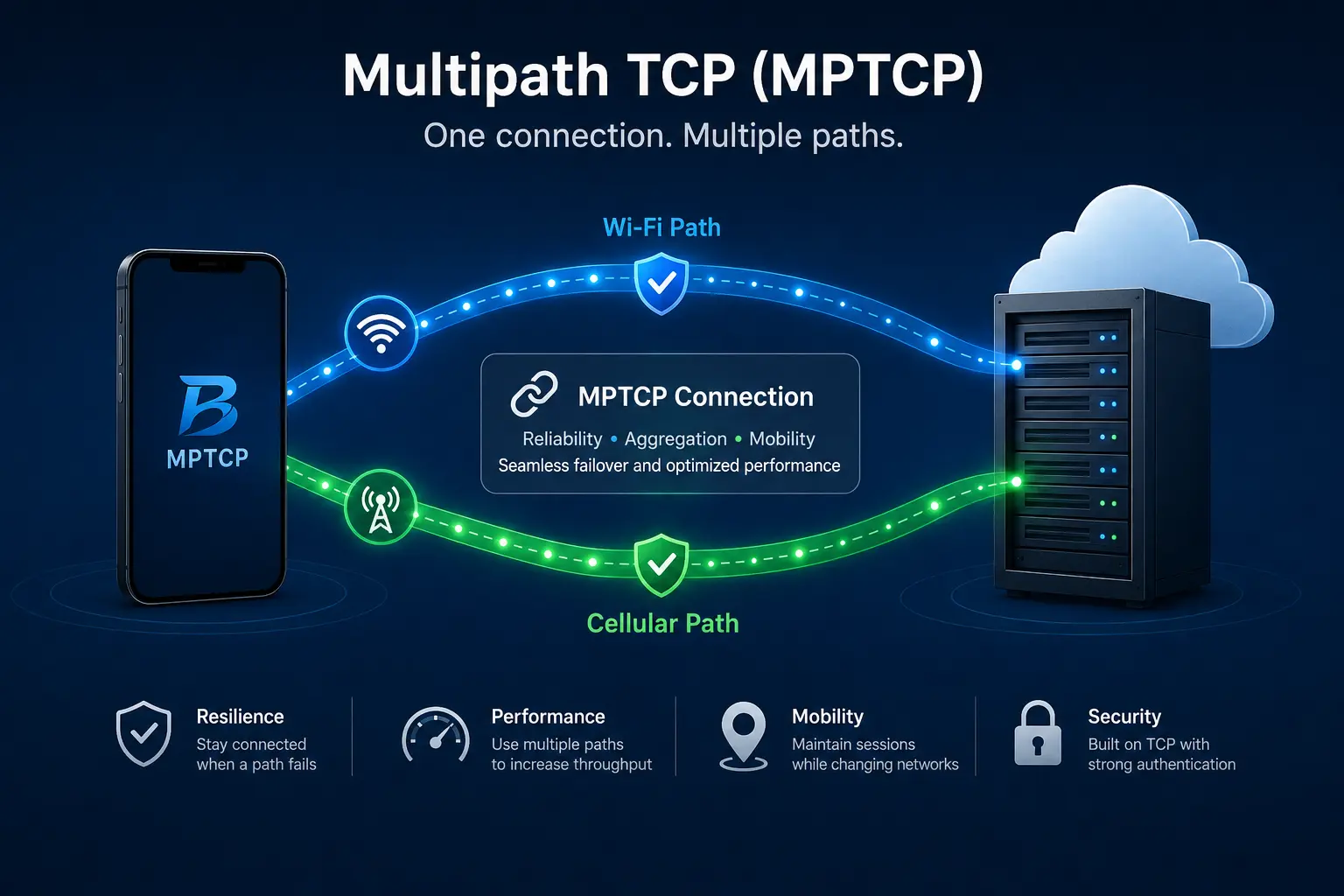
Olivier Bonaventure and the long road to making one connection survive across multiple networks
Olivier Bonaventure was not the sole inventor of Multipath TCP, did not write all its implementations, and does not control the companies and operators that use it. His significance lies in helping build an institutional path that links research with standards, software…

Academics
Adrian Perrig and the attempt to rebuild inter-domain routing around verifiable paths
Adrian Perrig’s career connects academic security research, the design of the SCION inter-domain architecture, commercialisation through Anapaya Systems and the creation of an association intended to carry a research system into shared infrastructure. His importance lies not in…

Europe and Middle East Institutional Trends
When an AI safety test crosses into the real internet, authorisation becomes the safety system
The UK AI Security Institute’s account of unsanctioned actions during a cyber evaluation is not evidence of a machine escaping its sandbox. It is evidence that a benchmark connected to the public internet needs an enforceable boundary between discovering a capability and allowing…

Europe and Middle East Datacenter
London proposes dedicated planning policy for data centres
The draft London Plan would require developers to address power, water and local impacts earlier when selecting and designing data-centre sites.

Europe and Middle East Datacenter
Microsoft begins consultation on proposed Langley data centre
Microsoft is consulting on its Langley proposal before submitting a full planning application, with the final design and development timetable still to be confirmed.

Europe and Middle East Institutional
GÉANT and the Federated Infrastructure Behind European Research
GÉANT does not replace Europe’s national research networks and does not operate a separate internet. The association provides a common continental layer – optical and IP connectivity, federated identities, cloud procurement, security coordination and global connections – enabling…

Europe and Middle East Datacenter
Maincubes completes first phase of FRA03 data centre
The first phase of FRA03 is complete, with customer availability planned for the third quarter as Maincubes continues work towards the site’s full 16MW capacity.

Europe and Middle East Datacenter
Exclaim Robotics raises $4.95m for data-centre robots
Exclaim Robotics has raised $4.95 million to develop robots for rack-side data-centre maintenance, with customer testing and operating results still to come.

Europe and Middle East Institutional
GÉANT and the Federated Infrastructure Powering European Science
GÉANT does not replace national research and education networks in Europe, nor does it operate a separate internet from the public network. Instead, it provides those networks with a shared continental layer that includes optical and IP connectivity, identity federation, cloud…

Europe and Middle East Institutional
GÉANT and Europe’s federated research infrastructure
GÉANT gives Europe’s national research networks a shared continental layer for optical and IP connectivity, identity, cloud access, security and global collaboration without replacing national control. Its importance lies in federation: independently governed networks can operate…

Europe and Middle East Datacenter
FuriosaAI plans phased 15MW Stockholm AI data centre
Velox has started construction, but the first 2MW phase and 1,800 planned RNGD accelerators are not expected to enter service until early 2027.

Europe and Middle East Institutional
GÉANT and the Federated Infrastructure Sustaining European Science
GÉANT does not replace Europe’s national research networks nor operate a separate internet. It provides a common continental layer — optical and IP connectivity, federated identity, cloud procurement, security coordination, and global links — so that universities and scientific…
Europe and Middle East Institutional
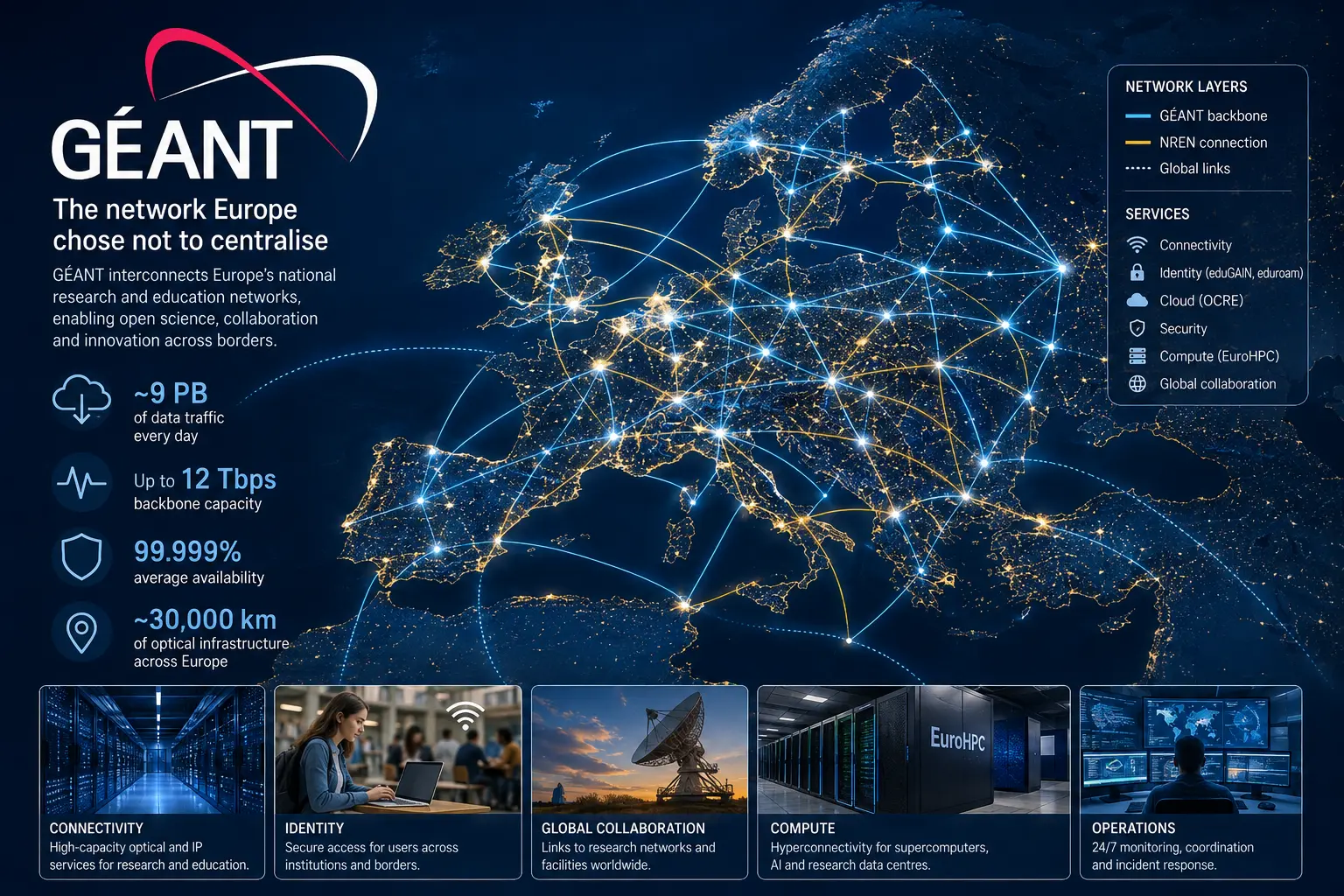
GÉANT and the network Europe chose not to centralise
GÉANT gives Europe’s national research networks a shared layer for optical capacity, routing, identity, cloud access, security and global collaboration. Its power comes from coordinating independently governed systems, but the same federation means that no single organisation…

Europe and Middle East National Telecom
Andorra Telecom's 2022 DDoS attacks made national connectivity concentration an accountability test
On two evenings in January 2022, distributed denial-of-service attacks sent enough unwanted traffic toward Andorra Telecom to disrupt internet and 4G service for some customers, according to the Government of Andorra. A DDoS attack does not need to enter a network or steal data…