
Summary
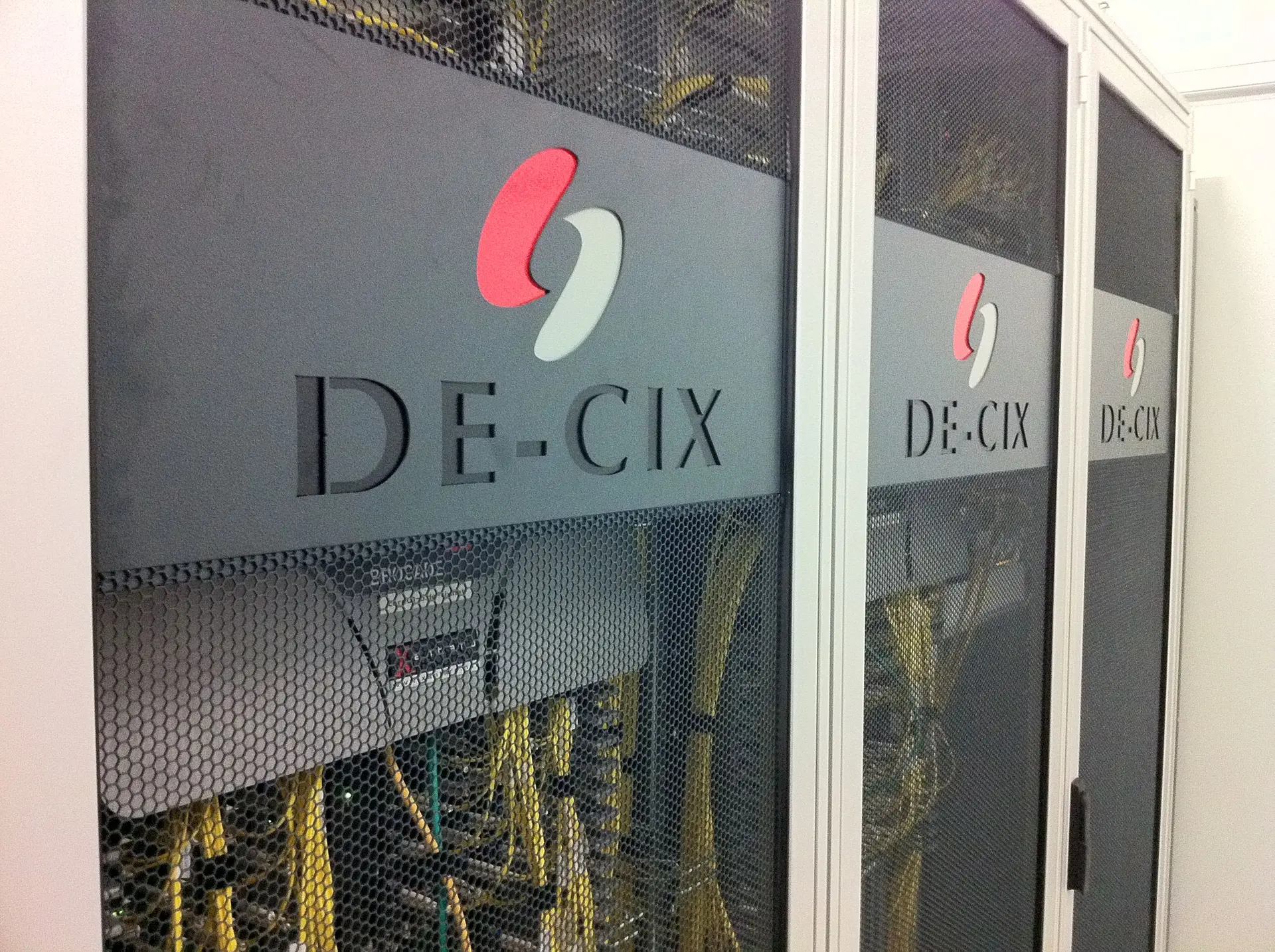
- An Internet Exchange, or IX, gives connected networks a shared place to exchange traffic directly. DE-CIX currently presents Barcelona as an IX location, and PeeringDB identifies DE-CIX Group AG as its operator in Barcelona, Spain.
- The public record describes useful ingredients for continuity planning: an IPv4 exchange LAN, an IPv6 exchange LAN, route-server access, and attachment choices associated with multiple local facilities. These are options an operator can design with; they are not proof of redundant paths, automatic failover, continuous reachability, or a service-level agreement.
- A sound design still depends on choices outside the exchange label: where ports are placed, which carriers and physical paths reach them, how Border Gateway Protocol policies are configured, how failures are monitored and tested, and what the relevant contracts actually promise.
- DE-CIX's 2020 announcement explains the historical intent behind the Barcelona exchange. Current operational descriptions should come from the present DE-CIX location page and the current PeeringDB record, not from future-tense statements made at launch.
For a business that depends on online services, “route continuity” is the ability to keep useful network paths available when a component, connection, or policy stops working as expected. It is tempting to treat a multi-site exchange as a finished resilience product. That shortcut is unsafe. A multi-site exchange supplies connection points and routing mechanisms. The customer must still combine them into a tested design whose failure domains are genuinely separate.
The distinction matters because the visible ingredients sit at different layers. An exchange LAN can let two networks pass traffic directly. A route server can simplify the exchange of routing announcements. More than one attachment location can give a network team choices about where to connect. None of those facts alone says that two circuits take different ducts, that two facilities have independent power dependencies, that an application can survive a route change, or that traffic will move automatically during an incident.
DE-CIX Barcelona is therefore most useful to examine as an operational control surface. Its value lies not in a broad promise that “multi-site means resilient,” but in the specific choices it places in front of an operator: where to attach, whether to use bilateral peering or a route server, how to participate over IPv4 and IPv6, and how to observe and test the resulting paths. Those choices can support continuity when they are assembled carefully. They can also preserve a hidden single point of failure when they are not.
Member Briefing
Deeper Profile Context
Sign in with the right membership level to unlock the full briefing and source notes.
Only for Strategic Circle
Strategic Circle
Open to all readers. Unlock profile briefings after joining and signing in.
Join Strategic CircleOnly for Leadership Alliance
Leadership Alliance
For qualified IP-asset owners and management; sign in to unlock alliance briefings.
Join Leadership Alliance