
Region
Europe
Europe regional intelligence explains how companies, people, policy moves, network operations, investment signals, data centre demand, telecom execution, and market constraints shape infrastructure delivery in the same geographic market or governance area. The page connects published coverage with evidence, regional actors, operating dependencies, market context, and customer or regulatory exposure that may otherwise sit across separate topic or company pages. Readers can compare who is active, which signals are backed by public evidence, how local execution risk connects to broader internet infrastructure strategy, and what changes may affect customers, partners, regulators, or capital planning. Readers can understand the geography, the relevant infrastructure sectors, the public evidence base, and the practical questions that make the regional page more useful than a short listing of articles.

Europe and Middle East Datacenter Trends
Citylink plans Wrocław data-centre heat recovery
The 24MW facility is still under construction, giving Citylink and Kogeneracja time to design heat recovery before the data centre is complete.

Europe and Middle East National Telecom Trends
Telefónica prepares 2,756 sites for Spain’s solar eclipse
Telefónica plans network changes across 31 provinces ahead of the 12 August eclipse, using more than 400 observation points to guide preparation.

Europe and Middle East Cloud Services
Seeweb and Italian Hosting Infrastructure: What Facility Evidence Does Not Prove About Network Control
Seeweb and Italian Hosting Infrastructure: What Facility Evidence Does Not Prove About Network Control company intelligence explains what the organisation operates, where it is exposed, and how its services, customers, partnerships, ownership signals, public evidence, and market…

Leaders
Giovanni Di Clemente on the Fibre Cut That Tested Local Operator Continuity
A regional internet outage is rarely explained by one company, one cable, or one engineer. In June 2018, an Abruzzo publication identified Giovanni Di Clemente as a Telweb engineer and quoted his estimate that a severed backbone fibre had affected 40,000 to 50,000 users. It also…

Leaders
Erik Bais and the Operator Choices Behind Faster BGP Recovery
In 2017, a Juniper customer case described Erik Bais and the A2B Internet team moving a virtual routing platform from laboratory validation into production. The case reported that a full Border Gateway Protocol routing table converged in three to four seconds. That is a concrete…
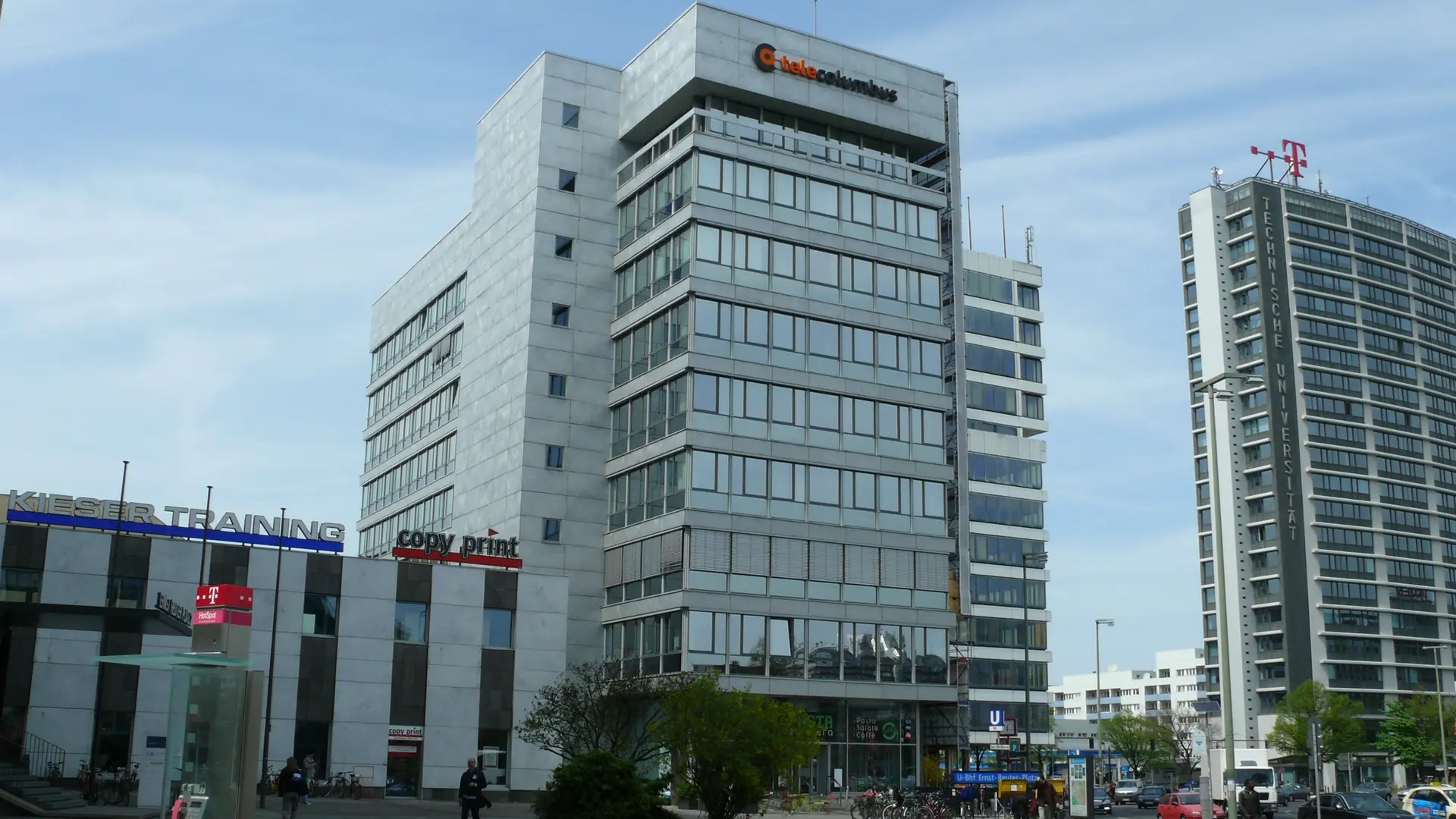
Europe and Middle East National Telecom
Tele Columbus and German Broadband Infrastructure: What Site and Registry Identity Do Not Prove About Control
Tele Columbus sits at the intersection of consumer broadband, physical network operations and Internet coordination records. Understanding that intersection matters because the same company and brand names can appear on corporate pages, legal notices, buildings and network…

Europe and Middle East National Telecom
Telekom Srbija and Serbian Network Identity: What a Telecom Site Does Not Prove About Operational Control
A company name on a telecom-related page can be useful evidence, but it is rarely the whole answer. Reading Telekom Srbija’s network identity responsibly means separating a legal entity, a dated site relationship, a registry listing and an internet coordination record—and then…

Europe and Middle East Datacenter Trends
Harworth in talks to sell second data-centre site
Harworth is negotiating a second data-centre land sale at a site with planning and power, while its wider 800MW connection portfolio remains at different stages.

Europe and Middle East Institutional
ROMGAZ’s AS57611: What Registry and Routing Records Show
ROMGAZ’s AS57611: What Registry and Routing Records Show intelligence summary explains the development, the public evidence available to readers, the organisations involved, the regional context, market exposure, and the infrastructure consequences that may follow. The Europe and…

Europe and Middle East National Telecom
Beltelecom and Belarusian Telecom Continuity: What Company Identity Does Not Prove About Network Control
Beltelecom and Belarusian Telecom Continuity: What Company Identity Does Not Prove About Network Control intelligence summary explains the development, the public evidence available to readers, the organisations involved, the regional context, market exposure, and the…

Leaders
Urban Suhadolnik's First-ASN Proposal: Narrowing Policy to Match Routing Reality
Urban Suhadolnik's First-ASN Proposal: Narrowing Policy to Match Routing Reality intelligence summary explains the development, the public evidence available to readers, the organisations involved, the regional context, market exposure, and the infrastructure consequences that…

Europe and Middle East National Telecom Trends
IRIS² now has a 348-satellite implementation baseline, not an operational constellation
Europe’s secure-connectivity programme has crossed an important contractual boundary. The Commission and SpaceRISE have fixed a larger, 348-satellite architecture and a path from detailed design to launches and ground infrastructure. That reduces one kind of uncertainty while…

Europe and Middle East Regional ISP
Raynet SAS and AS206086: What Registry and Routing Records Actually Show
Raynet SAS and AS206086: What Registry and Routing Records Actually Show intelligence summary explains the development, the public evidence available to readers, the organisations involved, the regional context, market exposure, and the infrastructure consequences that may…

Leaders
Andrew Palardy's TAYGA Patch: Closing an RFC 8215 Gap in Debian NAT64
A small validation rule can decide whether a network operator is able to use a standards-defined address-translation option at all. Debian Bug #1061773 recorded that TAYGA rejected an IPv6 translation prefix reserved by RFC 8215 for local use. Andrew Palardy, who said the bug…

Europe and Middle East National Telecom
POST Luxembourg and National Connectivity: What Company Identity Does Not Prove About Network Control
POST Luxembourg sits at the intersection of legal identity, group organization, regulated network access and a major fixed-network technology transition. Those four dimensions matter to national connectivity, but they answer different questions—and none, by itself, proves…

Leaders
Timofey Martiushev and the RouterOS Choices Behind Operator Continuity
A network outage can begin with a choice that looked harmless when it was made: an ambiguous gateway, a management service left open, an IPv6 path without equivalent filtering, or a tunnel whose overhead was never calculated. In 2018, Timofey Martiushev put such choices at the…

Europe and Middle East National Telecom
Arqiva and UK Broadcast Infrastructure: What Site Identity Does Not Prove About Network Control
Arqiva's public record, its descriptions of transmission work and the named role of Emley Moor show how legal identity and operational continuity can be examined together without treating them as the same thing.

Leaders
Jehan Procaccia and the Routing Boundaries That Keep Research Networks Working
Research networks do not stay useful merely because universities and laboratories are connected to the Internet. They also need explicit decisions about which routes carry collaboration traffic, which organizations exchange those routes, how IPv4 and IPv6 coexist, and what…

Europe and Middle East Cloud Services
Equinix (Netherlands) B.V. and AM3/AM4: Where Registry Identity Stops Short of Facility Control
Three public records describe a legal member name, a entity-maintained facility identity and an exchange colocation location in Amsterdam. Read together, they clarify where those identities meet, but they do not establish that Equinix (Netherlands) B.V. owns, operates or controls…

Europe and Middle East Cloud Services
Telehouse International Corporation of Europe Ltd’s Docklands Expansion: Why West Two Is an Operational-Control Test
Telehouse’s planned West Two expansion sits beside an existing Docklands facility and a visible interconnection ecosystem, but those facts occupy different evidence layers. The useful question is not whether the project sounds connected or resilient; it is which legal, facility…