
Profile
Research
Research profile intelligence connects person, company, institution, and other entity coverage for readers comparing the subjects behind BTW.MEDIA reporting. The page helps compare public profiles, related events, evidence packs, role changes, operating footprints, governance exposure, organisational links, and market relevance while keeping organisation and people records distinct from ordinary news chronology. Readers can understand the subject behind the headline, the evidence supporting that profile, and the infrastructure or market relationships that make the profile relevant. They can see who or what the profile represents, which public sources support it, how it connects to companies, markets, governance bodies, or events, and what changes may deserve continued attention as the subject evolves.

History
Four Plans, One Meter: BruNet’s 1995 Dial-Up Tariff
A December 1995 message from Brunei’s Telecommunications Department records four BruNet plans, each pairing a monthly subscription with a stated dollar value of “free traffic,” then charging extra use by the minute at different peak and off-peak rates.
History
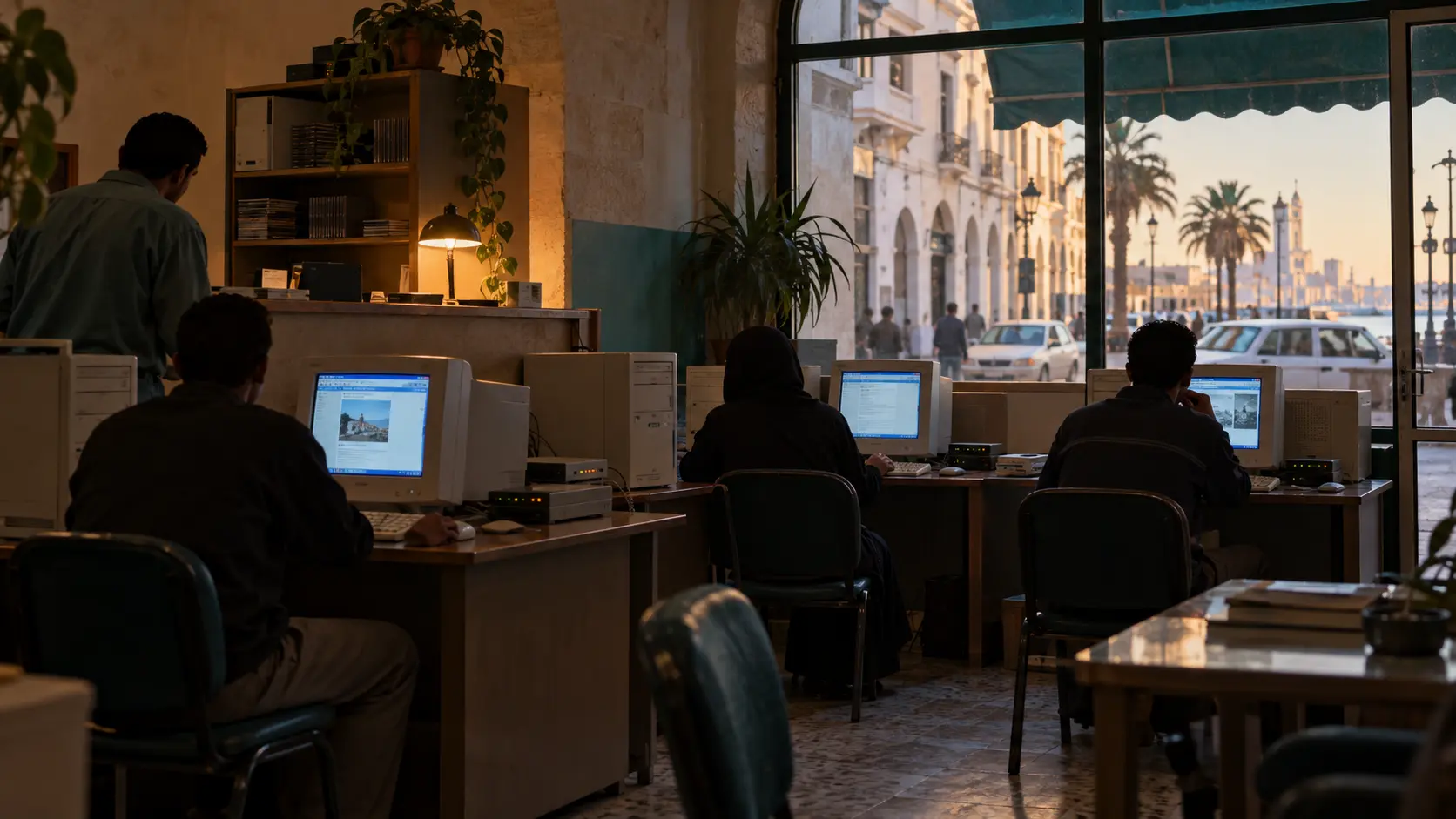
Libya’s Internet Had More Than One Opening Date, 1998–2000
Libya’s Internet chronology changes with the threshold being measured: institutional connection, licensed service, eligibility to connect, and ordinary public use do not begin on the same day. Contemporary accounts disagree most sharply just as public venues started to appear.
History
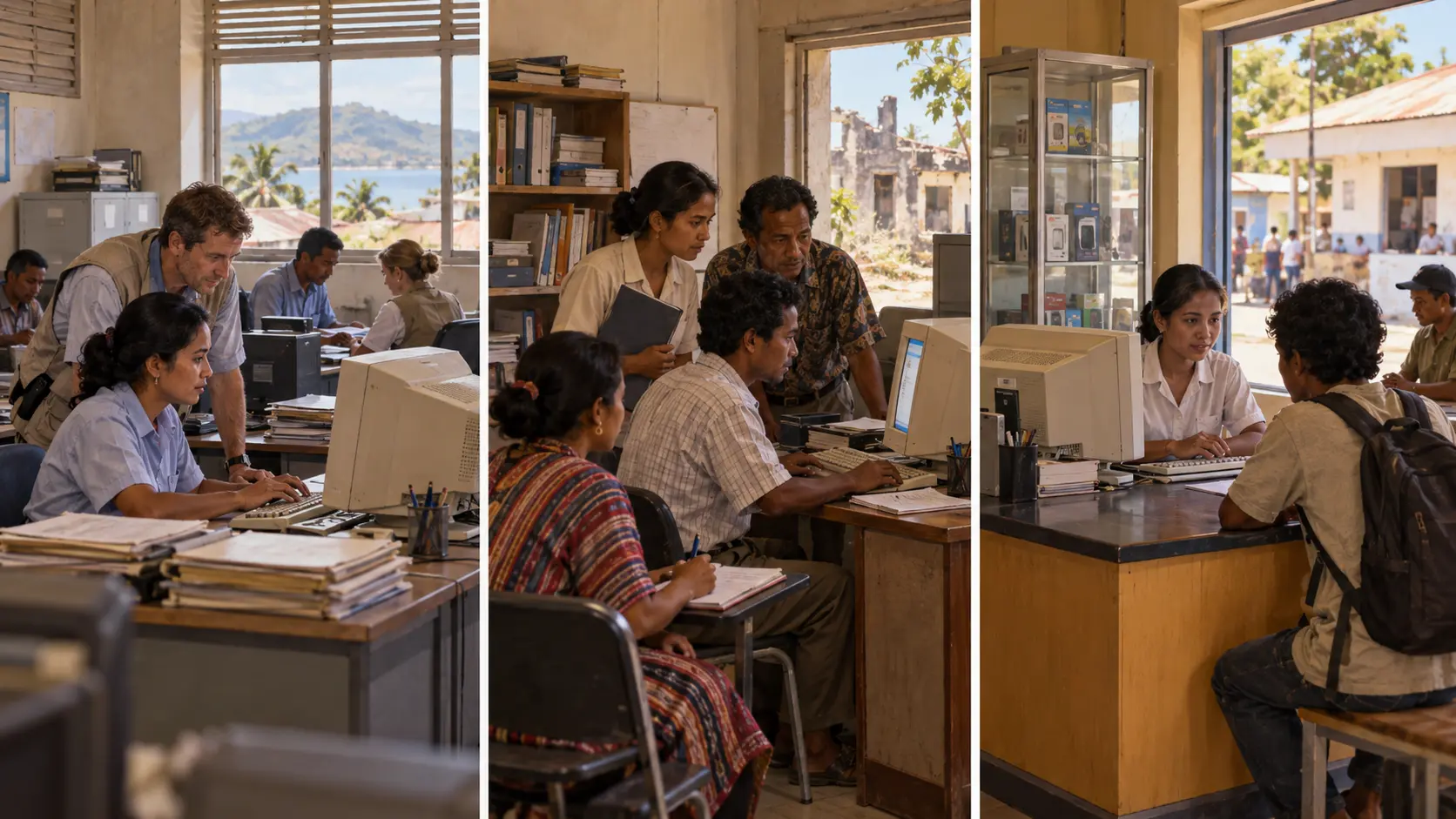
Three Gateways, Three Client Groups: Timor-Leste’s Internet, 2000–02
Timor-Leste’s early postwar Internet did not begin as one national service. From 2000 to mid-2002, three gateways served separate client groups, and only one—the Telstra gateway—operated commercially.

History
Public Dial-Up, UUNET by Satellite: Gulfnet Kuwait, 1994–97
Three messages from Gulfnet’s director trace two access layers: a satellite connection reported in 1994, public UNIX dial-up in 1995, and a 1997 account of satellite backhaul to UUNET/AlterNet beside domestic modem access. These are operator snapshots, not proof of a continuous…

History
AlterNex Turned ECO-92 into a Public Internet Gateway, 1989–92
Brazil’s first academic Internet links and AlterNex’s public-facing service mark different milestones. The 1992 Rio conference connected an NGO-run communications node to an RNP-operated international IP path, while the earlier AlterNex network had already moved civil-society…

History
Burundi’s Internet Went Live Before Its Public Launch, 1997
In 1997, Burundi’s first Internet service did not have one clean launch date. CNI said it had tested free access from May, begun serving customers in Bujumbura on 1 August, and still planned a public launch later that month. A dispute over access to ONATEL’s earth station had…

History
Moldova’s Technical University Had E-Mail, but a Campus Web Had to Wait, 1997
A 1997 university paper called a 9.6 kbps line through Romania the first Internet connection for the `utm.md` domain. It carried dial-up e-mail, the authors said, but not serious Web browsing. The same paper described a separate 64 kbps satellite gateway and a campus network that…

History
A Twice-Daily Call Kept the Network Going: Vanuatu’s Pacific S.D. Network, 1994–96
In Vanuatu, one small development network had a name in the global host list before it had stable local IP service. By December 1996 it still called Sydney twice a day over dial-up, using a FidoNet system, while a local TCP/IP upgrade remained a plan the group could not yet…

Story
When the Registry's Own Remedy Became the Risk: The AFRINIC–Cloud Innovation Enforcement Cycle
AFRINIC's contractual enforcement action against Cloud Innovation Ltd escalated over thirty months into injunctions, contempt warnings, an attachment over up to USD 50 million of registry funds and, on 12 September 2023, a Supreme Court order placing AFRINIC itself under…

Story
ARIN advanced its out-of-region draft; the objection stays in play
A unanimous Advisory Council vote moved ARIN-2025-3 to Recommended Draft after an objection arrived late in the review. The minutes describe advancement as reversible, but the record still has to show how dissent will be answered.

History
The Password Sniffer That Put SSH on Port 22, 1995
A Finnish researcher’s account of stolen credentials led to a concrete replacement for remote login: first a beta program, then a registered port and a public source release. The sequence matters because SSH was already running before its protocol draft had any standing in the…

History
ThaiSarn Let Individuals Join, but Could Not Resell the International Line, 1994
In January 1994, Thailand’s NECTEC said individuals could join the country’s research network. The fee did not buy a slice of its international circuit: CAT controlled the leased line, and special conditions barred the resale of its bandwidth. NECTEC said it used membership…

History
The First Permanent Link Served Parliament First: Georgia’s Internet Pilot, 1995
Georgia’s first permanent Internet connection is often dated to the summer of 1995. A surviving route trace makes that milestone unusually concrete: a packet from London reached a host in Tbilisi, while the accompanying machine list included several Parliament servers. The link…

History
The Gateway Put the Address in the Message: Intermail’s Commercial Mail Relay, 1981–90
Before email users could assume that one address worked across systems, Intermail asked them to put a forwarding instruction inside the message itself. USC’s Information Sciences Institute kept the mail programs in place and operated the boundary between them. That choice made…
History
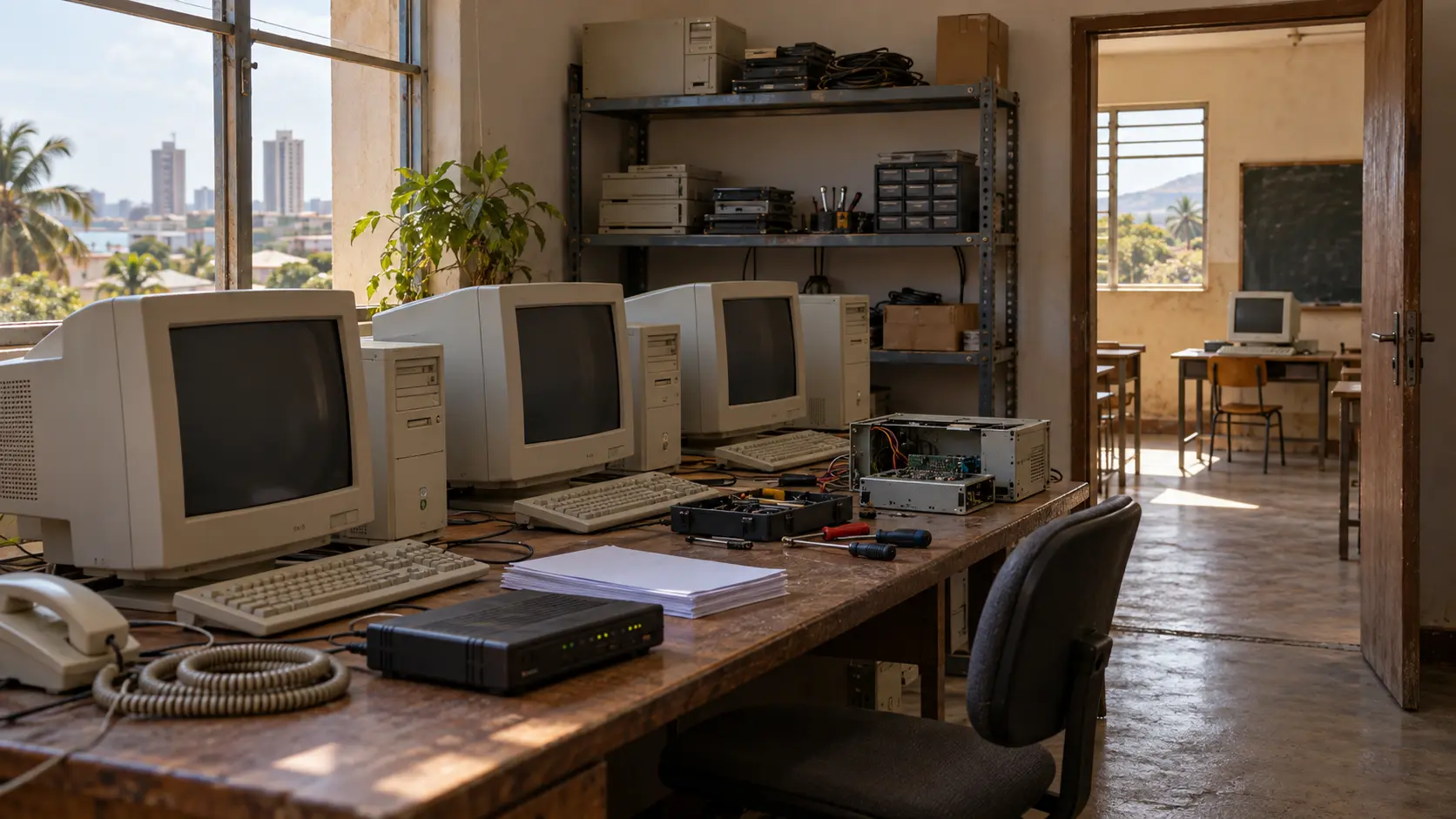
Maputo’s University POP Served Mozambique’s Provincial Schools—at a Cost, 1998–2001
Mozambique’s Internet para as Escolas project linked schools beyond Maputo through CIUEM, the country’s only point of presence at the project’s conception. That made a university in the capital the access hub—and the repair desk—for a network whose provincial schools often lacked…

History
.fi Arrived Before the Global Route: Finland’s Domain, 1986–88
On 4 December 1986, Tampere University of Technology asked to administer Finland’s new country-code domain. Its application said the names would be used first for mail. Two years later, FUNET’s first routing test carried Finnish IP packets through NORDUnet to the United States.…

History
Eritrea’s UUCP E-mail Was Priced by the Megabyte; IP Went Wholesale, 1996–2000
Before an international IP gateway reached Eritrea, UUCP mail was sold by the megabyte. A provider’s 2000 account described a falling email rate, two commercial services and a fixed-price wholesale offer through state operator TSE—alongside a conflicting account of when the…

History
Albania’s “Public” FreeNet Had an Eligibility List, 1995–96
In 1996, Albania’s FreeNet could be called public while excluding individual users. The distinction lay in its service rules: an institutional network for nonprofit organizations, email first, with commercial and political uses outside its stated remit.

History
The Address List Was Not Permission: DEC’s ARPANET Email, 1978
In 1978, Digital Equipment Corporation could find hundreds of ARPANET addresses in a printed directory and reach many of them with one product announcement. The difficult question was not whether the network could deliver the message. It was whether being reachable made a…

History
The Gambia’s Internet Came in Stages: X.25, Mailbags and the 1998 Gateway
The Gambia did not move from “offline” to “online” on one date. Records describe access to online services over X.25 by 1996, scheduled email collection the next year, and a satellite gateway that widened international connectivity in 1998. Each milestone changed a different part…