
Content Type
Briefing
Within the Content Type facet, Briefing intelligence gathers BTW.MEDIA articles that share the same editorial format, helping readers compare briefings, profiles, risk notes, market analysis, and event coverage without mixing different kinds of evidence. The page explains how this content type frames internet infrastructure events, company movements, governance decisions, operational signals, and public evidence across the site. Readers can compare which actors or infrastructure systems appear most often, how source quality changes interpretation, and whether the material is a durable profile, a time-sensitive event, a strategic market signal, or a governance development. The result is a useful search page for operators, investors, customers, analysts, and policy stakeholders who need to understand the consequence, timing, and evidence behind similar article formats.

Europe and Middle East National Telecom Trends
Swiss Spectrum Bidders Can Plan to Share a Network. First, They Must Stop Talking
The future network may have shared steel and radios. During the auction, a chat about who will use which frequencies can turn an efficiency plan into a map of rival bids.

Europe and Middle East National Telecom Trends
Switzerland Will Share the Mast, but Not the Coverage Claim
A radio on somebody else's roof can serve the public. A radio in a customer's living room may only serve the furniture. Switzerland's spectrum auction has decided which one counts.

Africa National Telecom Trends
Kenya Wants the Satellite Dish to Come With an Address Book
A beam can cross a border in milliseconds. Kenya's proposed satellite rules ask who keeps track of the equipment at the other end—and who answers when it causes trouble.

Europe and Middle East National Telecom Trends
Five Cities on the Map. The Street Key Is Still at Ofcom.
Harrelli Communications wants the legal tools to build fibre routes and share infrastructure across the UK. Ofcom's consultation asks when a contractor's plan becomes a public right to use the street—and who will carry the costs when the digging begins.

CASE FILE
Brussels Wants an Arctic Cable Alarm. Who Gets the 2 A.M. Call?
The EU's new Arctic strategy proposes a cable hub to spot trouble and help repairs. Its real test will come at the handoff: a warning from the seabed needs an authority, an operator and a vessel to move in the same direction.

CASE FILE
The Phone Number Has a Waiting Room. Its Former Customer Needs a Door.
Canada's telecom regulator refused to reopen a former host's porting system for Ztar Mobile. A dissent found a smaller job left undone: prove who last used an unreassigned number before the clock runs out.

CASE FILE
October 23 Came. Verizon’s Copper Scissors Stayed Locked.
Verizon’s earliest date to retire legacy phone lines has passed. The FCC stopped the application’s automatic approval before it took effect. In rural Virginia, counties are asking the question the calendar cannot answer: which household has a working replacement voice line?

CASE FILE
Three Buyers Want SFR. France Kept the Spectrum Keys.
Orange, Bouygues Telecom and Iliad/Free have proposed taking different parts of Altice France’s business. France will examine three linked deals, and Arcep will separately rule on the radio frequencies and phone-number resources that make a network work. The cabinet is still…
Asia-Pacific National Telecom Trends
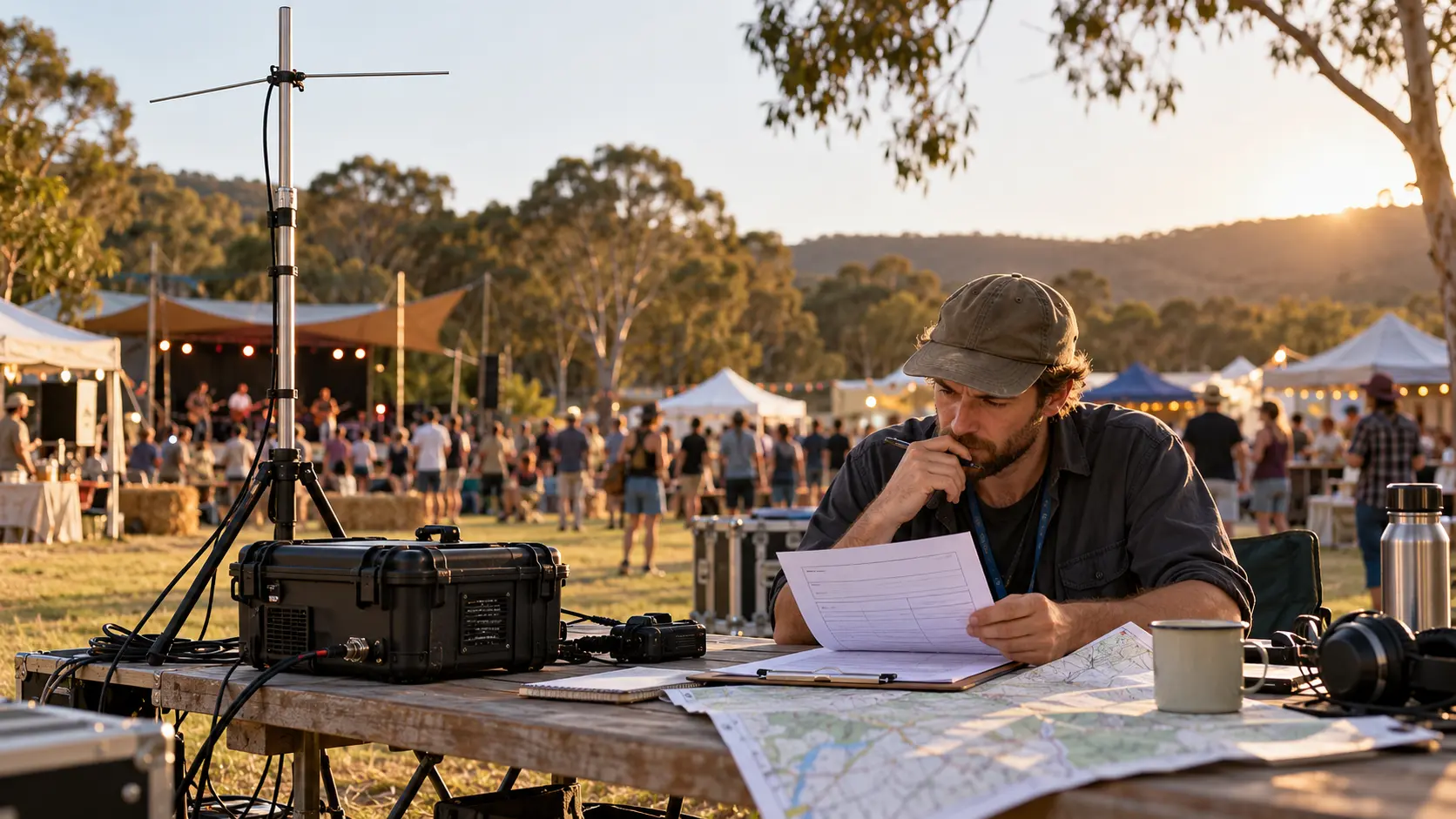
Pop-up FM Gets a Chaperone. ACMA Keeps the Licence Stamp.
Australia’s regulator wants accredited people to coordinate most short-term event radio applications. The proposed route cuts the filing lead from eight weeks to four, while ACMA keeps the decision that makes the frequency available.

CASE FILE
The Hearing Is in November. Canada Paid for the Deaf Delegates’ Trip in October.
A seat at a telecom hearing has a travel bill. The CRTC ordered C$3,788 in advance costs for two Deaf Wireless Canada Consultative Committee representatives before its consumer-protection hearing begins. Three large carriers must pay it now.

Asia-Pacific National Telecom Trends
C-DOT’s Sixth Telecom Centre Has a Familiar 6G Menu
C-DOT opened its sixth academic Centre of Excellence at IIT (BHU), but its published 6G research menu has already appeared in the announcements for IIT Hyderabad and IISc. Varanasi brings a live lab portfolio; the first project agreement will show what C-DOT adds to it.

Europe and Middle East National Telecom Trends
France Put SFR on a Six-Month Clock. The Public Saw It Eight Months Later.
Arcep’s newly published order tells SFR to deliver mobile service in 54 targeted-coverage areas and fixed 4G in another list of 27. The deadline runs from the date SFR received the order. The public document leaves that date out.

North America National Telecom Trends
Northwestel’s Tower Rates Need Receipts, Not Just a Spreadsheet
A northern tower can host someone else’s gear. Northwestel has asked to revise the rates for space, power and attachments; Canada’s telecom regulator wants to see the working behind the bill. The due date for that working has moved to 3 November.

Europe and Middle East National Telecom Trends
Some lift alarms still need 2G. Britain’s exit plan asks users to find them
The UK has given mobile operators a timetable, trial rules and a quarterly reporting loop for retiring 2G. The people expected to spot many of the devices left behind may never have bought service from those operators.

North America National Telecom Trends
Northwestel’s Fee Waiver Got a Longer Clock. The North Still Waits.
Canada’s telecom regulator first aimed to decide a northern Internet winback waiver within 45 business days. Now it gives itself 120 calendar days from the filing. The question behind the clock is who gets a cheaper return trip.

Europe and Middle East National Telecom Trends
Cambridgeshire Lost 630 Homes on Paper. The Fibre Kept Growing.
BDUK’s October ledger trims CityFibre’s contracted Cambridgeshire count even as its recorded build rises. A financial model moved the boundary; the public gets a footnote instead of an address list.

Europe and Middle East National Telecom Trends
Cheshire’s Broadband Contract Took a Trip to Norfolk
Britain’s latest Project Gigabit table gives a contract named for Cheshire an extra 11,360 premises. The footnote sends them to Norfolk, where another supplier already has its own row.

Africa Institutional Trends
Nigeria’s US$750m cloud bet has one big customer: the government
Abuja wants private capital to build a regional cloud market. Its plan starts with something the state already controls: what federal agencies buy, how they buy it and whether those contracts are predictable enough to finance new capacity.

North America National Telecom Trends
Copper Is Leaving. Should Canada Freeze Its Wholesale Bill?
The CRTC is asking whether fading copper networks deserve frozen access rates while every incumbent should offer a 50 Mbps wholesale doorway.

ICANN
ICANN’s Fourteen-Year-Old .IDN File Gets a Stamp and a Bouncer
The board has denied Nameshop’s challenge to a terminated domain application. It also told its review committee what to do if the same application comes knocking again.