Summary
- The EU's 20 October Arctic strategy proposes an Arctic Cable Hub as the first step toward a broader Maritime Security Hub. The initial brief is to monitor, protect and support repairs of North Atlantic-Arctic submarine cables.
- The wider hub is to be led by EU Member States; Brussels would support interested states and EEA partners. Private cable operators are named as partners, while the actual alert-to-repair handoff remains to be designed.
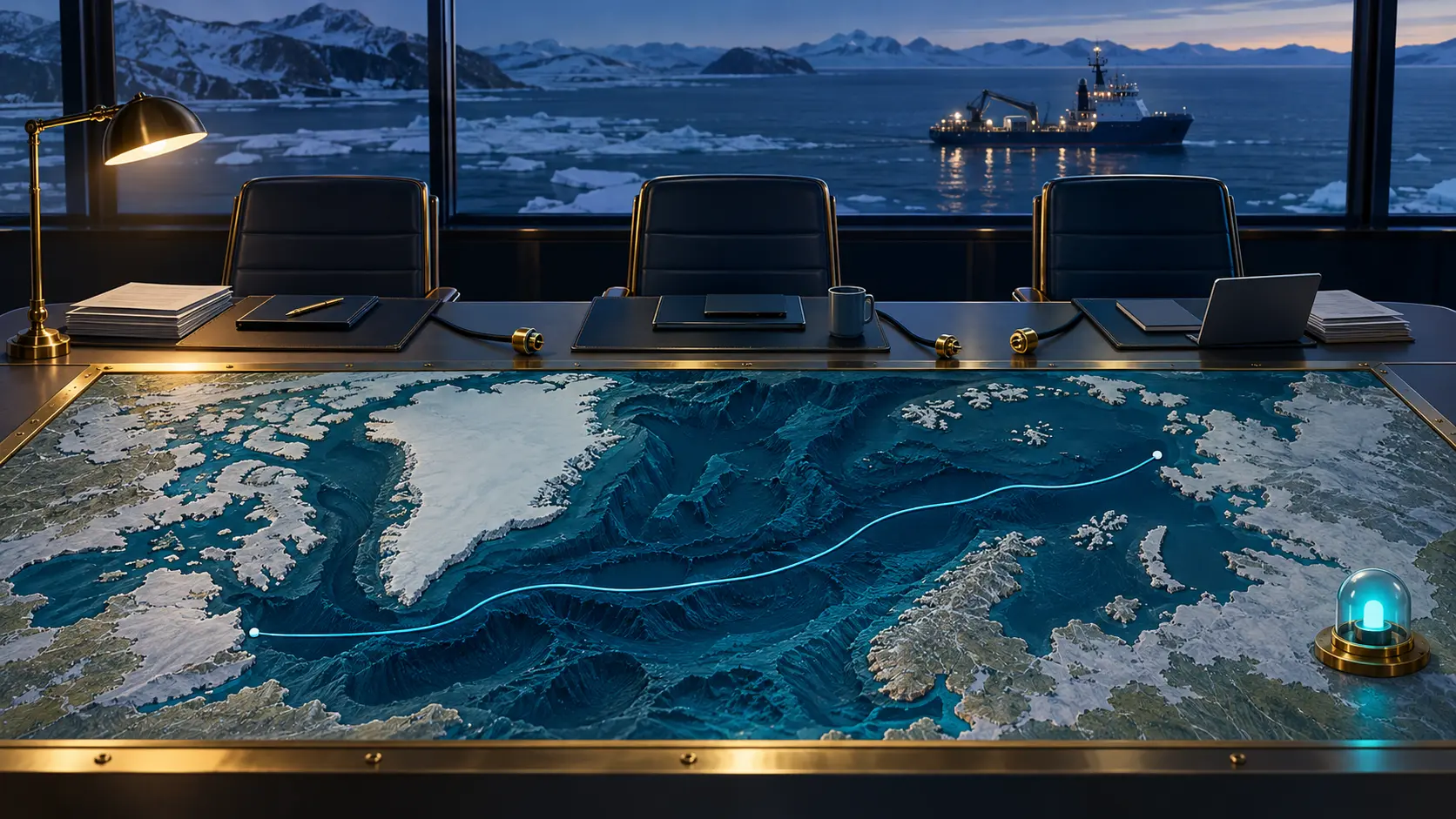
There is a familiar way to protect a cable on paper: draw it on a map, add a glowing warning light and put three organisations around the table. The hard part starts when the light turns on at two in the morning. In its 20 October joint Arctic communication, the EU proposes an Arctic Cable Hub to monitor, protect and support the repair of submarine cables in the North Atlantic-Arctic. It is the first piece of a wider Maritime Security Hub, where national and EU information would meet. The question behind that neat diagram is who is allowed to do what with the warning.
The proposal gives an outline of authority. The broader maritime hub would be led by Member States, with possible coordination with like-minded partners. The EU would support Member States and interested EEA partners in establishing the cable hub. It also promises investment in smart technologies on cables that can provide early warnings. The communication points to Baltic and Mediterranean cable hubs as models, including cooperation with the private sector. Those verbs matter: a private operator may detect the fault, a national authority may hold the maritime picture, and someone else may have to approve and arrange a repair.
The Commission's strategy page sets the two layers side by side. Cable monitoring and repair support are the first task; later, the maritime hub could take in landing-site protection, vessel tracking, pollution, illegal fishing and search-and-rescue information. A hub that tries to run all of those jobs at once would turn a cable alarm into a general-purpose inbox. The proposed sequence gives the cable mission a chance to establish a usable route from signal to response before more duties arrive.
There is a concrete EU precedent for the handoff. In a June 2026 repair-capacity call, the EU agency HaDEA set out a €40 million scheme for modular equipment in other European sea basins. A public emergency-response applicant must identify at least three vessels prepared to take the modules; equipment at a port or shipyard must be installable within three days of a vessel arriving, after a request by a Regional Surveillance Hub or another competent authority. That is a procurement rule for the existing call, not an operating rule for the proposed Arctic hub. It shows the level of specificity the Arctic plan will eventually need: who requests, what is ready, and how fast it can move.
The technology list is longer than the operating manual. The joint communication names existing EU maritime information-sharing systems and satellite sources. Its separate Earth-observation government-service pilot is proposed for 2027. That year belongs to the observation pilot. The document gives the Cable Hub no named operator, first operational date or repair-dispatch rule. The missing line is more specific than a budget: which authority confirms an alert, contacts the cable owner, checks maritime conditions and initiates the repair chain?
This story sits beside the plan to build new Arctic routes, rather than inside it. The communication says EUR 107 million of Connecting Europe Facility Digital support has already gone toward Greenland connectivity and the Pan-Arctic Cable vision. That is a connectivity investment, while the Arctic Cable Hub concerns the governance of existing and future cables when something goes wrong. A new route without a clear response chain can add capacity while also adding another asset that needs watching.
High Representative Kaja Kallas described the proposed cable hub as a way to monitor, protect and repair critical undersea infrastructure. The first credible sign of progress will be prosaic: an agreed roster, a trusted alert channel, a decision owner and a repair contact. That is how a map gets a phone number.
Sources
Member Briefing
Deeper Profile Context
Sign in with the right membership level to unlock the full briefing and source notes.
Only for Strategic Circle
Strategic Circle
Open to all readers. Unlock profile briefings after joining and signing in.
Join Strategic CircleOnly for Leadership Alliance
Leadership Alliance
For qualified IP-asset owners and management; sign in to unlock alliance briefings.
Join Leadership Alliance