Summary
- Unisys said its expected GIF/LZW licensing applied to commercial software developers; it said online end users were not the focus, freeware was exempt, and most website operators using purchased software would not need a separate license.
- CompuServe announced an open, no-cost 24-bit successor called GIF24 on 17 January 1995. W3C dates PNG’s creation to December 1994 and says CompuServe supported PNG by October 1996.
The license had a place in the chain
On 6 January 1995, Unisys drew a boundary between the company selling LZW software and the person opening the resulting image. Its clarification said online end users, including Internet users, were not the focus of licensing. The commercial software developer was the party expected to obtain a license.
Unisys described its agreement with CompuServe as a royalty of one per cent of the average selling price of CompuServe software—about 11 cents for each copy sold and connected to its information service. The agreement was completed on 21 June 1994. CompuServe could decide whether to sublicense LZW to commercial developers whose GIF software connected directly to its service. Unisys said it did not require fees to be passed to sublicensees or end users.
The company also said it would not pursue earlier inadvertent infringement by GIF software marketed before 1995. It expected commercial developers launching or enhancing GIF software from 1995 onward to secure a license, directly or through a licensed online service. Non-commercial, non-profit applications, including freeware, were exempt. Most organizations publishing a website, Unisys said, bought the enabling software from another company; those commercial software sellers were the expected licensees.
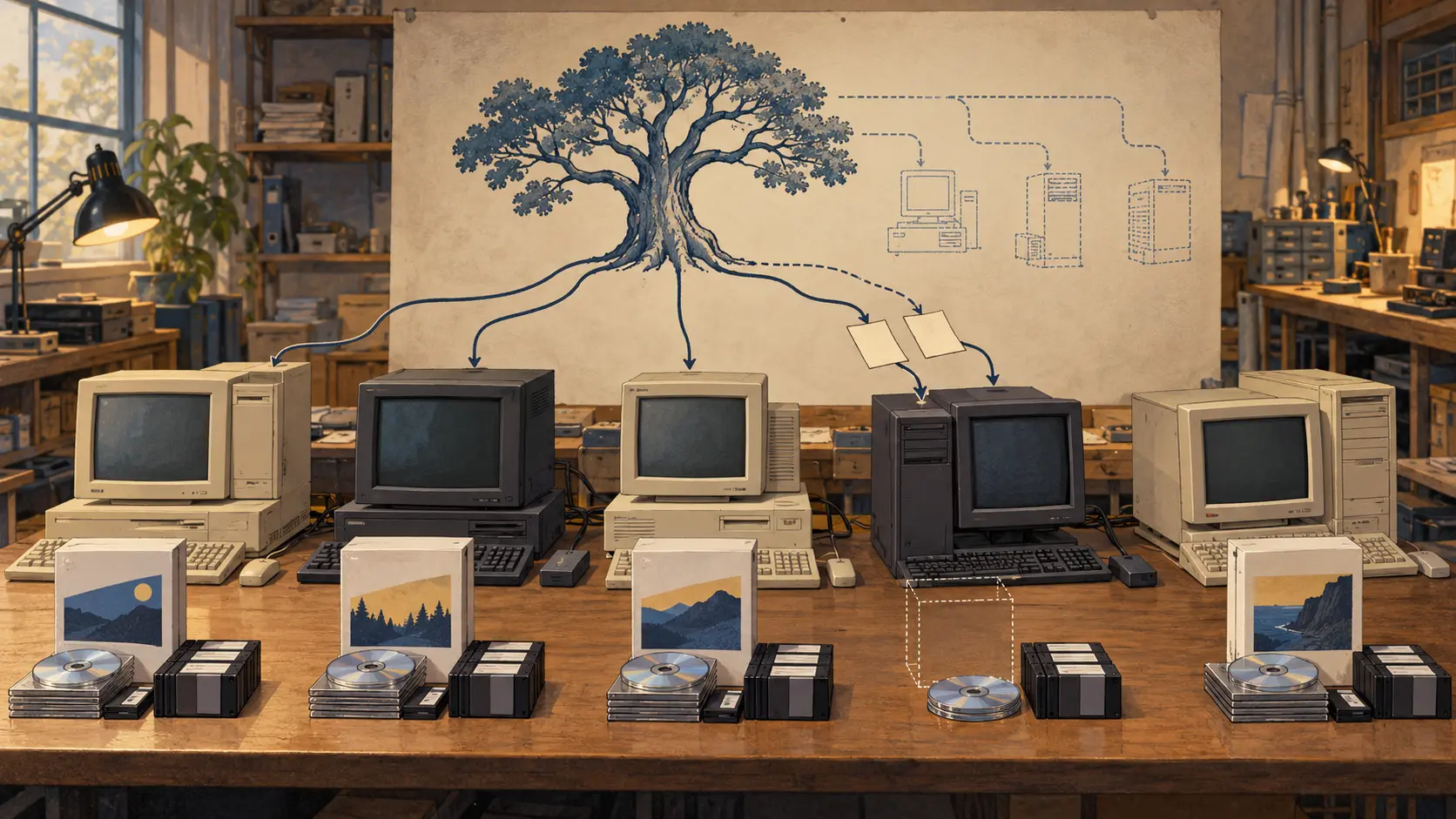
That distinction put the contract around software production and distribution. The reader saw an image. The developer had to decide whether a product could keep using LZW and under what terms.
GIF24 was a proposal, not a finished specification
Unisys’s statement referred to confusion caused by a CompuServe advisory in December. On 17 January 1995, CompuServe announced that it would coordinate GIF24, a proposed GIF successor capable of 24-bit lossless compression.
CompuServe said the specification would be open and available without cost. It invited graphics vendors, its GO GRAPHICS community, web and bulletin-board users to suggest design goals and technologies. It also asked for nominations of community representatives and promised more information on goals and process.
The announcement records a project and an invitation to participate. It does not present a published GIF24 specification. CompuServe had negotiated an LZW license for its service, could choose whether to sublicense within that agreement, and now offered to convene a successor-format effort.
PNG was already on another clock
W3C’s 1996 fact sheet dates PNG’s creation to December 1994 and says it had been stable since March 1995. Its revision history says the format was frozen from the ninth draft of 7 March 1995. PNG’s work therefore had its own timeline when GIF24 was announced.
PNG 1.0 became a W3C Recommendation on 1 October 1996; W3C announced it on 7 October. The release highlighted cross-platform lossless graphics and variable transparency. It said W3C and CompuServe had supported PNG’s development and wanted it accepted as the Internet’s new lossless graphics standard. The same CompuServe that had announced GIF24 was backing PNG by then.
The sequence resists a neat winner-and-loser story: PNG began in December 1994, GIF24 was announced in January 1995, PNG stabilized in March and became a Recommendation in October 1996. Licensing, format design and standards endorsement moved on separate tracks.
The source record leaves one gap: the January announcement and W3C’s 1996 release do not trace GIF24’s later development. A dated follow-up or surviving draft would change that part of the history.
The right to license did not choose the image on screen
Unisys could set the licensing terms it asserted for LZW. CompuServe had contractual discretion over sublicensing and could convene a successor project. Software makers chose which formats to implement; a standards recommendation could aid adoption but did not place support in every viewer.
End users stood at the far end of the chain. Unisys said developers were the expected commercial licensees and that most website operators using purchased software needed no separate license. Product teams still had to weigh compatibility, licensing costs and the readiness of another format. The sources show two proposals and different forms of authority; they do not quantify how much either path changed commercial development.
Sources
Member Briefing
Deeper Profile Context
Sign in with the right membership level to unlock the full briefing and source notes.
Only for Strategic Circle
Strategic Circle
Open to all readers. Unlock profile briefings after joining and signing in.
Join Strategic CircleOnly for Leadership Alliance
Leadership Alliance
For qualified IP-asset owners and management; sign in to unlock alliance briefings.
Join Leadership Alliance