Summary
- Ask A Biologist began in 1997; a common email address later routed questions to appropriate faculty and graduate-student volunteers.
- The same inbox supported answers suited to a child’s school level and revealed demand for quizzes, colouring pages and information about scientific careers.
An inbox can keep the night shift without demanding that a biologist sleep beside it. That was one of the useful bargains Charles Kazilek described in his 2010 account of Ask A Biologist: a website could accept curiosity around the clock while scientists found time to answer properly. The send button was the easy part. The reply needed a person.
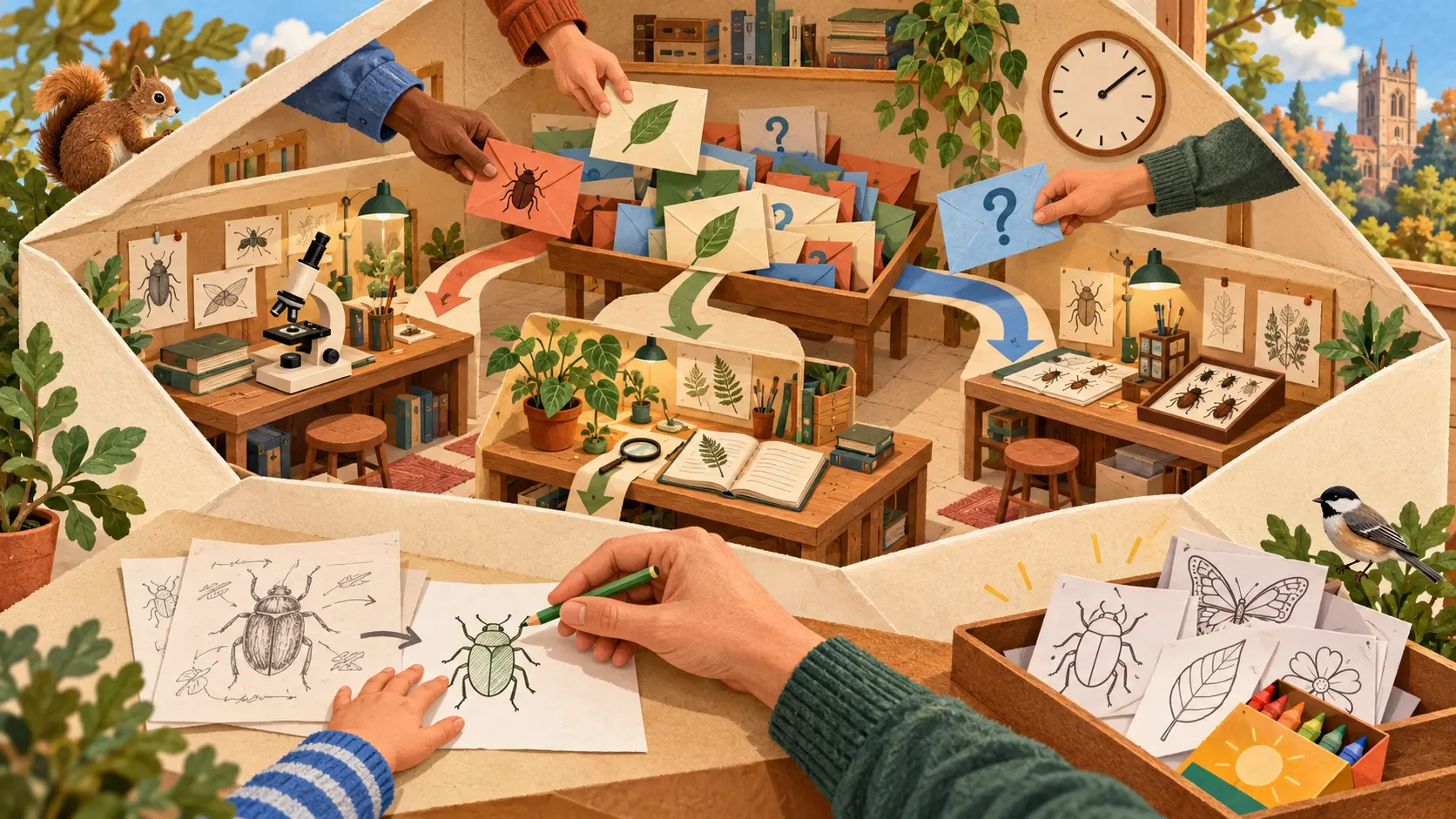
The project began in 1997 at Arizona State University, with a single page on the School of Life Sciences website. By Kazilek’s 2010 account, more than 150 scientists and experts supported its question service. Yet the public did not need to choose among that many inboxes. Questions entered through a common email address and were directed to suitable faculty members and graduate students. A university’s scattered knowledge acquired a front door.
The shared address also spared any one person from being overwhelmed. It created an opportunity to review a response and revise it for the reader’s school level. Being right about biology was one qualification; making the answer useful to a child was another piece of work. The site’s hidden machinery included deciding who should reply and whether the explanation would survive contact with its intended audience.
There was no shortage of reasons to care about that work. In a February 2006 institutional account, Arizona State University reported that the service had answered more than 18,000 questions from school students and their teachers. Kazilek remained its principal developer and caretaker. He identified finding time as a major difficulty and credited the volunteers with keeping the service going. The web page had generous opening hours; its human contributors still had other jobs to do.
By 2010, the question box was receiving more than requests for biological explanations. Kazilek reported that over a quarter of incoming questions concerned careers in biology. Students wanted to know what scientists did, which classes they had taken and how opportunities had opened up. The expert at the other end had become part of the subject. A perfectly stocked reference shelf could explain an organism; a person could explain the route into studying it.
Incoming mail also gave the website its next assignments. Students asked for quizzes, and quizzes followed. Parents and grandparents wanted activities for younger children, and the site developed colouring pages. These examples in Kazilek’s account show a small feedback loop with a tangible output: someone expressed a need, and the project made something other people could use. Curiosity was doing a little editorial commissioning.
The site grew to include interviews, games, photographs, video and teaching resources. Its contributors included illustrators, writers and translators as well as scientists. As online information multiplied, Kazilek also described readers arriving with differing answers and wanting help making sense of them. The job was expanding from supplying a fact to helping a person decide what they had found.
That growth kept returning to the same practical constraint. In 2006, Kazilek advised anyone starting an outreach project to plan for its survival as seriously as its creation. Thank-you notes were rewarding; time still had to be found. The history of Ask A Biologist gives the modest shared inbox its due. It distributed attention, made room for editing and carried suggestions back into the site. Behind a button offering an expert stood the less glamorous achievement of keeping experts able to answer.
Member Briefing
Deeper Profile Context
Sign in with the right membership level to unlock the full briefing and source notes.
Only for Strategic Circle
Strategic Circle
Open to all readers. Unlock profile briefings after joining and signing in.
Join Strategic CircleOnly for Leadership Alliance
Leadership Alliance
For qualified IP-asset owners and management; sign in to unlock alliance briefings.
Join Leadership Alliance