Summary
- Apple launched the U.S. iTunes Music Store in April 2003 at 99 cents per song, with playback on three Macs, unlimited iPods and unlimited CDs for personal use. Purchases required a U.S.-billing-address credit card.
- In April 2004 Apple raised the computer limit from three to five, including previously purchased songs, and cut repeat burns of the same playlist from ten to seven. A single song could still be burned without a numerical limit.
The price was a number; the permission was a system
The April 2003 launch release made a neat offer: 99 cents bought a song without a subscription. Apple advertised playback on up to three Macintosh computers, an unlimited number of iPods and an unlimited number of personal-use CDs. The checkout was less universal. A buyer needed a Mac running iTunes 4 and a credit card with a U.S. billing address. The song might travel to any iPod; the store itself began behind a national payment gate.
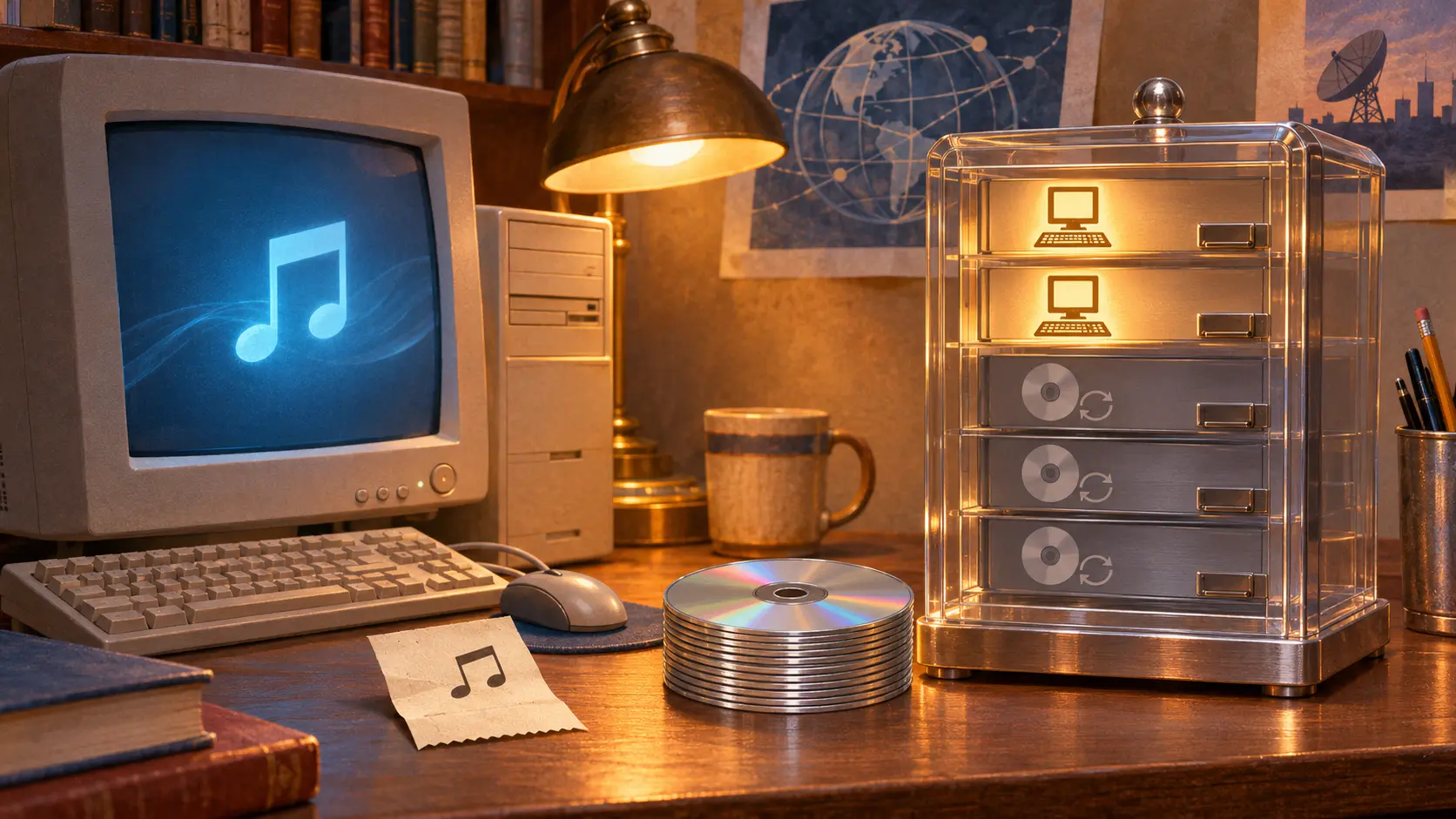
In October, iTunes arrived on Windows. Apple kept the 99-cent price and three-computer ceiling, now across any combination of Macs and Windows PCs. This was a larger addressable crowd, with the same per-buyer machine count. The store's promise of personal use was a set of separate switches: purchase eligibility, computer authorization, portable playback and CD copying. The headline price concealed all four switches.
The sharpest evidence came from Apple's own first-anniversary announcement. It lifted the computer allowance to five and explicitly included songs already purchased. On the same page, Apple reduced the number of times the same playlist could be burned to CD from ten to seven. A single song could still be burned without a numerical cap; users could still listen on unlimited iPods. CD copying remained available; the new rule narrowed one repeatable arrangement of songs while widening the set of authorized computers. Apple's press office announced a rights trade in the middle of a birthday party.
The record behind the switches
Apple's 2004 Form 10-K describes iPod, iTunes software and the Store as one music system. It says the company paid for third-party music rights under arrangements that were often short-term; acceptable usage rules and content availability affected the Store and related hardware, including iPods. Labels and artists required digital-rights and security mechanisms. The filing identifies the commercial pressure behind managed permissions, while the two Apple releases show the permissions customers could actually read.
A 99-cent song was easy to price. The harder product was a durable rulebook for what happened after checkout. Apple controlled the software that counted computers and repeated playlists; content owners controlled whether their music remained available on acceptable terms. The customer held the song, the receipt and a set of permissions that could be announced anew on the Store's first birthday.
Sources
- Apple, iTunes Music Store launch, 28 April 2003.
- Apple, iTunes for Windows launch, 16 October 2003.
- Apple, iTunes Music Store first anniversary, 28 April 2004.
- Apple FY2004 Form 10-K, SEC, Items 1 and 7, licensing-risk discussion.
Member Briefing
Deeper Profile Context
Sign in with the right membership level to unlock the full briefing and source notes.
Only for Strategic Circle
Strategic Circle
Open to all readers. Unlock profile briefings after joining and signing in.
Join Strategic CircleOnly for Leadership Alliance
Leadership Alliance
For qualified IP-asset owners and management; sign in to unlock alliance briefings.
Join Leadership Alliance