Summary
- On 12 April 1994, Internet Direct’s administrator reported that an advertisement had reached “almost 5,000” groups available from the provider’s site and said the subscribers responsible had been disabled under its user agreement.
- The same administrator reported that complaint email was crashing the site and that Canter & Siegel had threatened a $250,000 lawsuit.
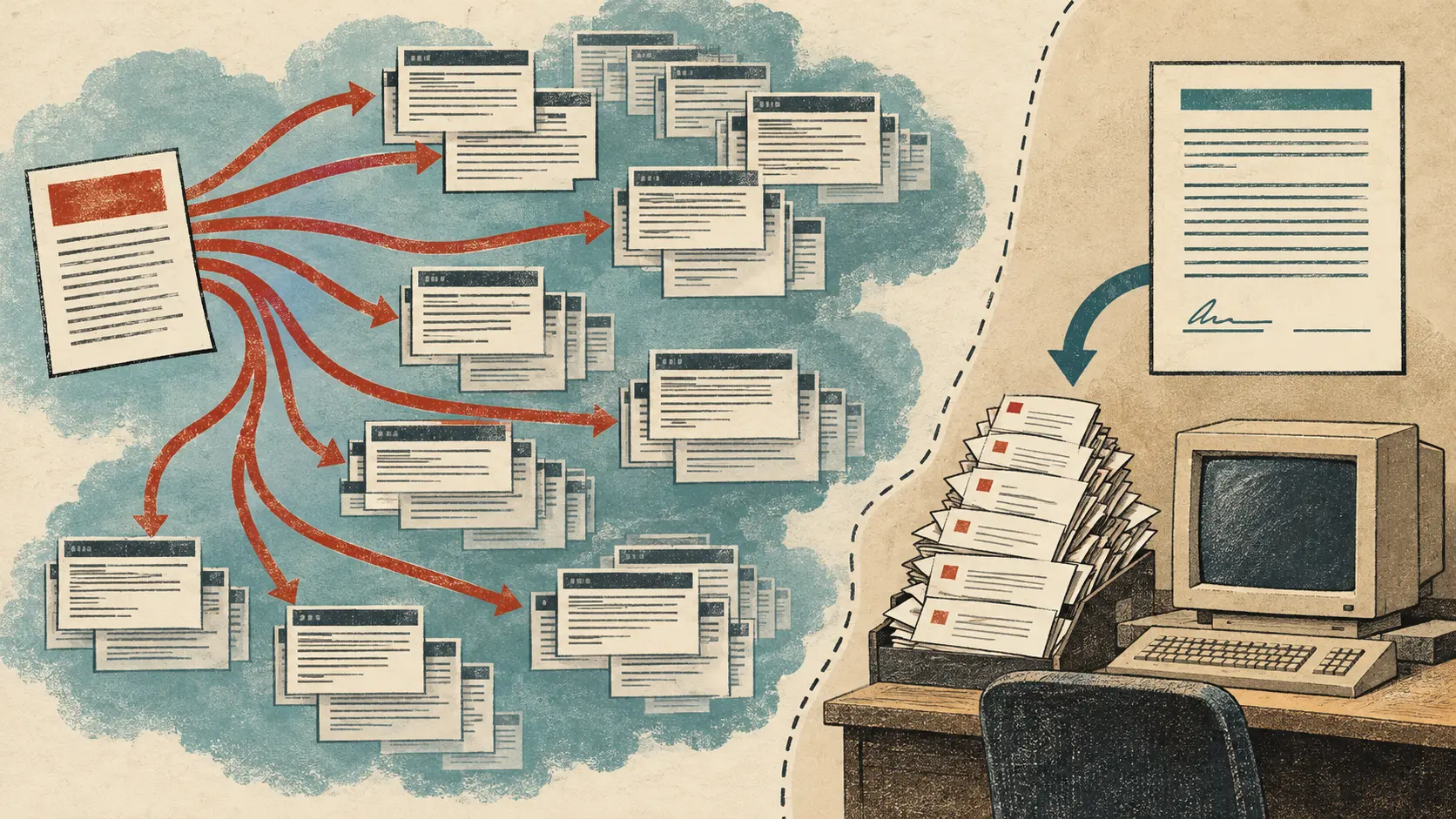
Who could stop a post that travelled through almost 5,000 Usenet groups? The clearest answer left by the April 1994 record is a system administrator with authority over a subscriber account.
Jeffrey D. Wheelhouse identified himself as Internet Direct’s system administrator when he posted a reply on 12 April. He said one of the provider’s users had sent Canter & Siegel’s advertisement to “almost 5,000 newsgroups available from our site.” Wheelhouse reported that the users had been disabled on Internet Direct’s system because the posting violated its user agreement. He also said email volume was crashing the provider’s site and that the law firm had threatened to sue Internet Direct for $250,000. Wheelhouse’s post records the administrator’s account from that day. His post is preserved in the Usenet archive.
The advertisement was about the U.S. Diversity Visa programme. A contemporaneous Usenet reply quotes a version headed “Green Card Lottery 1994 May Be The Last One!” It offered information by email, pressed a June deadline and listed 55,000 visas. The official notice for fiscal year 1995, published in the Federal Register on 31 March 1994, set mail-in registration from 1 through 30 June and stated the same 55,000-visa limit. It required no application fee or special form. The government’s entry procedure was a mailed registration; the advertisement was a commercial pitch for information.
Wheelhouse described distribution through discussion groups and a narrower lever: Internet Direct’s own agreement with subscribers. He reported that the users were disabled on the provider’s system. That is the local action visible in his account.
Then came the bill for attention. Wheelhouse said the email volume was crashing Internet Direct’s site and apologised for the cost and inconvenience imposed on others. A message that was cheap to send at broad scale could leave readers and operators with the work of reading, sorting, answering and keeping service available. Wheelhouse described incoming mail straining Internet Direct’s own service. That local operating burden is the cost his post makes visible.
On 23 May, Canter & Siegel wrote that they intended to take action involving Internet Direct and Netcom; a court docket or settlement record would show whether Wheelhouse’s reported $250,000 threat became a case, and neither appears in this source set.
Three control points sat in the same dispute. Usenet carried the words. Internet Direct could act on a subscriber relationship it administered. Legal threats put pressure on the provider that was trying to contain the local consequences. The record’s sharpest fact is the small, practical boundary where an operator could reach an account—and where a mass post left its recipients with the next task.
Member Briefing
Deeper Profile Context
Sign in with the right membership level to unlock the full briefing and source notes.
Only for Strategic Circle
Strategic Circle
Open to all readers. Unlock profile briefings after joining and signing in.
Join Strategic CircleOnly for Leadership Alliance
Leadership Alliance
For qualified IP-asset owners and management; sign in to unlock alliance briefings.
Join Leadership Alliance