Summary
- The January 1997 WebElements announcement introduced frames and stylesheets, offered older browsers the previous version and anticipated easier overseas downloads.
- Mark Winter also said the chemical errors readers had reported remained. More than 1,500 feedback messages helped motivate the layout change; that was a message count.
The periodic table was getting a new outfit. Its known chemical errors were coming to the fitting.
On 3 January 1997, Mark Winter announced WebElements version 2 beta 6 in a public message to sci.chem. The interface had undergone a major overhaul, adding frames and stylesheets. Then came a wonderfully plain admission: the chemical errors observant users had reported were still there. Correcting them was the next job.
That sentence gives the release its historical interest. It lets us see two kinds of progress that a polished screen can easily merge in the reader's mind: getting to the information more comfortably, and improving the information itself.
The access problem was real. A 1995 manuscript coauthored by Winter explained to chemists that browsers controlled much of a page's appearance, including fonts and sizes. Chemical publishing had particular demands for subscripts, superscripts and Greek characters. The paper described uneven support and noted Mosaic's ability to display subscripts and superscripts. A formula had to survive its trip into the browser.
WebElements already offered a clickable periodic table and graphical views of its data. The same manuscript described two working online calculators: users entered a formula, the web server asked a component of MacElements on a Macintosh to do the calculation, and the result came back as HTML. There was useful machinery behind the page, with several places for a reader's experience to go wrong.
Winter's 1997 announcement treated browser differences as practical work. He wanted feedback from Internet Explorer users with stylesheet support. He expected readers without stylesheets to avoid problems, while asking them to report any. Those whose browsers could not handle frames could continue using the old version while he prepared a version without frames. The new entrance left an older door open.
He also linked the redesign to more than 1,500 feedback messages. The announcement reported smaller files and expected them to improve download times outside the United Kingdom. It offered a direction of improvement, with no timing figures. Faster access had a concrete constituency: people reaching the reference from farther away.
Meanwhile, the chemical corrections remained on the list. Winter thanked the people who had identified problems and put that unfinished work in public view. He also said the layout still had rough edges to tackle after his holiday. The announcement reads like a maintainer's actual desk: useful work shipped, another pile waiting, finite hours available.
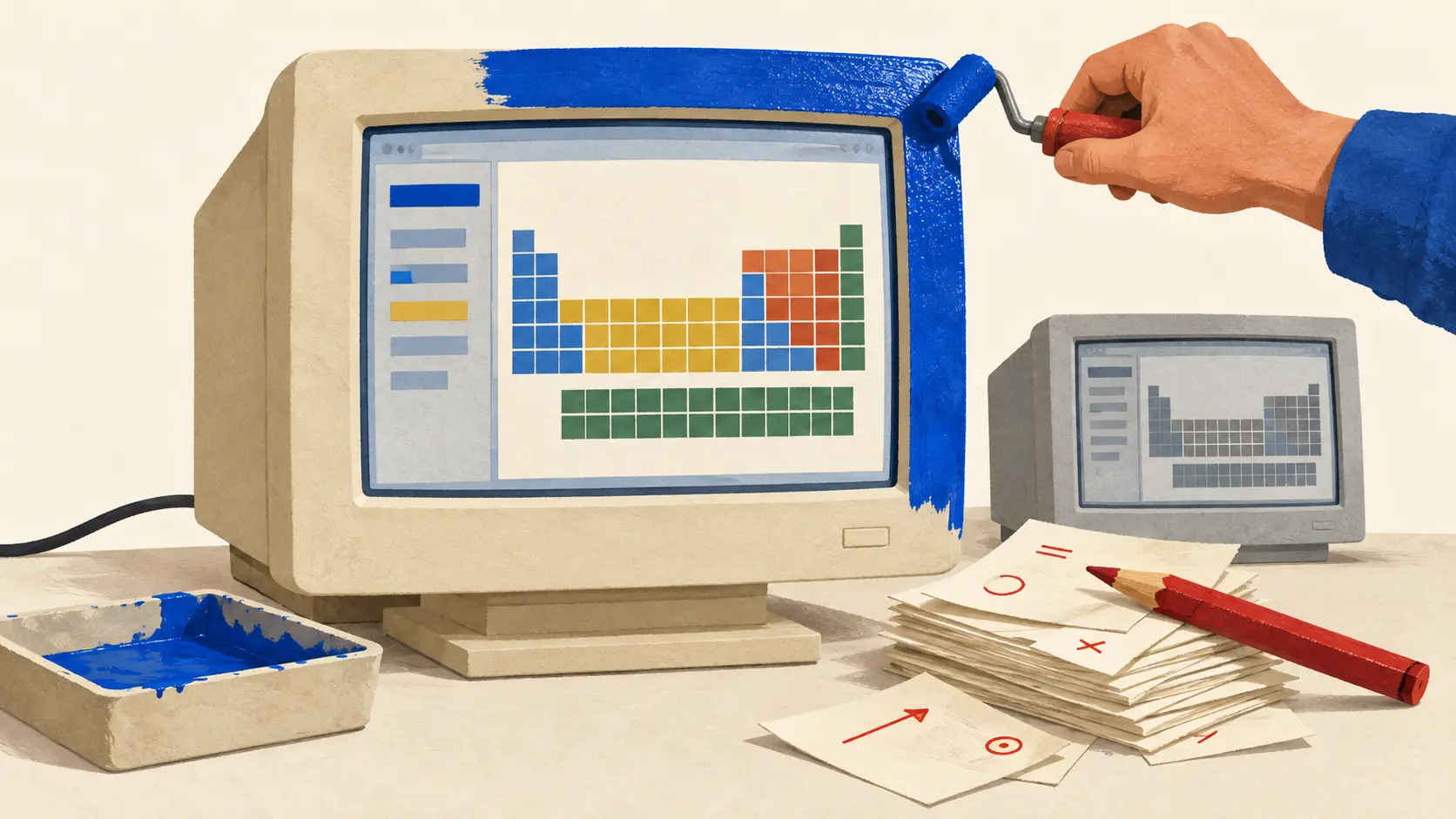
A fresh interface can give old information a very confident face. This release note supplied the missing expression: here is what has changed, and here is what still needs attention. The paint had dried. The red pencil had work to do.
Member Briefing
Deeper Profile Context
Sign in with the right membership level to unlock the full briefing and source notes.
Only for Strategic Circle
Strategic Circle
Open to all readers. Unlock profile briefings after joining and signing in.
Join Strategic CircleOnly for Leadership Alliance
Leadership Alliance
For qualified IP-asset owners and management; sign in to unlock alliance briefings.
Join Leadership Alliance