Summary
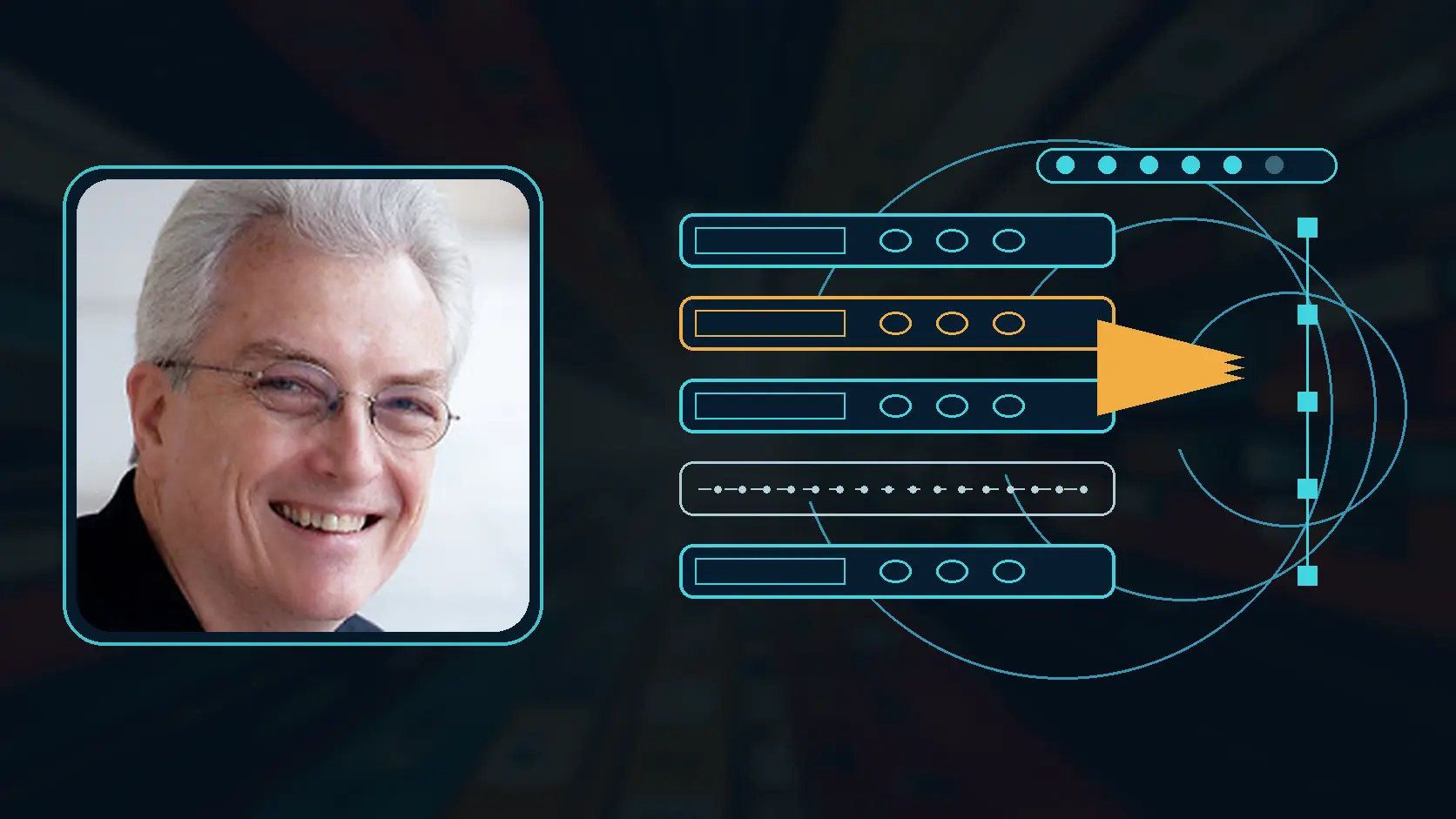
- Vishnu Pavan Beeram and co-authors published RFC 10057 in November 2026. It defines YANG models for TE tunnels, TE LSPs and TE interfaces.
- A tunnel is a container of one or more LSPs between its endpoints. A path can be compute-only and reserve nothing; a secondary LSP can be provisioned in the control plane without data-plane resource commitment.
- Device-independent LSP state is keyed by tunnel name, LSP ID and node. Tunnel state, path state, per-node LSP state, interface advertisement state and packet delivery are separate records.
One tunnel name, several objects
The model begins with a useful simplification. Operators talk about “the tunnel.” Buyers put it in a contract. A dashboard draws one line. An automation workflow uses one name.
RFC 10057 then opens the box. A TE tunnel is a YANG container of one or more TE LSPs between termination points. A TE path is an engineered path that becomes traffic-bearing only after instantiation in forwarding. A TE LSP is the connection-oriented service built over that path.
Those nouns do not collapse because a GUI puts them under one tab. The tunnel has endpoints, encoding, switching type, protection, restoration, bandwidth, hierarchy and a controller section. Each path carries constraints, objective functions, associations, explicit route objects, priority and bandwidth. The LSP list carries the state actually retrieved at a node.
The RFC wants downstream technology and signaling models to augment this common layer. That is sensible architecture. It also means an operator must record which augmentation was loaded and which concrete signaling mechanism produced the state being read.
A computed path can reserve nothing
The sharpest control boundary sits in compute-only. In that mode, the device or controller computes a feasible path and reports it. The RFC says explicitly that no resources are committed or reserved. Topology changes can cause another computation.
A polished route diagram therefore proves calculation. It does not prove installation. The model already supplies the language for path-computing, path-computation-ok and path-computation-failed, followed later by setting-up, setup-ok, setup-failed, up, tearing-down and down for LSPs. The state names make the difference visible to any operator willing to keep them apart.
Resource status adds another boundary. The model’s primary LSP status describes an established LSP whose allocation is committed in the data plane. Its secondary status describes an LSP provisioned in the control plane, with non-commitment of data-plane resources as the stated example. Protection is not the same thing as carried traffic.
The useful question is not whether the controller found a path. It is which path was computed, which LSP was instantiated, which node committed the resource and which forwarding entry received traffic.
The same LSP has three coordinates
The device-independent LSP list is keyed by tunnel-name, lsp-id and node. That key is an operational lesson disguised as schema.
tunnel-name connects the state to the customer-facing object. lsp-id distinguishes several paths or generations inside that tunnel. node says where the state was retrieved. The same LSP can appear with ingress, transit or egress origin, and each view carries different local information.
At ingress, the device module can expose uptime and the remaining time to install or destroy. It can expose the downstream next hop, outgoing interface, neighbor and label. On transit or egress, the applicable state moves upstream or changes meaning. A controller collecting rows from several nodes gets a richer record and a larger reconciliation problem.
The actual route object is scoped to ingress origin in the model. It is an RSVP Record Route view where available. That is useful corroboration, but it remains a route record. The forwarding table, counter, packet capture and application transaction supply later evidence.
Administrative intent lives beside observed state
The tunnel has admin-state and operational-state. Administrative values include up, down and auto. Auto follows whether the client layer uses the tunnel. Operational state is a separate leaf.
This arrangement lets a network preserve intent while reporting a different runtime condition. It becomes dangerous when a template flattens both fields into “enabled.” The audit trail should preserve who set the administrative value, what the observed state was, when it changed and which LSP rows supported that observation.
TE interfaces have their own evidence boundary. ietf-te-device references normal interfaces from RFC 8343, then adds TE metric, administrative groups, shared-risk link groups, switching capability and bandwidth-flooding thresholds. Its read-only advertisement state reports flood interval, last and next flood time, trigger and advertised areas.
A fresh advertisement timestamp proves the local TE subsystem reported a flooding event. It does not prove that every router accepted the link state, that path computation used it or that traffic crossed the link.
An RPC result is not a packet
The tunnel action RPC supports resetup, reoptimize and switchpath. Its action result may be success, failure or in progress. Reoptimization can be marked disruptive, because moving multiple tunnels may interrupt traffic.
Those fields govern a control operation. They do not carry an end-to-end forwarding result. An action marked successful can still lead to a setup failure on another node, a changed protection role, a new path that has not installed, or a forwarding entry with no traffic.
NETCONF, NACM and YANG Push subscriptions from RFC 8639 and RFC 8641 answer other questions. They establish the management channel, authorization, subscription and delivery of selected model data. They do not make a successful state update a successful service.
Keep the receipt at the narrowest object
For each operation, record the administrative intent and exact model revision first. Add path constraints, computation method, compute-only status and computed-path result. Join that to the instantiated LSP by tunnel name, LSP ID and every participating node. Then preserve origin role, setup and operational state, resource status, protection role and state, installation timer, route information, interface references and advertisement state.
The final join should attach traffic counters or a packet-level observation and the application result to the exact LSP generation. RFC 9012 already explains how BGP color communities and tunnel colors can steer services onto a chosen tunnel; the operational receipt must prove that the intended service mapping happened.
A controller can show one tunnel. The network still reports several paths, several node-local LSPs and several clocks. Beeram and his co-authors built a common model for those facts. The operator’s job is to keep them attached to the right fact.
Sources: RFC 10057; RFC 10056; RFC 8343; RFC 8341; RFC 6241; RFC 8639; RFC 8641; RFC 9012; Vishnu Pavan Beeram profile.
Member Briefing
Read the full trend briefing
Members read the full briefing with the source notes behind every finding.
Strategic Circle
A daily briefing in your language, built from changes we have verified.
Join for USD 20/monthCancel anytime.
Members also get the full research library, a daily briefing on the networks they follow and the private forum.